
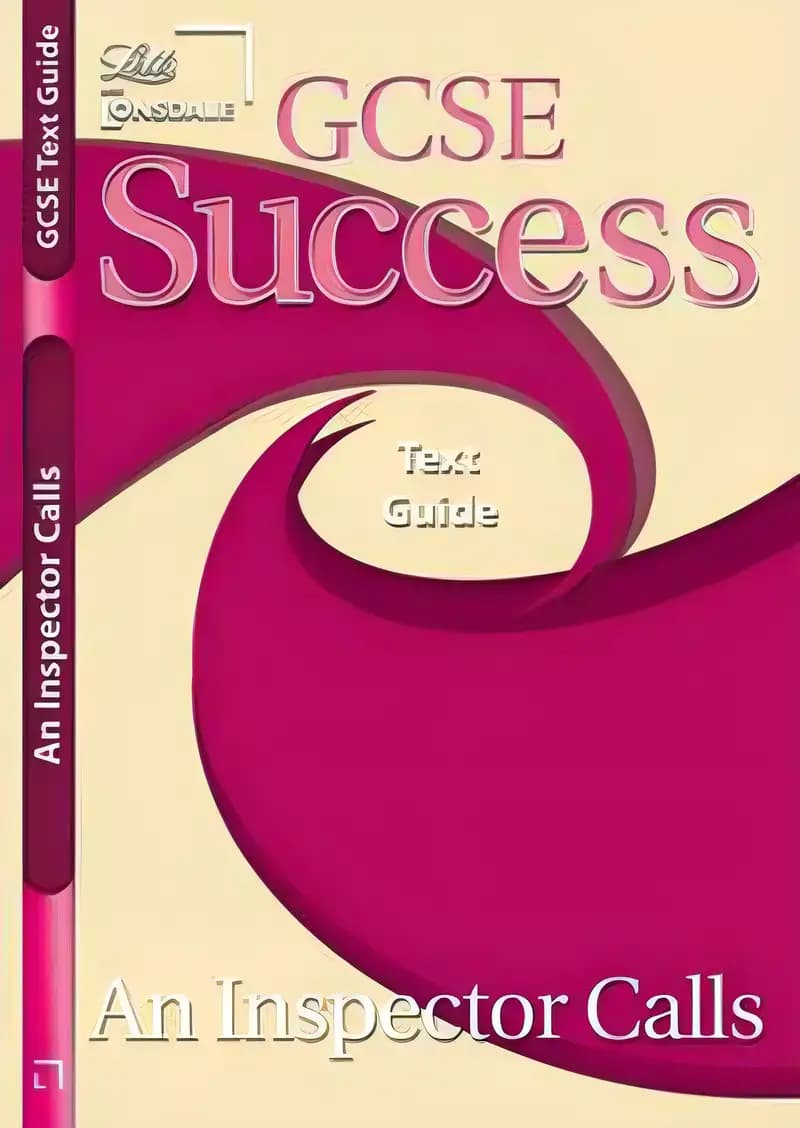
GCSE Success "An Inspector Calls" Text Guide
GCSE success Series
on Goodreads (2)
What’s inside...
Offering an analysis of the plot and structure of 'An Inspector Calls', this book also provides an exploration of characters and themes to allow students to focus on the text. It provides advice to help build students' confidence and includes exam tips and techniques to support students in the revision process.
Series reading
Non-Sequential
Age
14-16
Length
48 pages
Text complexity
Character compass
Inspector Goole
Gerald Croft
Eric Birling
Sheila Birling
Sybil Birling
Arthur Birling
Discussion points
How do the actions of each character influence the events in the story?
What themes stand out to you in 'An Inspector Calls', and why do you think they are important?
How does the setting of the play contribute to the overall message?
What do you think the inspector symbolizes in the play, and why?
If you were in the play, which character would you choose to be and why?
Tip: Role play these questions
Encourage your child to express their own opinions about the story and its characters, showing genuine interest in their thoughts. Discuss the historical context of the play and how the themes might relate to modern issues. Use examples from the text to stimulate deeper thinking and connection to the content. Praise their insights and guide them to think critically about the moral implications presented in the book.
Key lessons
Example Lesson: Responsibility for others
Explanation: The narrative of 'An Inspector Calls' emphasizes the interconnectedness of society and how our actions can significantly impact others. The inspector's inquiry into the death of Eva Smith shows the consequences of each character's actions.
Real-World Application: Children can learn the importance of considering the effects of their actions on others, fostering a sense of social responsibility and empathy.
Example Lesson: Social inequality and justice
Explanation: The play addresses issues of class and social responsibility, highlighting the disparities between the wealthy and the impoverished. Eva Smith's mistreatment by each member of the Birling family represents broader social injustices.
Real-World Application: This encourages children to be aware of and question social inequalities and injustices in their communities, promoting fairness and equality.
Example Lesson: The importance of honesty
Explanation: Throughout the play, characters are revealed to have hidden truths and deceitful behaviors, which contribute to the tragedy of Eva Smith. The inspector's role is pivotal in unveiling these truths.
Real-World Application: Children learn the value of transparency and honesty in their interactions and the potential harm that deceit can cause in relationships and to one's self-esteem.
Example Lesson: Reflecting on one's actions
Explanation: The play's structure allows characters—and by extension, the audience—to reflect on past actions and their ramifications, stressing the importance of self-reflection and moral accountability.
Real-World Application: This teaches children the importance of reflecting on their actions and learning from their mistakes to make better choices in the future.
Example Lesson: The impact of collective responsibility
Explanation: The inspector's final speech outlines the importance of collective responsibility, where society must work together to protect and uplift its most vulnerable members.
Real-World Application: This lesson highlights the importance of teamwork and community support, encouraging children to actively participate in collective efforts for the betterment of society.