
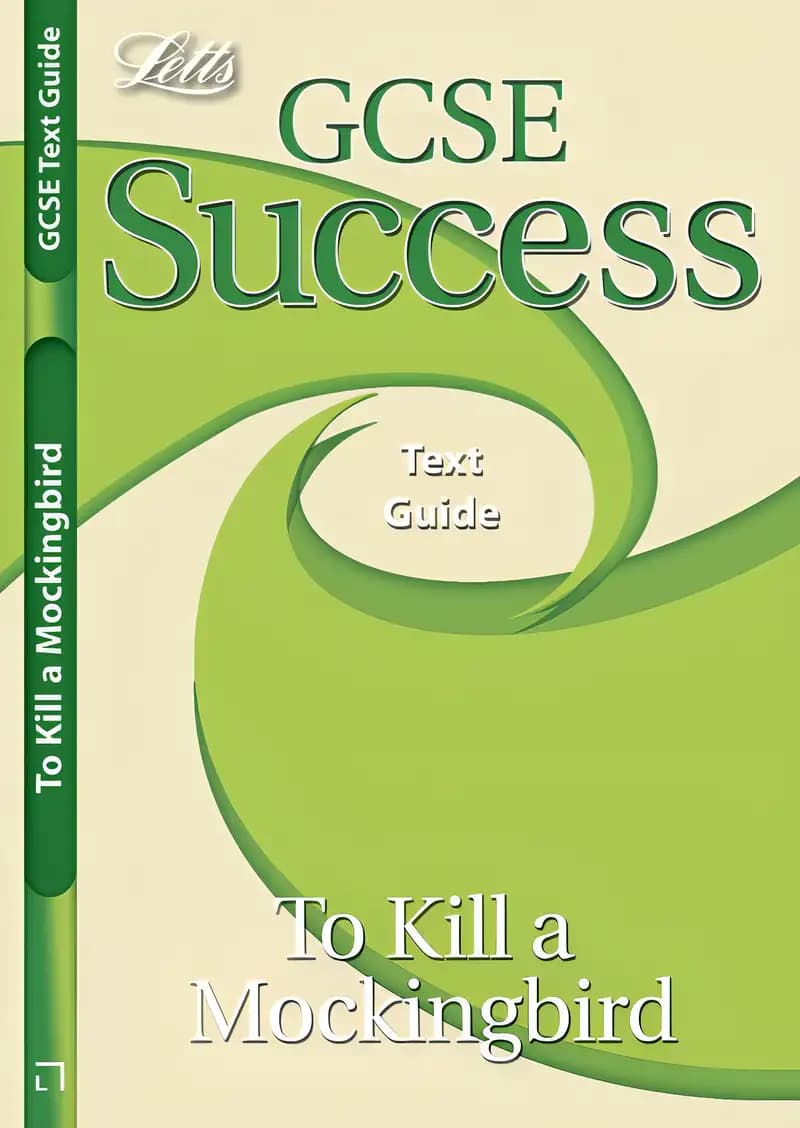
GCSE Success "To Kill a Mockingbird" Text Guide
GCSE success Series
What’s inside...
This Success Text Guide for 'To Kill a Mockingbird' provides a thorough analysis of the plot and structure, along with an in-depth exploration of characters and themes. It includes key quotations, sample essay questions, and essay plans to aid in exam preparation. Graded sample answers help students understand what examiners are looking for. Quick Tests at the end of each section reinforce understanding. This comprehensive guide is an essential resource for students studying this classic novel.
Series reading
Non-Sequential
Age
14-17
Length
96 pages
Text complexity
Character compass
Scout Finch
Calpurnia
Heck Tate
Tom Robinson
Arthur 'Boo' Radley
Jem Finch
Miss Maudie Atkinson
Aunt Alexandra
Atticus Finch
Mayella Ewell
Bob Ewell
Discussion points
How do the characters in 'To Kill a Mockingbird' demonstrate courage and compassion?
What are your thoughts about the way justice is portrayed in the story?
How do the themes of racism and inequality resonate with you?
Which character do you identify with the most and why?
What lessons can we learn from Atticus Finch's parenting style?
Tip: Role play these questions
Before discussing, create a comfortable and open environment where your child feels safe to express their thoughts and opinions.
Encourage your child to think critically by asking them how they might handle similar situations that characters face in the book.
Use examples from current events to help your child make connections between the book’s themes and the real world.
Highlight the historical context of the story before diving into deeper discussion to give your child a solid ground for understanding the book's challenges.
Praise your child's insights and encourage them to ask questions, fostering a two-way dialogue.
Key lessons
Example Lesson: Empathy and Understanding
Explanation: Through the narrative, readers learn about the importance of seeing the world from others' perspectives, notably through Atticus Finch's advice to Scout about walking in someone else's shoes.
Real-World Application: Children can apply this lesson by trying to understand their peers' feelings and viewpoints, fostering a more inclusive and supportive environment at school or in playgroups.
Example Lesson: The Significance of Moral Courage
Explanation: Atticus Finch exemplifies moral courage by defending a Black man, Tom Robinson, in a racially charged trial despite facing criticism and threats from the community.
Real-World Application: This can encourage children to stand up for what is right, even when it's unpopular or difficult, reinforcing integrity and bravery in confronting injustices.
Example Lesson: Importance of Confronting Prejudices
Explanation: The story addresses racial and social prejudices explicitly and points out the harmful effects on individuals and communities.
Real-World Application: Children learn to recognize and question stereotypes and biases they encounter, promoting critical thinking and empathy towards others from different backgrounds.
Example Lesson: Growth and Learning Through Experience
Explanation: Scout and Jem Finch grow and mature as they navigate complex social issues in their town, learning from both their experiences and the guidance of their father.
Real-World Application: This teaches children the value of personal growth through life's challenges and the importance of using one’s experiences as a learning tool for future decisions.