
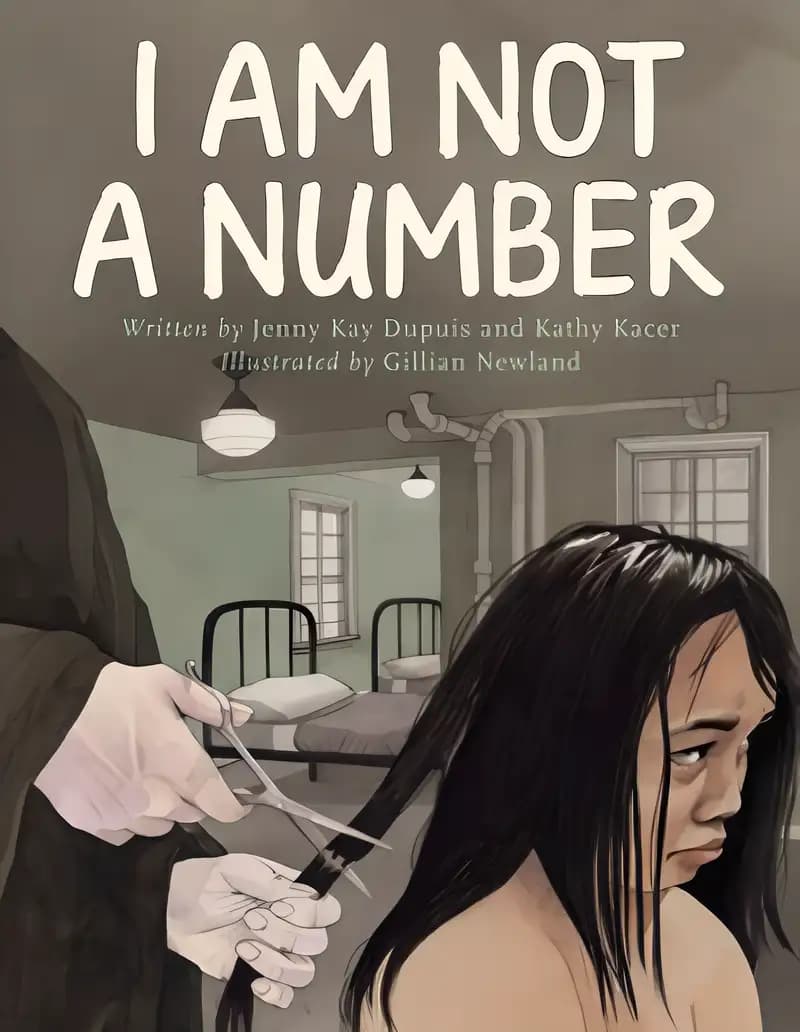
Gaawin Gindaaswin Ndaawsii / I Am Not a Number (English and Ojibwa Edition)
illustrations by
on Goodreads (1,636)
What’s inside...
When eight-year-old Irene is removed from her First Nations family to live in a residential school she is confused, frightened, and terribly homesick. She tries to remember who she is and where she came from, despite the efforts of the nuns who are in charge at the school and who tell her that she is not to use her own name but instead use the number they have assigned to her. When she goes home for summer holidays, Irene's parents decide never to send her and her brothers away again. But where will they hide? And what will happen when her parents disobey the law? Based on the life of co-author Jenny Kay Dupuis' grandmother, I Am Not a Number is a hugely necessary book that brings a terrible part of Canada's history to light in a way that children can learn from and relate to.
Age
7-11
Length
32 pages
Text complexity
Character compass
Irene
Irene'S Mother
The School Nun
Discussion points
What do you think it felt like for Irene to leave her home and go to the residential school?
Why is it important to remember and talk about the stories of people who have had different experiences from us?
How did Irene show courage in the story?
What can we learn from Irene’s story about standing up for ourselves and others?
Tip: Role play these questions
Start by setting a calm and open environment where your child feels safe to express their thoughts and feelings. Express genuine interest in their responses and encourage them to think deeply about the story’s themes. Relate the story's situations to their own experiences to foster empathy and understanding. Lastly, underscore the importance of history and resilience, and how we can learn from the past to build a better future.
Key lessons
Example Lesson: Resilience in the face of adversity
Explanation: The story demonstrates resilience through the main character, Irene, who withstands the harsh conditions and unjust treatment in a residential school.
Real-World Application: Children can learn to persevere through difficult situations, understanding that they can overcome challenges with determination and inner strength.
Example Lesson: Importance of cultural identity
Explanation: Irene's journey highlights the significance of maintaining one's cultural roots despite external pressures to conform, showcasing the Ojibwa language and traditions.
Real-World Application: This teaches children to value their own heritage and respect diverse cultures, fostering a sense of pride and identity.
Example Lesson: Empathy and understanding
Explanation: The book encourages empathy by showing the emotional and physical hardships faced by Indigenous children, inviting readers to reflect on the impact of historical events.
Real-World Application: Children can apply this by showing compassion and understanding towards others who may have different experiences or backgrounds, promoting inclusivity.
Example Lesson: Courage to stand up against injustice
Explanation: Irene and her family show immense courage when they decide to resist the oppressive system and assert their rights, challenging the authorities.
Real-World Application: This encourages children to speak out against wrongdoings and advocate for themselves and others in situations of unfairness or injustice.
Example Lesson: The power of family bonds
Explanation: The story illustrates the strength found in family support and unity during times of trouble, which helps Irene to navigate her challenges.
Real-World Application: Children learn the importance of maintaining strong family connections and supporting each other, emphasizing the role of family as a source of comfort and strength.