
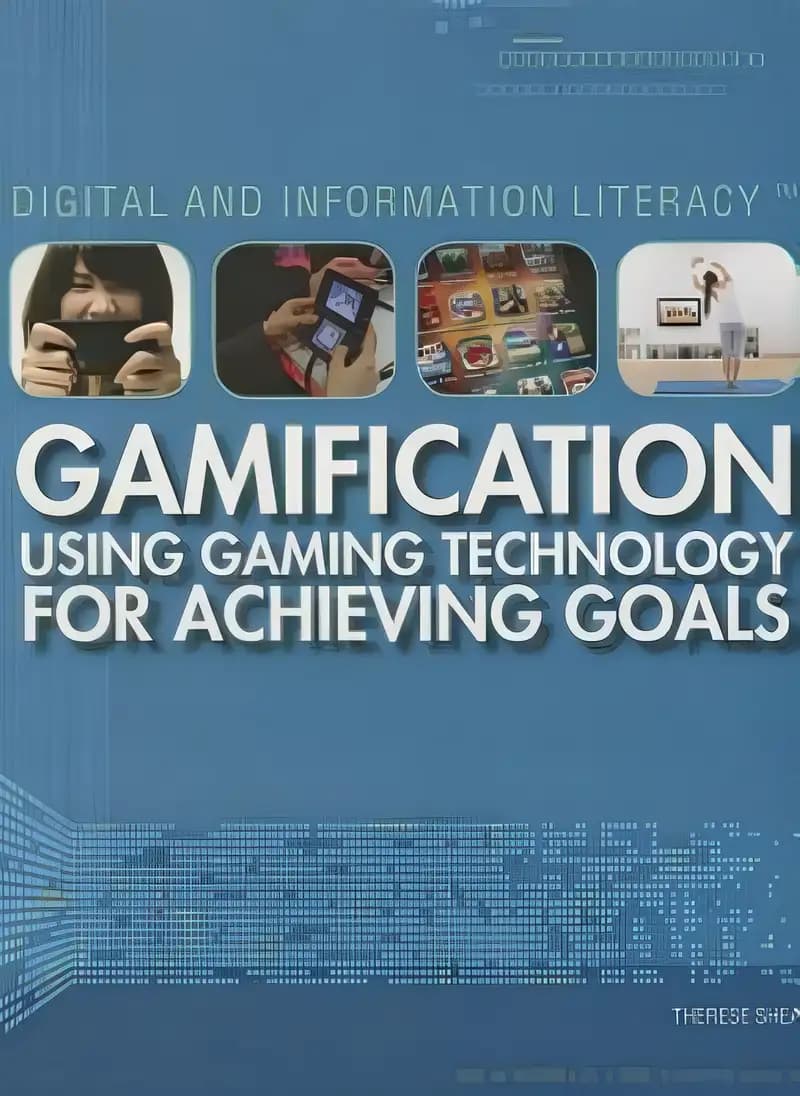
Gamification: Using Gaming Technology for Achieving Goals (Digital and Information Literacy, 2)
#2 in Digital And Information Literacy Series
on Goodreads (7)
What’s inside...
The book 'Gamification: Using Gaming Technology for Achieving Goals' by Therese Shea explores the concept of gamification, which applies game-design elements to non-game contexts. It discusses enhancing digital and information literacy through engaging and interactive learning. The book covers the psychological basis, design strategies, and applications of gamification in education, business, and personal development. It also delves into how gamification can motivate individuals and improve user experience in both digital and real-world settings. Additionally, it showcases real-world examples of gamification in environmentalism, health, and social causes, emphasizing its potential in sparking interest among future computer scientists.
Discussion points
What are some ways that games make learning more fun for you?
Can you think of a goal you achieved recently by using something you learned from a game?
How do you think gaming technology can help people learn new things?
What’s your favorite game and what have you learned from it?
Tip: Role play these questions
Share your own experiences with games and learning to kickstart the conversation.
Encourage your child to draw parallels between the games they enjoy and the skills they gain from them.
Listen actively and show genuine interest in their gaming experiences which helps foster a deeper discussion.
Pose follow-up questions based on your child’s responses to keep the conversation flowing and insightful.
Key lessons
Example Lesson: Goal Setting
Explanation: The book explains how games use goals to guide player engagement and achievement.
Real-World Application: Children learn to set realistic and achievable goals for their academics and personal hobbies.
Example Lesson: Problem-Solving Skills
Explanation: Through gaming examples, the book demonstrates how to approach and solve challenges strategically.
Real-World Application: Kids can apply strategic thinking to overcome obstacles in their schoolwork and social interactions.
Example Lesson: Importance of Persistence
Explanation: Characters in the book repeatedly attempt difficult levels or challenges, showcasing the value of persistence.
Real-World Application: Children understand the significance of persisting through difficult tasks, whether they pertain to learning a new skill or resolving conflicts.
Example Lesson: Technological Awareness
Explanation: The book delves into various gaming technologies, helping children understand digital tools and their uses.
Real-World Application: This fosters an early interest and understanding in technology, which is beneficial in the increasingly digital world.
Example Lesson: Teamwork and Collaboration
Explanation: Gaming scenarios that require players to work together highlight the benefits of collaboration.
Real-World Application: Kids learn to collaborate with peers in group projects or team sports, appreciating different viewpoints and skills.