
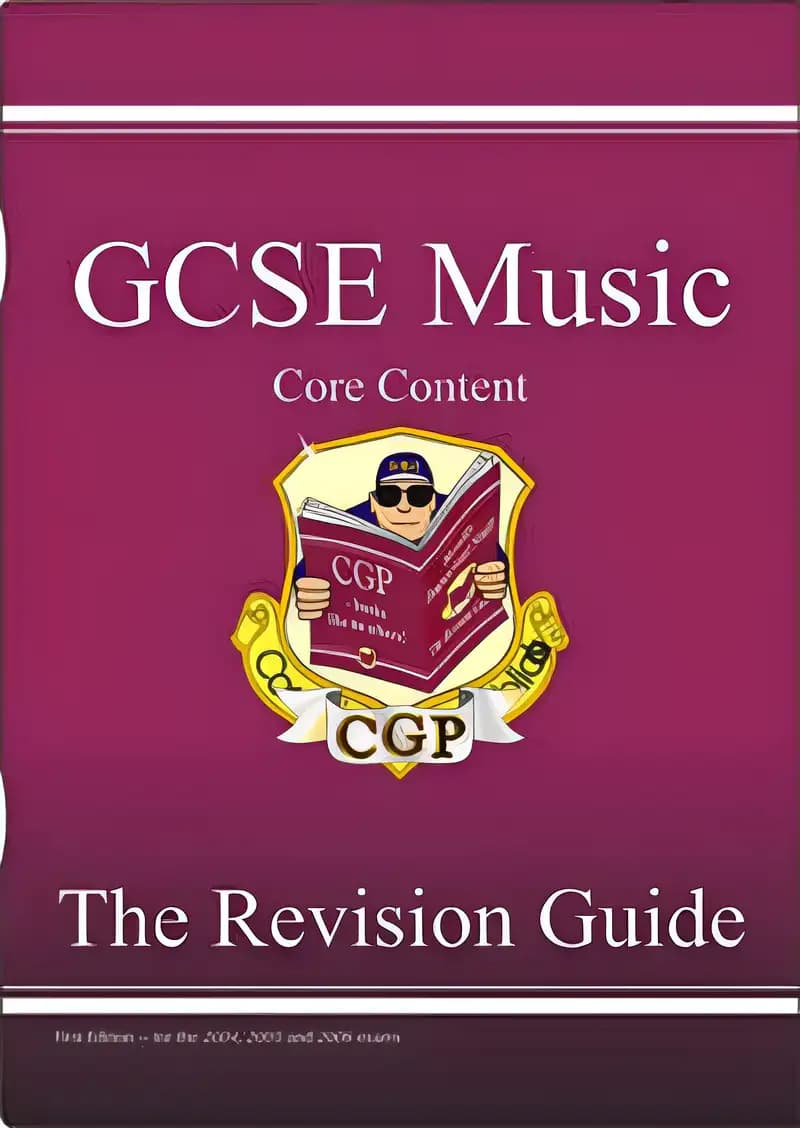
Gcse Core Content Music Theory Revision Guide
on Goodreads (5)
What’s inside...
GCSE Music Core Content Revision Guide
Why read this book
- Concise, clear music theory concepts explained.
- Enhances musical literacy and critical listening skills.
- Ideal for exam preparation and confident learning.
- Supports development of long-term academic skills.
Age
14-16
Length
62 pages
Text complexity
Discussion points
What elements of music theory did you find most intriguing, and why?
How do you think understanding music theory can help a musician or a listener?
Can you explain how a specific music theory concept is applied in a song you like?
How might learning music theory change the way you experience music?
What challenges did you face while studying this guide, and how did you overcome them?
Tip: Role play these questions
Listen to a variety of music pieces together and ask your child to identify the elements of music theory they learned.
Encourage your child to teach you a music theory concept. This not only reinforces their learning but also helps you understand their progress and interests.
Discuss how music theory might influence a musician's decisions when composing or performing music.
Create a friendly quiz based on the guide’s content to make the learning process interactive and fun.
Relate music theory concepts to your child’s favorite songs or genres to make the discussion more relevant and engaging.
Key lessons
Example Lesson: Understanding the Value of Practice
Explanation: This guide emphasizes the importance of consistent practice and revision to master music theory, which is a key component in musical education.
Real-World Application: Children learn that regular practice can be applied to any skill they wish to master, whether it's a musical instrument, a new sport, or academic subjects.
Example Lesson: Attention to Detail
Explanation: Music theory requires attention to detail when understanding elements such as scales, chords, and rhythm. This guide helps children focus on these intricate details.
Real-World Application: This skill can help children in being more meticulous in their daily tasks and schoolwork, leading to better quality of work and higher academic performance.
Example Lesson: Critical Thinking
Explanation: Analyzing musical compositions and understanding their theoretical foundations fosters critical thinking skills.
Real-World Application: Children can use critical thinking to solve problems creatively in other areas of their life, such as math, science, or even social situations.
Example Lesson: Appreciation of Music
Explanation: By learning the technical aspects of music through this guide, children can deepen their appreciation for the artistry involved in creating music.
Real-World Application: This heightened appreciation can enhance their cultural knowledge and encourage them to explore and enjoy various forms of artistic expression.
Example Lesson: Goal Setting
Explanation: The structured learning approach in the guide encourages setting achievable goals, such as mastering a particular music theory topic before moving to the next.
Real-World Application: Goal setting can be transferred to personal goals in fitness, hobbies or even academic aspirations, teaching kids the value of setting and achieving objectives.