
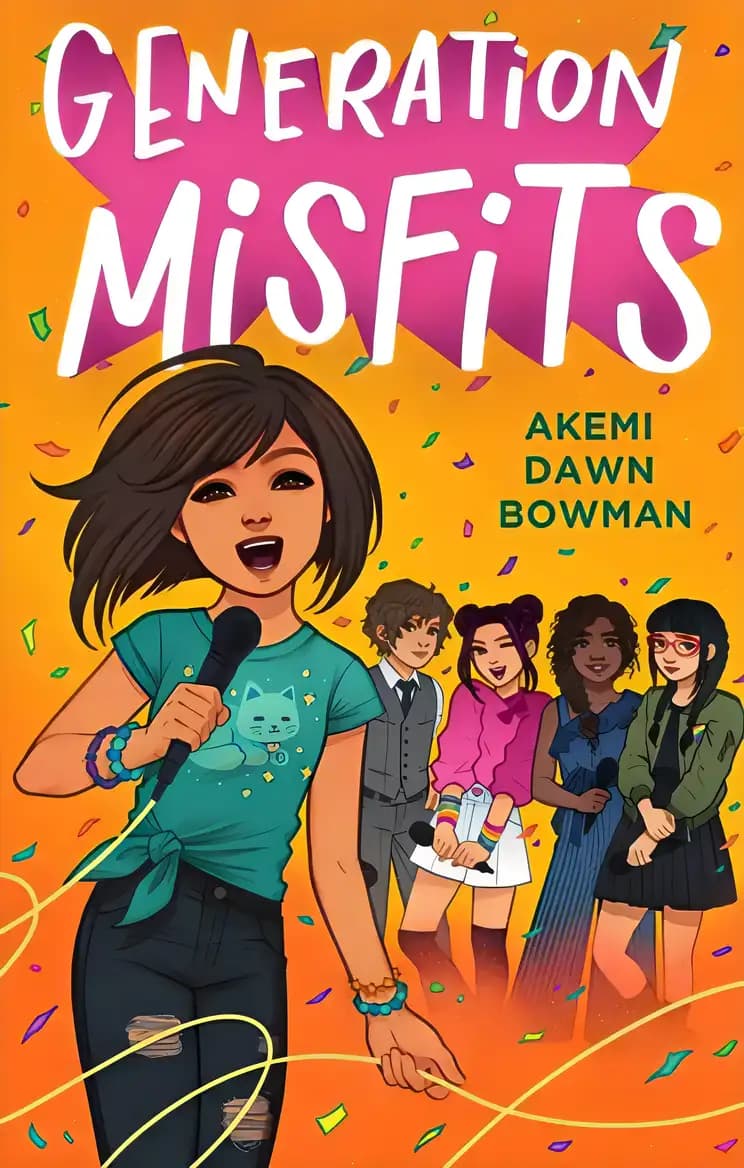
Generation Misfits
#1 in Generation Misfits Series
on Goodreads (166)
What’s inside...
Generation Misfits by Akemi Dawn Bowman is a heartwarming, fish-out-of-water own voices story about an eleven-year-old Japanese-American girl named Millie who is attending a real school for the first time. She dreams of finally having friends and a little bit of freedom. Millie finds her chance when she joins an imitation band of her favorite J-Pop group, where she meets a group of misfits who quickly become a tightknit group of friends that are like family. However, Millie soon realizes that one of them is dealing with problems bigger than what notes to hit when it comes time for their performance. Can Millie help her friend, even when their problem feels too big to say out loud?
Character compass
Millie Nakakura
Discussion points
What did you think about the friendships in the story? How do they compare to your friendships?
What challenges did the characters face and how did they handle them? What would you do in a similar situation?
How do the characters grow and change throughout the story? Can you relate to any of these changes?
The story explores the theme of fitting in. Have you ever felt like a misfit? How did that make you feel and what did you learn from that experience?
What does courage mean to you? How did the characters show courage in the story?
Tip: Role play these questions
Start the conversation by sharing your own thoughts and reactions to the book to set a comfortable tone for open discussion.
Encourage your child to think deeper by asking them how they might feel or act if they were in the characters’ shoes.
Link discussion points to real-life scenarios your child might encounter to help them connect with the themes in the story.
Validate your child’s feelings and thoughts as they respond, fostering a safe environment for expression.
Key lessons
Example Lesson: Embracing Individuality
Explanation: The story highlights the importance of accepting one's unique traits and qualities.
Real-World Application: Children can learn to appreciate the diversity of personalities and talents in their peers, fostering an inclusive environment.
Example Lesson: Importance of Friendship
Explanation: The narrative demonstrates how friendships can provide support and understanding during challenging times.
Real-World Application: Kids can understand the value of building strong, supportive relationships and learn how to be a good friend.
Example Lesson: Overcoming Challenges
Explanation: Characters in the book face various obstacles but learn to navigate them with resilience.
Real-World Application: This teaches children to persevere through difficulties they encounter, be it at school or in personal life.
Example Lesson: Self-Expression
Explanation: The book shows characters expressing themselves through arts and conversation, highlighting the importance of communication.
Real-World Application: Children are encouraged to explore and express their thoughts and feelings in creative and constructive ways.