
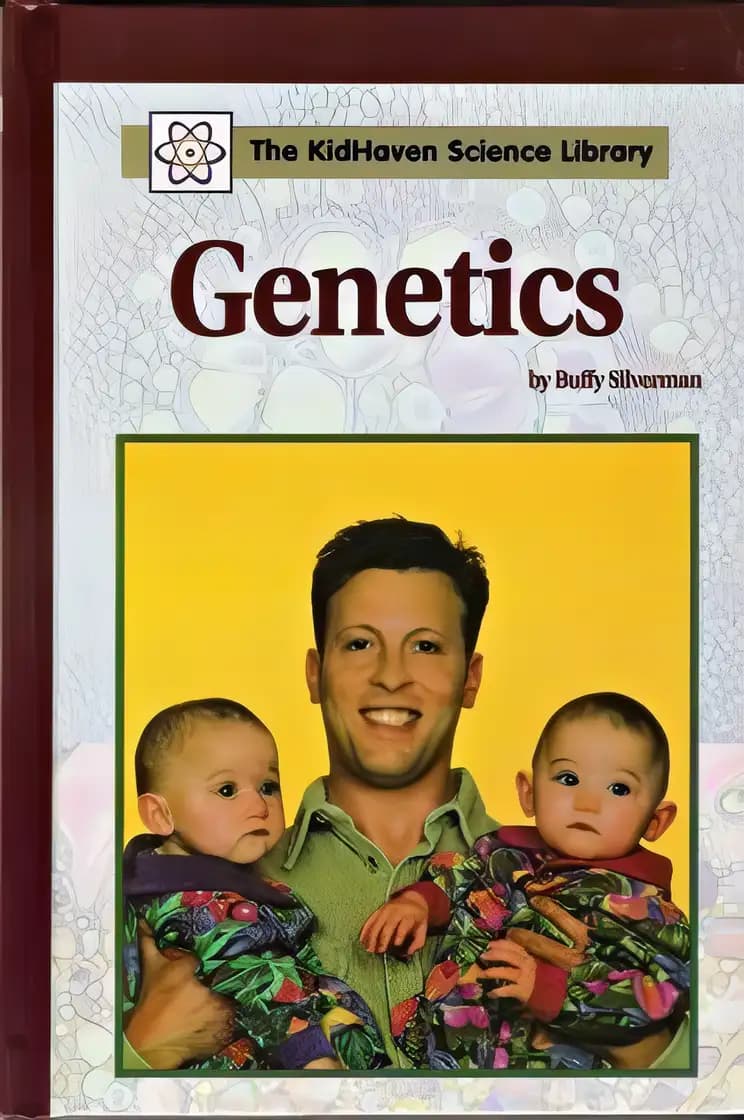
Genetics
Kidhaven science library Series
What’s inside...
Genetics explains how living things pass on characteristics from one generation to the next, covering topics from Gregor Mendel's study of pea plants, to the cloning of Dolly the sheep, and the use of DNA fingerprints in criminal investigations. It also discusses how mutations cause genetic diseases and the potential role of genes in curing diseases.
Series reading
Non-Sequential
Age
9-10
Length
48 pages
Text complexity
Discussion points
What are some traits that you've inherited from our family?
How do you think animals adapt to their environments?
Can you think of a way that genetics can help solve some of the problems in the world?
Why do you think it's important for scientists to study genetics?
Tip: Role play these questions
Before reading, briefly explain what genetics is and why it is essential in understanding living beings.
Use real-life examples of inherited traits, such as eye color or hair type, to make the content relatable.
Encourage your child to ask questions throughout the reading to enhance comprehension and retention.
After reading, connect the book’s themes with your child’s everyday observations or ongoing science lessons in school.
Key lessons
Example Lesson: Understanding Genetic Diversity
Explanation: The book explains how genetic variations lead to the diversity of traits in different organisms, using clear examples and engaging illustrations.
Real-World Application: Children learn to appreciate and respect differences among people, understanding that diversity is a natural and valuable aspect of human and animal life.
Example Lesson: Importance of Inheritance
Explanation: Through simple text, the book illustrates how traits are passed down from parents to offspring, helping children grasp the concept of inheritance.
Real-World Application: This helps children understand the connection between generations and can spark curiosity about their own family histories and traits.
Example Lesson: Role of Genetics in Health
Explanation: ‘Genetics’ touches on how certain diseases can be inherited and how modern medicine can help manage or prevent genetic disorders.
Real-World Application: Children learn the significance of medical history and the advancements in medical science, fostering a proactive attitude toward health and wellness.
Example Lesson: Science as a Tool for Problem Solving
Explanation: The book showcases how geneticists use their knowledge to solve real-world problems, such as improving crop resistance to pests.
Real-World Application: This can encourage children to consider careers in science and appreciate how scientific research impacts everyday life.
Example Lesson: Ethical Considerations in Genetics
Explanation: Discussions around the ethical implications of genetic modifications are introduced, promoting critical thinking.
Real-World Application: It provides a platform for children to think and question the moral implications of scientific advancements, promoting an early understanding of ethics in innovation.