
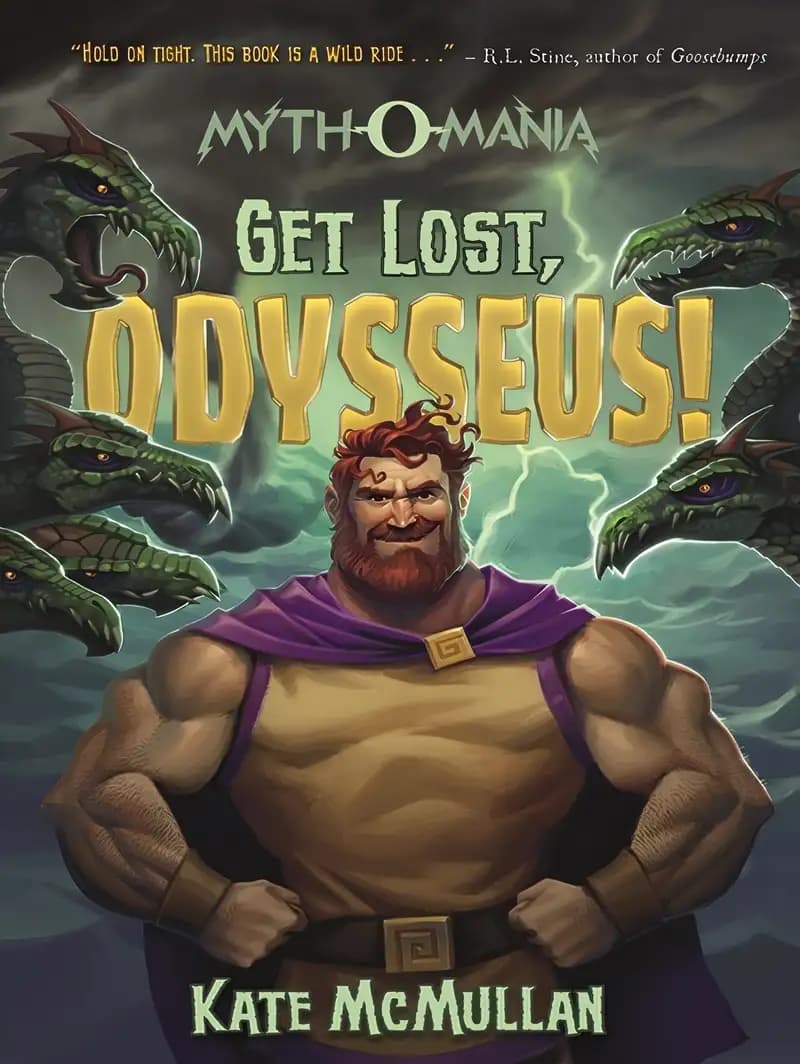
Get Lost, Odysseus! (Myth-O-Mania) (Myth-o-Mania, 10)
#10 of 10 in Myth-O-Mania Series
on Goodreads (526)
What’s inside...
The Trojan War is over, and Odysseus must make his way back to Ithaca. Poseidon, angered by Odysseus, vows to hinder his journey, but Hades, having a soft spot for the warrior, secretly plans to assist him. In 'Get Lost, Odysseus!', Kate McMullan retells the classic Greek story with humor and originality, illuminating lesser-known aspects of Odysseus's journey. You might think you know all about The Odyssey, but until you read Get Lost, Odysseus!, you don't know the truth. With Kate McMullan's trademark blend of humor and details from the original tale, Get Lost, Odysseus! tells the Greek classic in a brand-new way in this eBook. The Trojan War is over, but now Odysseus has to find his way home to Ithaca . . . and in typical fashion, he's angered Poseidon enough that the sea-god has decided to make his journey miserable (if not impossible). But Hades has a soft spot for the long-gone warrior, so even if he's sworn to Poseidon he won't help Odysseus directly, he might be able to pull a few strings.
Character compass
Hades
Odysseus
Athena
Discussion points
Why do you think Odysseus is determined to find his way back to Ithaca? What does home mean to you?
How do the various characters Odysseus meets affect his journey? Which character would you like to meet and why?
What lessons do you think Odysseus learns throughout his adventures? Have you ever learned something important from a mistake or challenge?
Odysseus faces many challenges. How does he use his wits to overcome them? Can you think of a time when you solved a problem creatively?
If you could change one part of Odysseus' journey, what would it be and why?
Tip: Role play these questions
Encourage your child to express what they find fascinating about the story and relate it to their own experiences.
Discuss the morals and decisions made by Odysseus and other characters, asking your child how they would have acted differently in similar situations.
Use the mythological elements of the story to ignite your child’s imagination, asking them to dream up their myth-inspired adventure.
Highlight Odysseus' qualities and flaws, encouraging your child to think about personal growth and values.
After reading, engage in a creative activity such as drawing a scene from the book or creating a map of Odysseus' journey.
Key lessons
Example Lesson: Perseverance through obstacles
Explanation: Odysseus faces numerous challenges and adversaries on his journey back home. His determination and resourcefulness in overcoming these hurdles illustrate the value of perseverance.
Real-World Application: Children can apply this lesson by persisting in solving difficult tasks at school or in personal projects, understanding that obstacles are a part of any journey.
Example Lesson: The importance of cleverness and wisdom
Explanation: Odysseus often uses his wits to navigate tricky situations, showing that brains can be as important as brawn.
Real-World Application: This encourages children to think critically and value intelligence in solving problems, whether in academic settings or interpersonal relationships.
Example Lesson: Consequences of pride
Explanation: Throughout the story, Odysseus’ excessive pride leads him into trouble, teaching readers about the pitfalls of hubris.
Real-World Application: Kids learn to recognize the importance of humility, and how boasting or underestimating others can lead to negative outcomes in their own lives.
Example Lesson: Value of teamwork
Explanation: Odysseus relies on his crew numerous times, proving that many tasks are easier when accomplished together.
Real-World Application: It highlights for children the importance of collaborating with others, sharing responsibilities, and respecting different opinions and skills in group assignments or team sports.