
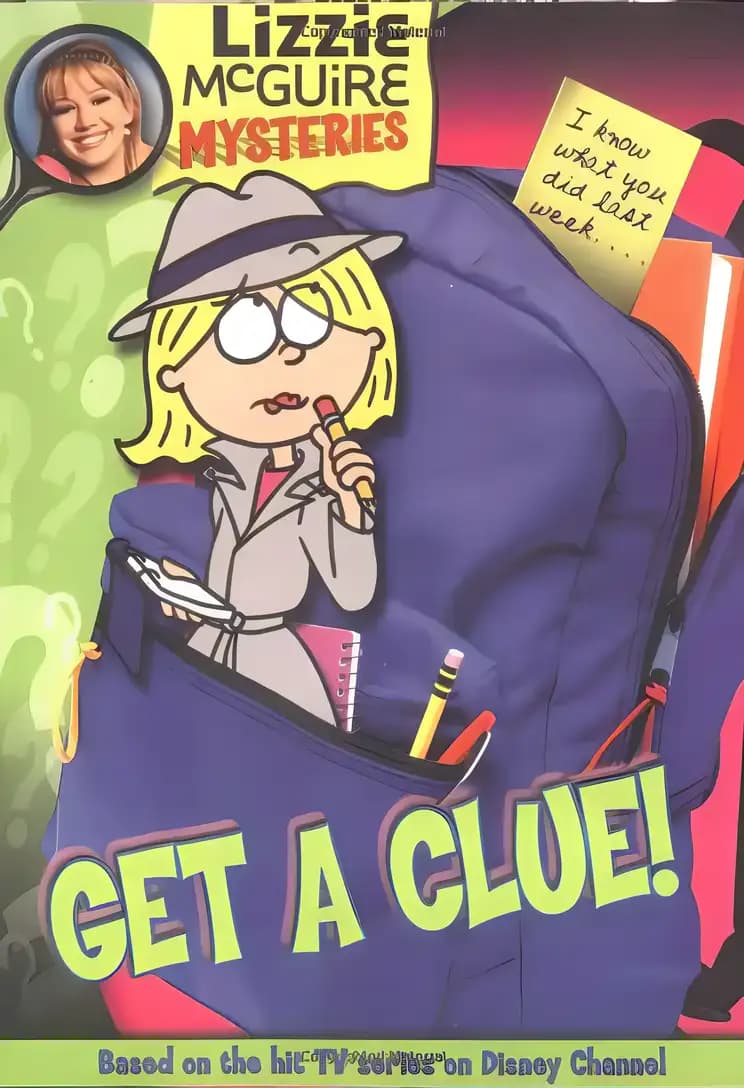
Get a Clue! (Lizzy Mcguire)
#1 of 5 in Lizzie McGuire Mysteries Series
on Goodreads (204)
What’s inside...
In the midst of an assignment to write their own mysteries, Lizzie and her friends are faced with a real-life mystery when a series of annoying and threatening notes appear around school, seemingly written by Lizzie herself. As the notes, bearing messages like 'I Know What You Did Last Week,' continue to surface in lockers, notebooks, and knapsacks, students grow increasingly annoyed. Determined to clear her name and find the true culprit, Lizzie embarks on a mission to track down the guilty party before she's alienated from her peers and exiled to Loser-ville forever.
Character compass
Lizzie Mcguire
David "Gordo" Gordon
Miranda Sanchez
Kate Sanders
Discussion points
What do you think Lizzy learned about friendship in this story?
How would you solve the mystery if you were in Lizzy’s shoes?
Why do you think it’s important to work together when solving a problem?
How do you feel about how Lizzy handled the challenges she faced?
What lessons can we take from Lizzy’s adventures to apply in our own lives?
Tip: Role play these questions
Encourage your child to place themselves in Lizzy’s situation, enhancing empathy and problem-solving skills. Use the questions to guide a conversation that connects the story to your child’s experiences and feelings. Highlight the importance of cooperation and friendship as key themes. Lastly, emphasize the fun and thrill of unraveling mysteries together, making the reading experience both educational and enjoyable.
Key lessons
Example Lesson: The importance of honesty
Explanation: In 'Get a Clue!', Lizzy McGuire learns that being honest with her friends and family builds trust and strengthens relationships.
Real-World Application: Children can apply this lesson by being truthful in their interactions, thus fostering trust and creating stronger bonds with peers and family members.
Example Lesson: The value of teamwork
Explanation: Throughout the book, Lizzy and her friends solve mysteries by working together, demonstrating how teamwork can lead to success.
Real-World Application: Kids can use this lesson to collaborate with others in school projects or in sports, appreciating that collective efforts often yield better results.
Example Lesson: Problem-solving skills
Explanation: Lizzy tackles various challenges and obstacles in the story, showing how creative thinking and determination can help solve problems.
Real-World Application: Children can embrace problem-solving in their daily life, whether in resolving conflicts with friends or overcoming hurdles in their academic work.
Example Lesson: Responsibility
Explanation: Lizzy takes responsibility for her actions in the story, learning from her mistakes which leads to personal growth and maturity.
Real-World Application: This lesson encourages children to accept responsibility for their actions and learn from the outcomes, aiding their development into accountable individuals.
Example Lesson: Empathy
Explanation: Lizzy shows empathy towards her friends' feelings and situations, understanding different perspectives and offering support.
Real-World Application: Children can practice empathy by considering the feelings of others and showing kindness, which helps in building meaningful relationships and a compassionate community.