
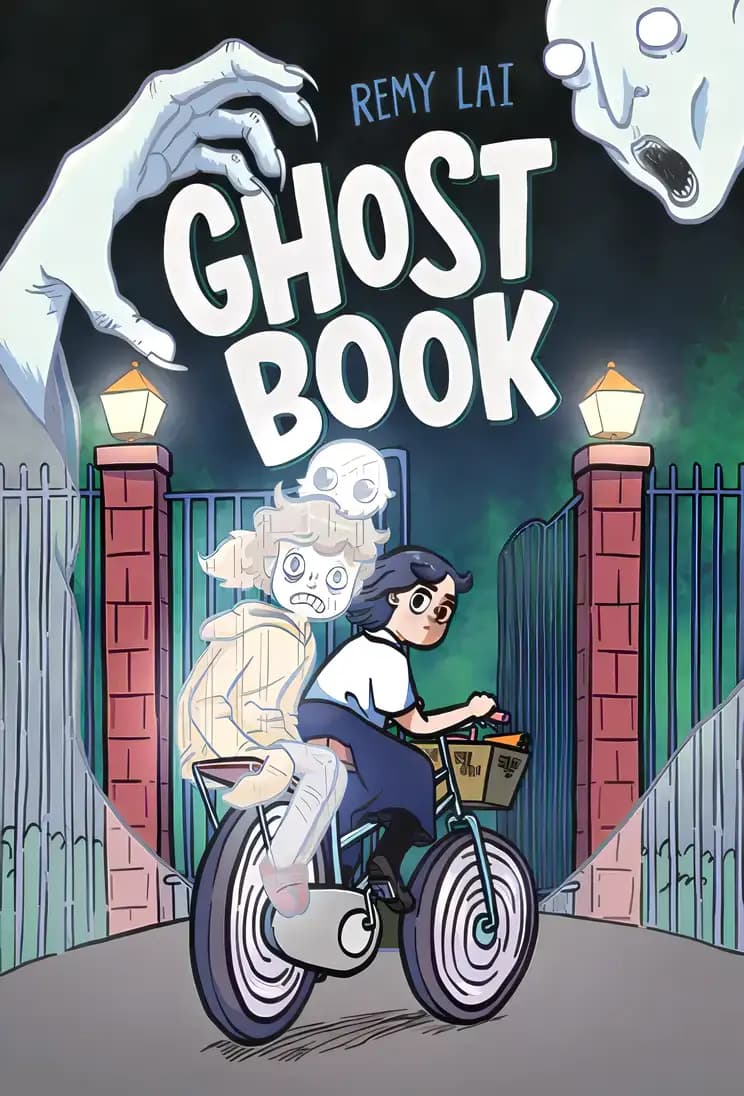
Ghost Book
on Goodreads (1,994)
What’s inside...
Perfect for fans of Spirited Away, Coco, and Ghosts, this contemporary fantasy graphic novel follows July Chen, a girl who sees ghosts and befriends William, a boy stuck between life and death. Set during Hungry Ghost month, when dangerous ghosts roam free, July and William embark on an adventure to return him to his body, uncovering a dark truth―for William to live, July must die. Inspired by Chinese mythology, this tale of friendship, sacrifice, and the unseen world is both dark and hopeful, and has been praised as a unique, spellbinding adventure full of heart.
Age
8-12
Length
320 pages
Text complexity
Character compass
July Chen
Mr. Boo
William
Grand Auntie
Discussion points
What did you feel about the relationship between the characters and the ghost?
How do you think the ghost’s presence changes the story?
What would you do if you were in the main character's shoes and met a ghost?
Why do you think the ghost is in the story? What does it represent?
How did the characters' reactions to the ghost change throughout the book?
Tip: Role play these questions
Encourage your child to express their feelings about the story and its characters, fostering emotional intelligence.
Discuss the concept of friendship and otherness as portrayed in the book, prompting your child to think about inclusivity and empathy.
Use the ghost as a metaphor to explore themes of fear, mystery, and curiosity, and relate them to real-life situations your child might face.
Promote critical thinking by asking your child to guess the next plot twists or alternate endings involving the ghost and other characters.
Highlight the character development throughout the book to help your child understand growth, change, and resolutions.
Key lessons
Example Lesson: Empathy and Understanding
Explanation: In 'Ghost Book', the characters learn to understand and empathize with the feelings of others, even when they are different from their own experiences. This is demonstrated through their interactions and the resolutions of conflicts within the story.
Real-World Application: Children can apply this lesson by recognizing and respecting the feelings and perspectives of their peers and family members, fostering a more inclusive and supportive environment.
Example Lesson: Courage and Resilience
Explanation: The story showcases characters facing fears and overcoming obstacles, teaching children the importance of bravery and perseverance in difficult situations.
Real-World Application: This lesson can encourage children to face their own challenges, such as trying new activities or standing up for what is right, with confidence and determination.
Example Lesson: Importance of Friendship
Explanation: The book highlights the value of having friends and working together, which is portrayed through the characters' collaborative efforts to solve a mystery.
Real-World Application: This encourages children to value their friendships, collaborate with others, and understand the strength in teamwork.
Example Lesson: Problem-Solving Skills
Explanation: Through the characters' quest, children learn about problem-solving and critical thinking as the characters analyze clues and make decisions.
Real-World Application: Children can use similar approaches in their academic challenges and personal conflicts, enhancing their decision-making and analytical thinking skills.
Example Lesson: Acceptance of Loss
Explanation: The narrative gently introduces themes of loss and the process of grief, portrayed through the characters' experiences with the 'ghosts' in the story.
Real-World Application: This can help children understand and cope with loss in real life, providing them with a basic framework to process their emotions in times of grief.