
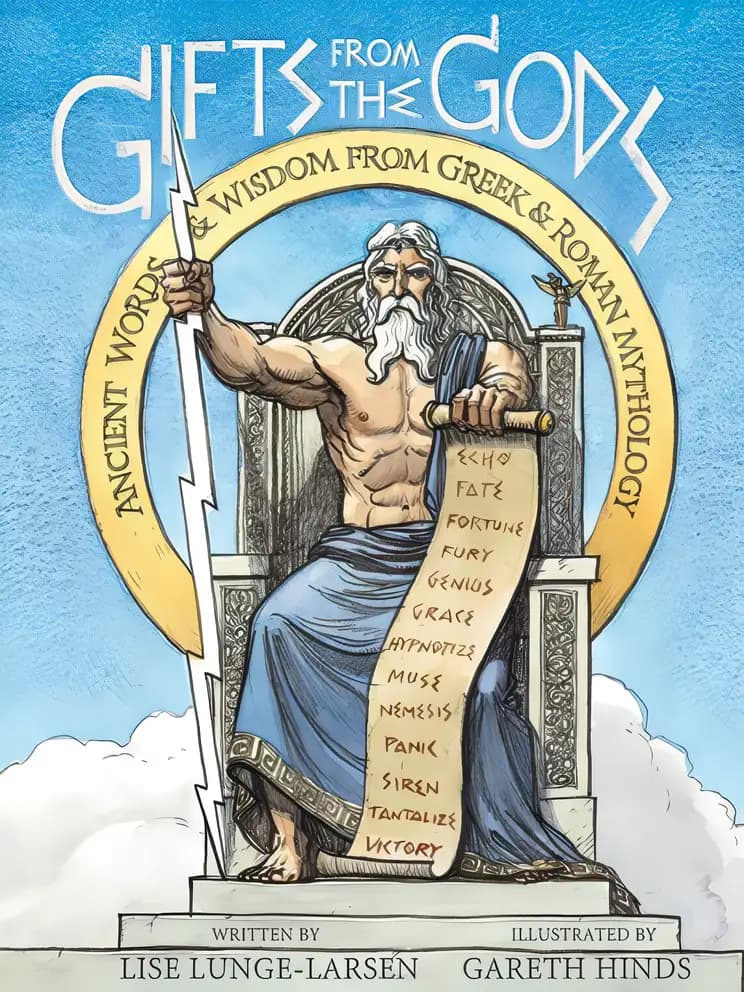
Gifts from the Gods: Ancient Words and Wisdom from Greek and Roman Mythology
What’s inside...
Did you know that museums were initially temples built to worship the nine muses? That Janus was the god of doorways and hallways, and after him we have named janitors? Where did these words-and other words, such as chaos, genius, nemesis, panic, and echo, come from? From the ancient stories of the Greeks-stories that rang so true and wise that the names of the characters have survived for centuries as words we use every day. This rich collection of myths is perfect for the classroom or as a gift book.
Age
10-12
Length
96 pages
Text complexity
Discussion points
What traits do you admire in your favorite character from the myths, and why?
How might you use the wisdom from these myths to handle a challenge in your own life?
If you could have a conversation with one of the gods, what would you ask them and what do you think they would say?
Can you think of any modern situations where the ancient lessons from the myths could be applied?
How do the characters and stories in this book differ from other myths or stories you know?
Tip: Role play these questions
Relate the stories to daily life situations for your child, making the myths relevant by drawing parallels to help them see the connection and applicability.
Ask your child to imagine and describe what life might have been like during ancient Greek or Roman times, helping them get into the mindset of the characters.
Encourage your child to express which moral lessons from the myths resonate with them and why. It aids in deeper understanding and personal connection.
Discuss the consequences characters face for their actions in the stories, prompting your child to think about cause and effect in a broader context.
Key lessons
Example Lesson: Understanding the origin of words
Explanation: This book explores the roots of various English words tied to Greek and Roman gods, providing an educational journey through language and mythology.
Real-World Application: Kids learn to appreciate the depth of language and improve their vocabulary, which can enhance their communication skills and academic performance.
Example Lesson: Learning the value of resilience
Explanation: Mythological stories often depict gods and heroes overcoming great obstacles, showcasing the importance of resilience.
Real-World Application: Children can apply this understanding by developing a resilient mindset in confronting their own challenges in school or social situations.
Example Lesson: Importance of morality and ethics
Explanation: Many myths include moral lessons about the consequences of good and bad behavior, emphasizing ethical decision-making.
Real-World Application: This can help children in discriminating between right and wrong and making wise decisions during everyday interactions and dilemmas.
Example Lesson: Understanding human emotions
Explanation: The book depicts various emotions through the stories of gods and mortals, helping children understand and label their own feelings.
Real-World Application: Enhances emotional intelligence, aiding children in managing emotions effectively and empathizing with others.
Example Lesson: Inspiring creativity and imagination
Explanation: The mythical stories filled with fantastical elements encourage children to think creatively and imagine worlds beyond their own.
Real-World Application: Promotes creative thinking and problem-solving skills that are essential in academic and personal growth.