
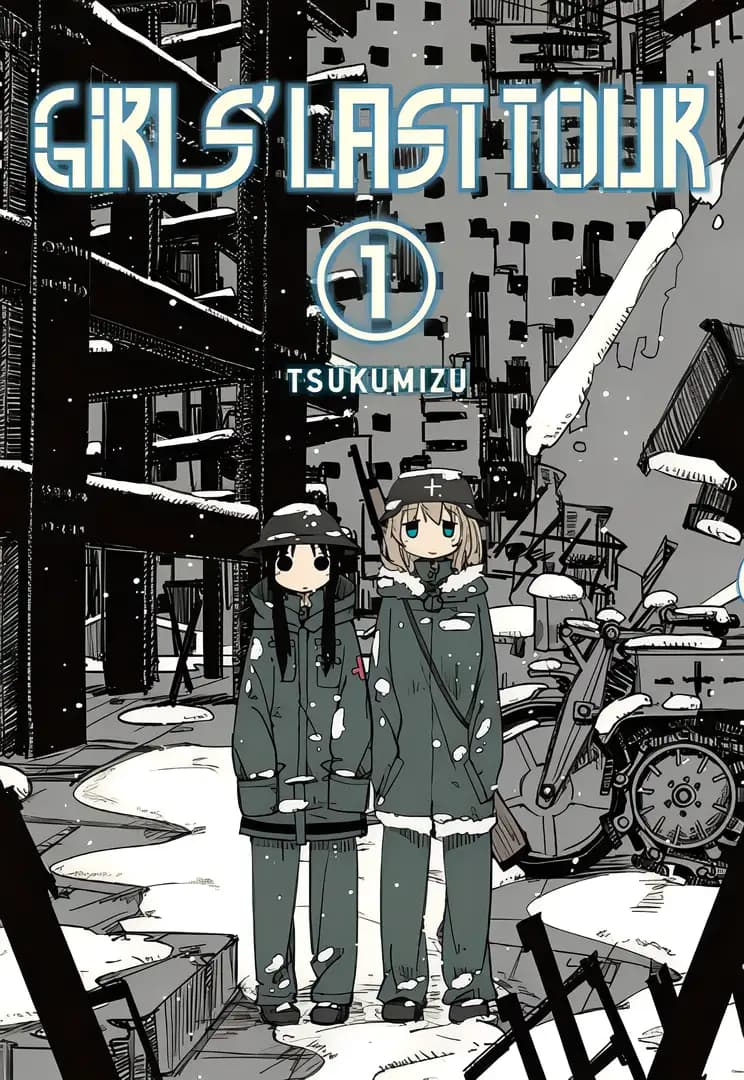
Girls' Last Tour, Vol. 1 (Girls' Last Tour, 1)
#1 in 少女終末旅行 / Girls' Last Tour Series
on Goodreads (1,849)
What’s inside...
Civilization is dead, but not Chito and Yuuri. Time to hop aboard their beloved Kettenkrad motorbike and wander what's left of the world! Sharing a can of soup or scouting for spare parts might not be the experience they were hoping for, but all in all, life isn't too bad...
Character compass
Chito
Yuuri
Discussion points
How do you think Chito and Yuuri support each other in their journey, and why is their friendship important?
What do you think the world in 'Girls' Last Tour' teaches us about hope and perseverance?
How would you adapt if you were in Chito and Yuuri's situation? What essentials would you bring on a journey?
What emotions did you feel while reading about their adventures and discoveries? Did anything in the story surprise you?
How do the themes of exploration and survival in the book connect to our everyday life?
Tip: Role play these questions
Encourage your child to express their thoughts and feelings about the journey and struggles of Chito and Yuuri. Use the characters' experiences as a way to discuss the importance of teamwork and friendship. Make connections to real-life scenarios to help them relate to the themes of survival and hope. Be open to listening to their perspectives, and share your insights to guide the conversation towards meaningful reflections on the book’s themes.
Key lessons
Example Lesson: Resilience in adversity
Explanation: The story showcases two characters, Chito and Yuuri, navigating a post-apocalyptic world with optimism and courage.
Real-World Application: Children can learn to face challenges with a positive attitude and find joy in small things, even in difficult situations.
Example Lesson: Value of companionship
Explanation: Throughout their journey, Chito and Yuuri support and depend on each other, emphasizing the importance of friendship and companionship.
Real-World Application: Children learn the importance of building strong, supportive relationships and how working together can help overcome obstacles.
Example Lesson: Innovation and problem-solving
Explanation: The characters frequently use their ingenuity and resourcefulness to navigate the challenges of their environment.
Real-World Application: This encourages children to think creatively and develop problem-solving skills that are applicable in their daily lives, from school projects to personal challenges.
Example Lesson: Appreciation of the past
Explanation: As they explore remnants of the past civilization, the characters learn and reflect on history, showing an appreciation for what has come before them.
Real-World Application: Children are encouraged to be curious about history and learn from it, understanding how past events shape the present and future.