
Gloom Town
on Goodreads (491)
What’s inside...
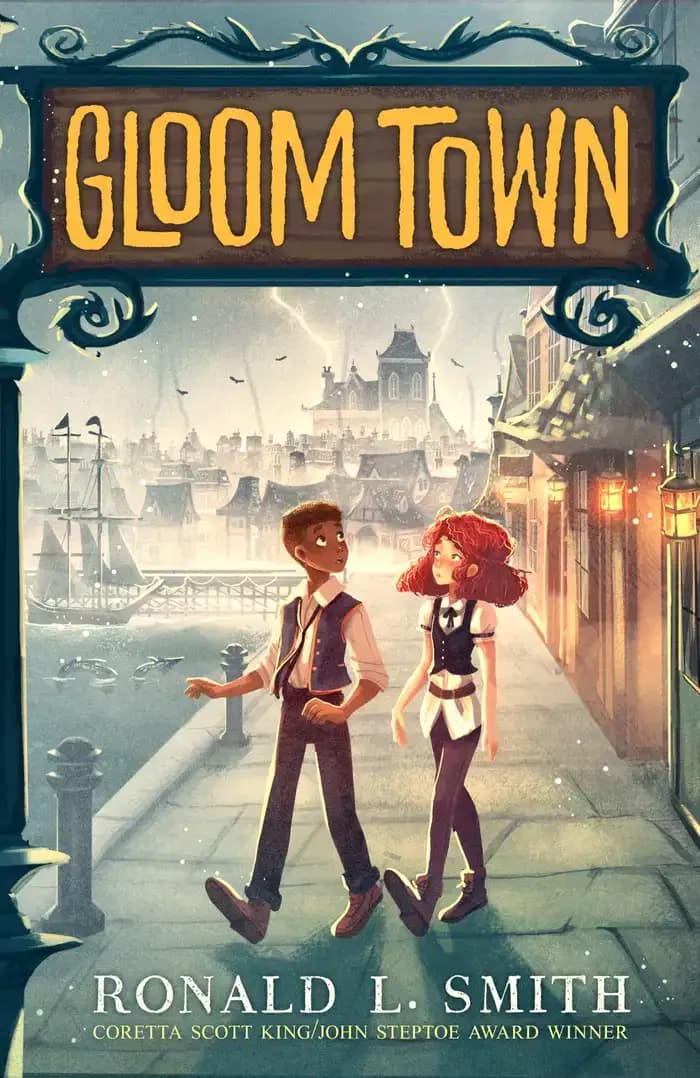
A delightfully creepy novel from a Coretta Scott King/John Steptoe New Talent Award winner imbued with magic and seafaring mythology. Lemony Snicket and Jessica Townsend meet Greenglass House, with a hint of Edward Gorey thrown in. When twelve-year-old Rory applies for a job at a spooky old mansion in his gloomy seaside town, he finds the owner, Lord Foxglove, odd and unpleasant. But he and his mom need the money, so he takes the job anyway. Rory soon finds out that his new boss is not just strange, he’s not even human—and he’s trying to steal the townspeople’s shadows. Together, Rory and his friend Isabella set out to uncover exactly what Foxglove and his otherworldly accomplices are planning and devise a strategy to defeat them. But can two kids defeat a group of ancient evil beings who are determined to take over the world?
Age
8-12
Length
304 pages
Text complexity
Character compass
Rory
Isabella
Lord Foxglove
Discussion points
What do you think makes Gloom Town a unique place? How would you feel if you lived there?
Rory, the main character, shows a lot of courage throughout the story. Can you think of a time when you had to be brave?
How do the themes of friendship and loyalty appear in the book? Why are these important in Rory's adventure?
The book mixes fantasy and reality. What are some parts that felt very real to you, and what parts felt more like fantasy?
If you could give Rory one piece of advice, what would it be?
Tip: Role play these questions
While discussing, relate the themes of the book to your child’s daily experiences to make connections more tangible.
Encourage your child to imagine alternative scenarios within the story, enhancing their creativity and depth of thought.
Discuss the characters' different choices and their consequences, guiding your child to consider different perspectives.
Celebrate your child’s responses to foster a positive reading environment, making them feel confident about expressing their thoughts.
Key lessons
Example Lesson: Courage in the face of adversity
Explanation: In 'Gloom Town', the protagonist, Rory, confronts a series of challenges in a spooky, supernatural environment. Despite feeling fear, Rory bravely tackles these obstacles to protect his loved ones.
Real-World Application: Children learn the importance of facing their fears and standing up in difficult situations, whether it's standing up for a friend or tackling a personal challenge.
Example Lesson: Importance of family and friendship
Explanation: Throughout 'Gloom Town', Rory’s motivation is often fueled by his desire to keep his family and friends safe. The strong bonds he shares with his mother and friends are highlighted as a source of strength.
Real-World Application: This theme teaches children the value of maintaining close relationships with family and friends, and how these relationships can provide support in tough times.
Example Lesson: Resourcefulness and problem-solving
Explanation: Rory often uses his ingenuity and resources available to him to navigate through the mysteries of Gloom Town. His ability to think on his feet is a key factor in resolving conflicts.
Real-World Application: Children learn to use their imagination and creativity to solve problems, and understand that sometimes unconventional solutions are needed to overcome obstacles.
Example Lesson: Understanding the consequences of choices
Explanation: As Rory makes various decisions throughout the narrative, the repercussions of these choices, good or bad, are made evident.
Real-World Application: This lesson can help children understand that their actions have consequences, guiding them to make thoughtful decisions in their lives.
Example Lesson: Empathy and compassion
Explanation: Rory’s interactions in Gloom Town often display his empathy towards others' predicaments, even when dealing with supernatural beings.
Real-World Application: By observing Rory's actions, children can learn the importance of being empathetic and compassionate towards others, regardless of their circumstances or differences.