
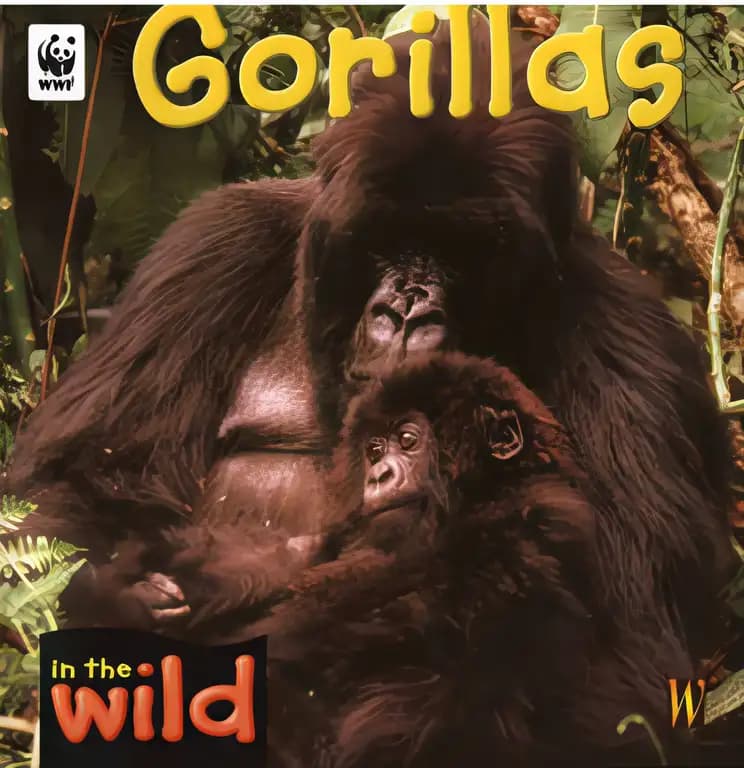
Gorillas
In the wild Series
on Goodreads (1)
What’s inside...
Photographs and simple text introduce the behavior and habitat of gorillas, and a list of resources provides organizations, books, and websites which deal with helping to protect them.
Series reading
Non-Sequential
Age
4-9
Length
32 pages
Text complexity
Discussion points
What did you find most interesting about the gorillas' behavior in the book?
How do you think the gorillas feel when their habitat is threatened?
What are some ways we can help protect gorillas in the wild?
Can you think of any similarities between gorillas and humans?
If you were a gorilla, what would you like to do every day?
Tip: Role play these questions
Start the conversation by sharing your own thoughts about the book to make your child feel comfortable expressing their opinions. Use the illustrations in the book to point out details and ask your child to imagine being part of the scene. Validate their responses and emotions to encourage deeper thinking and connection to the book's themes. Introduce related topics like wildlife conservation to broaden the context and learning experience.
Key lessons
Example Lesson: Empathy towards animals
Explanation: The book describes the daily life and challenges of gorillas in their natural habitat, which helps children understand and empathize with animals.
Real-World Application: Children can apply this lesson by showing kindness and respect towards animals they encounter in their everyday surroundings.
Example Lesson: Importance of conservation
Explanation: Gorillas are depicted as an endangered species in the book, highlighting the need for wildlife conservation efforts.
Real-World Application: This lesson encourages children to participate in or support environmental activities that foster wildlife protection, such as recycling or supporting local zoos.
Example Lesson: Diversity and uniqueness of species
Explanation: The book provides detailed insights into the unique behaviors and characteristics of gorillas compared to other animals.
Real-World Application: Children learn to appreciate and celebrate differences not only among animals but also among people, promoting inclusivity.
Example Lesson: Role of community
Explanation: The story illustrates how gorillas live in closely-knit family groups, emphasizing the importance of community and teamwork.
Real-World Application: This teaches children the value of cooperation and being supportive within their own families and social groups.
Example Lesson: Scientific curiosity
Explanation: Through engaging facts and figures about gorillas, the book fosters a curiosity about biology and the natural world.
Real-World Application: Children are encouraged to explore more about the world through science classes or educational programs that focus on zoology and ecology.