
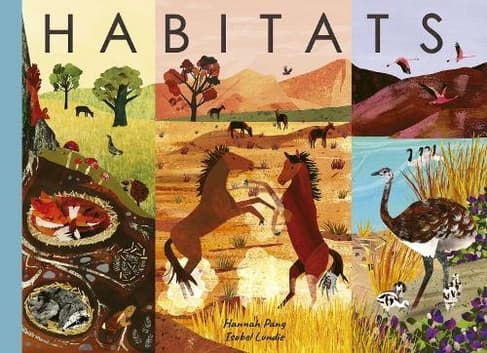
Habitats
#3 in Exploring Earth Series
illustrations by
What’s inside...
Explore the diverse and fascinating habitats of the world, from the lush rainforests to the arid deserts, and discover the unique wildlife that calls these places home.
Discussion points
What type of animals live in each habitat shown in the book, and why do you think they live there?
How do the various elements in a habitat work together to support the animals and plants?
What might happen if one part of a habitat is damaged or disappears?
How can we help protect different habitats around the world?
If you could create your own habitat, what would it look like and what creatures would live there?
Tip: Role play these questions
Encourage your child to compare and contrast the different habitats depicted in the book, which will enhance their analytical skills.
Use the illustrations in the book to spark discussions about the unique features of each habitat and the importance of biodiversity.
Discuss the environmental challenges that habitats face and brainstorm together ways to help preserve them, fostering a sense of responsibility and awareness.
Link the topics to your child's everyday life, such as discussing local habitats they are familiar with or animals they have seen, to make the concepts more relatable.
Inspire creativity by asking your child to draw their ideal habitat or compose a short story about living in one of the habitats from the book.
Key lessons
Example Lesson: Respect for nature
Explanation: The book 'Habitats' takes children on an exploratory journey through various natural environments, showcasing the delicate balance and beauty of each setting.
Real-World Application: Children learn to appreciate and care for their natural surroundings, encouraging environmentally friendly actions, like recycling and conserving water.
Example Lesson: Biodiversity importance
Explanation: Through vivid descriptions and illustrations, 'Habitats' highlights the varied species living in each environment, emphasizing their roles in ecosystem health.
Real-World Application: Kids understand the value of every creature and can participate in activities such as planting native plants and creating habitats for local wildlife.
Example Lesson: Interdependence of species
Explanation: The story illustrates how different species depend on each other and their environment to survive, portraying the interconnectedness of life.
Real-World Application: This lesson helps children grasp community importance, fostering cooperation and empathy in group activities and social interactions.
Example Lesson: Conservation and preservation
Explanation: The narrative encourages protecting and preserving habitats through the actions of its characters, who advocate for conservation efforts.
Real-World Application: Inspired by the book, children can be motivated to engage in or initiate conservation programs at school or in their communities.