
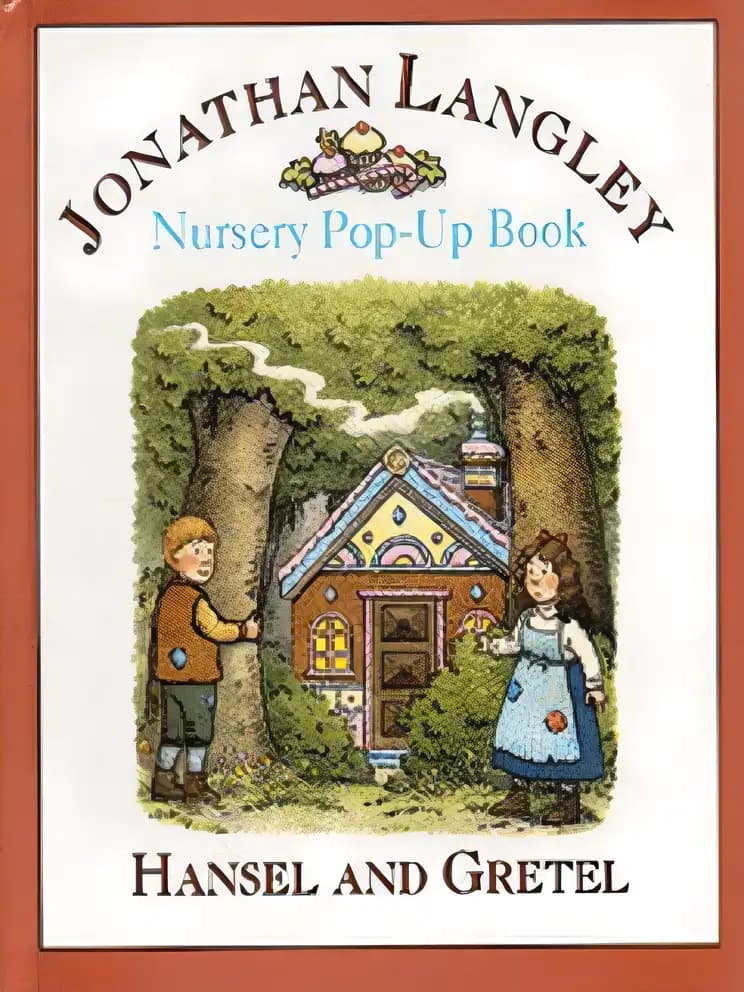
Hansel and Gretel: Nursery Pop-up Book (Collins Baby & Toddler)
Collins Baby & Toddler Series
What’s inside...
Once upon a time there was a poor woodcutter who lived near a great forest with his wife and his two children. The little boy was called Hansel, and the little girl's name was Gretel. So begins this classic Grimm tale of two innocent children, abandoned in the forest by their cruel mother, who happen upon the enchanting gingerbread house of a wicked witch. Hansel's cunning and little Gretel's courage foil the witch's evil plan to fatten them up and eat them, and in the best fairy tale tradition, they and their loving father live happily ever after. This old German fairy tale was collected by the German Brothers Grimm and published in 1812 in Grimm's Fairy Tales. It is also known as Hansel and Grettel, or Little Step Brother and Little Step Sister. Since its publication, it has become a classic and beloved tale to millions of avid readers.
Series reading
Non-Sequential
Age
4-8
Length
5 pages
Text complexity
Character compass
Hansel
The Father
Gretel
The Witch
Stepmother
Discussion points
How do you think Hansel and Gretel felt when they were lost in the forest?
What would you do if you found a house made of candy?
Why is it important to be cautious and think carefully before making decisions?
How did Hansel and Gretel work together to solve their problems?
What did you learn from the story about helping and supporting each other?
Tip: Role play these questions
Encourage your child to express their feelings about the characters' decisions and actions.
Discuss the concept of being resourceful and ask your child for examples of when they needed to use their wits.
Use the story to have a broader conversation about stranger danger and the importance of staying safe.
Highlight the themes of teamwork and resilience. Ask your child about times they have had to work with others to overcome challenges.
After reading, encourage your child to draw their favorite scene from the book, helping them visualize and internalize the story.
Key lessons
Example Lesson: The importance of resourcefulness
Explanation: Hansel and Gretel demonstrate resourcefulness by using breadcrumbs to mark their path and finding creative ways to escape the witch.
Real-World Application: Children can learn to think creatively and solve problems they encounter in everyday situations.
Example Lesson: Beware of strangers
Explanation: The story teaches caution through the character of the witch, who appears friendly but has ulterior motives.
Real-World Application: This can remind children to be cautious and seek guidance from trusted adults when dealing with unfamiliar individuals.
Example Lesson: The value of teamwork
Explanation: Hansel and Gretel's success in overcoming obstacles highlights the effectiveness of working together.
Real-World Application: Children can learn the importance of cooperation and teamwork in achieving common goals, whether in sports, school projects, or family activities.
Example Lesson: Importance of critical thinking
Explanation: The siblings’ ability to think critically allows them to escape danger.
Real-World Application: This encourages children to evaluate situations thoughtfully and make smart decisions in their daily interactions and challenges.