
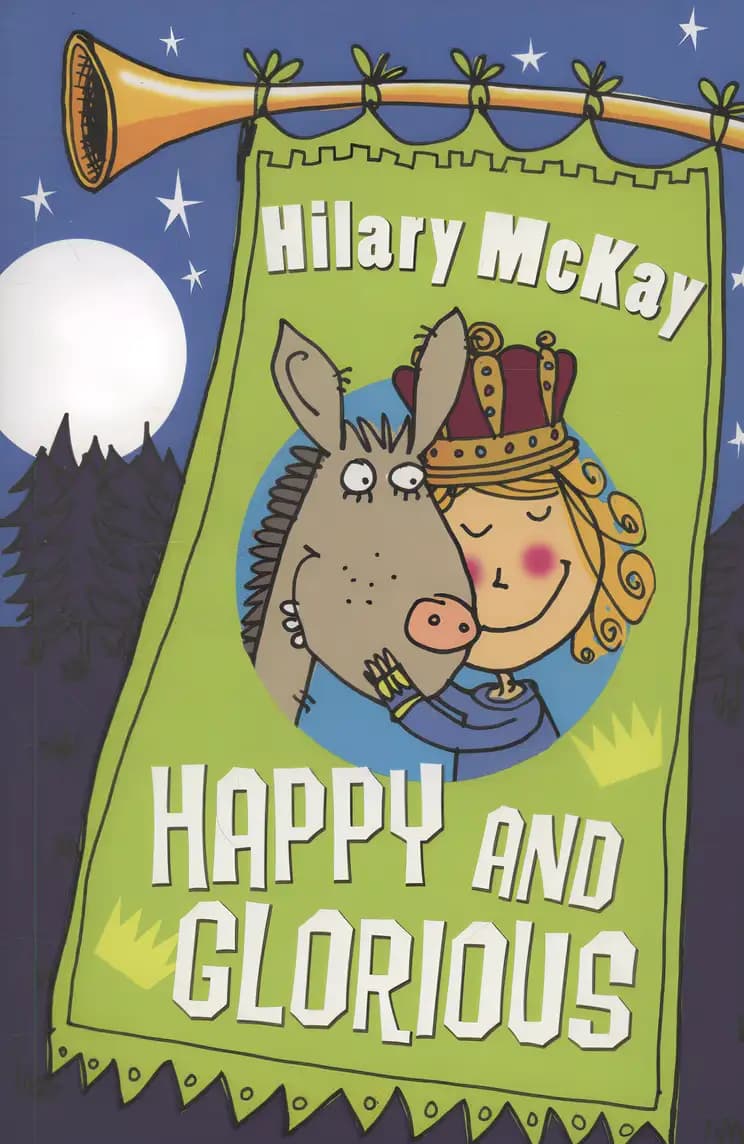
Happy and Glorious
#1 in The Queen Series
on Goodreads (11)
What’s inside...
Queens have two birthdays, one on their actual birth date and another on a more convenient date. The latter is considered more significant. However, on her unofficial birthday, a Queen feels unhappy as no one, including the Prime Minister, the Treasurer, or her Ladies-in-Waiting, has given her a present. Despite her modest wish for a small, inexpensive gift that may be hard to wrap due to its four legs and a tail, she remains empty-handed.
Discussion points
What do you think made the main character feel happy?
How did the characters show kindness to each other?
Can you think of a time when you felt the same way as any of the characters?
What would you have done differently if you were in the story?
How do you think the story would change if it happened in our town?
Tip: Role play these questions
Allow your child to express their thoughts and feelings about the story without interruption, showing genuine interest in their ideas.
Relate the characters' experiences to your child’s own life to deepen their connection with the story.
Ask follow-up questions based on your child’s responses to encourage critical thinking and detailed conversation.
Praise your child for their insights and encourage them to think creatively about different scenarios in the story.
Discuss the moral of the story and its applicability to everyday life, enhancing their understanding of right and wrong.
Key lessons
Example Lesson: Importance of family support
Explanation: In 'Happy and Glorious,' the close-knit relationships within the family play a significant role, as family members support and uplift each other during challenges.
Real-World Application: Children can learn to value and rely on their family members during tough times, understanding that a supportive family provides a strong foundation in life.
Example Lesson: Embracing individuality
Explanation: The main characters' unique personalities and talents are celebrated, teaching children that differences make us special and valuable.
Real-World Application: Children can be encouraged to express their true selves and appreciate the uniqueness of others, fostering a diverse and inclusive environment.
Example Lesson: Resilience in the face of adversity
Explanation: The characters encounter various obstacles but demonstrate resilience and determination to overcome them, illustrating the power of perseverance.
Real-World Application: Kids can learn to face their own challenges with grit and persistence, understanding that setbacks can be stepping stones to success.
Example Lesson: Importance of communication
Explanation: Characters in the book often resolve conflicts by talking openly about their feelings and thoughts, highlighting the effectiveness of clear communication.
Real-World Application: This can teach children to express themselves and discuss issues openly, leading to better understanding and resolution of conflicts in real life.
Example Lesson: Empathy and compassion
Explanation: Throughout the book, the characters show empathy by understanding and sharing feelings of others, emphasizing the importance of caring and kindness.
Real-World Application: Children are encouraged to be empathetic towards their peers, which can enhance their social interactions and build strong, positive relationships.