
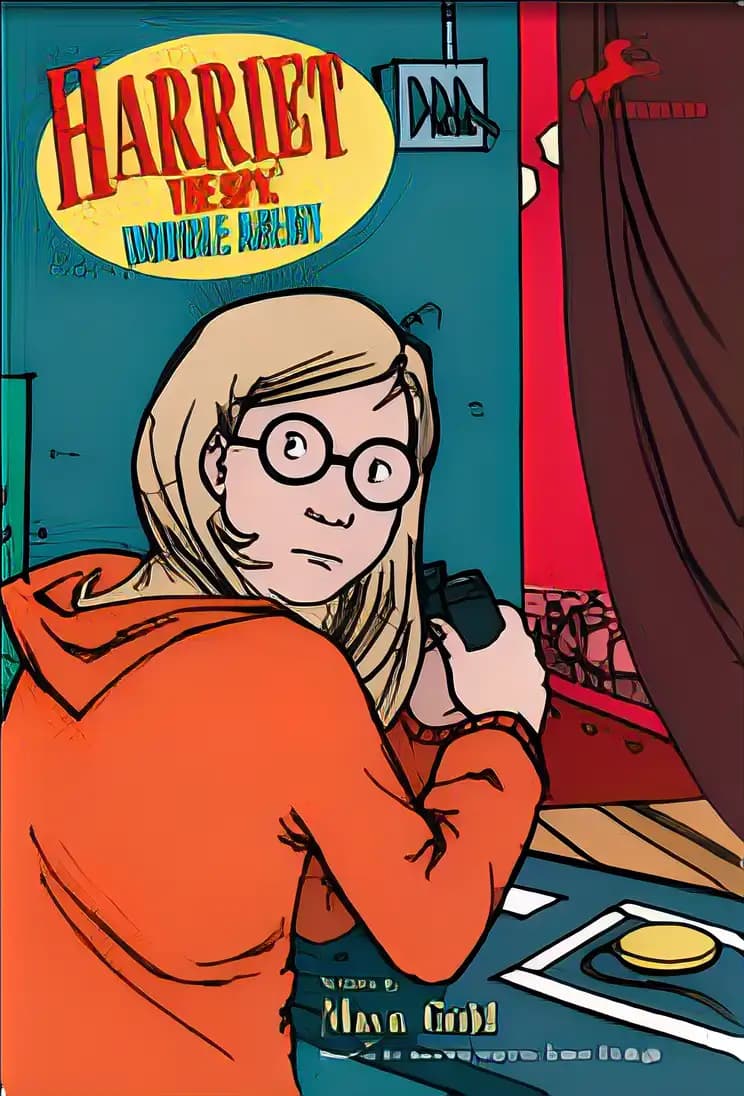
Harriet the Spy, Double Agent (Harriet the Spy Adventures (Dell Yearling Book))
#2 of 4 in Harriet the Spy Adventure Series
on Goodreads (286)
What’s inside...
Harriet is impressed to learn that the girl she has befriended, now called Annie Smith, is the person who not only created three names–Rosarita Sauvage, Yolanda Montezuma, and Zoe Carpaccio–but also three distinct personalities to match. This girl has potential. Being a spy has always been rather solitary, so Harriet is glad to have a new friend and spy partner. However, Harriet soon realizes that Annie reveals very little about herself, and indeed, is not telling the truth about her activities and whereabouts on the weekend. Sport confesses his love for Annie, but she admits she's in love with an older man. Harriet can't grasp the concept of love, even when she seeks advice from Ole Golly. As Harriet untangles Annie’s enigmatic behavior, she learns to appreciate the various kinds of love.
Character compass
Harriet M. Welsch
Discussion points
How do you think Harriet felt when she had to juggle her loyalties between two friends? What would you do in her position?
What qualities make someone a good friend or a good spy? Can you be both at the same time?
Harriet often observes others to learn about them. What did she discover about the people around her, and what did you learn from those observations?
How does Harriet handle challenges and conflicts throughout the book? Do you think she handled them well?
Can keeping secrets be harmful, or are there situations where it might be necessary? What would you do if you were Harriet?
Tip: Role play these questions
Encourage your child to think critically about character motivations, comparing their actions to personal values and experiences.
Prompt your child to consider different perspectives by asking how they would feel in a character's situation.
Discuss the ethical dilemmas presented in the book, guiding your child to articulate and reason through their own beliefs about loyalty and honesty.
Use characters' actions as a springboard for discussing real-life scenarios your child might encounter, enhancing their problem-solving skills.
Key lessons
Example Lesson: The importance of trust and honesty
Explanation: In the book, Harriet learns that being honest with her friends and others is crucial to maintaining trust. When she fails to be truthful, she faces consequences that affect her relationships.
Real-World Application: Children can apply this lesson by understanding the value of being trustworthy and honest in their interactions with friends and family to build strong, reliable relationships.
Example Lesson: The power of curiosity and critical thinking
Explanation: Harriet's adventures as a spy encourage her to question her surroundings and think critically about the information she gathers.
Real-World Application: This lesson teaches children to be inquisitive and thoughtful about the world around them, enhancing their problem-solving skills and intellectual growth.
Example Lesson: The impact of our actions on others
Explanation: Throughout the book, Harriet's actions as a spy sometimes negatively affect those around her. She learns to consider the consequences of her actions on her friends and community.
Real-World Application: Children learn to think about how their actions might impact others and to consider empathy and kindness in their daily decisions.
Example Lesson: Resilience in the face of challenges
Explanation: Harriet faces various challenges in her dual role as a student and a spy. She learns to adapt and show resilience, which helps her succeed.
Real-World Application: This lesson encourages children to persevere through their own challenges, whether in school or in their personal lives, fostering a resilient and adaptable mindset.