
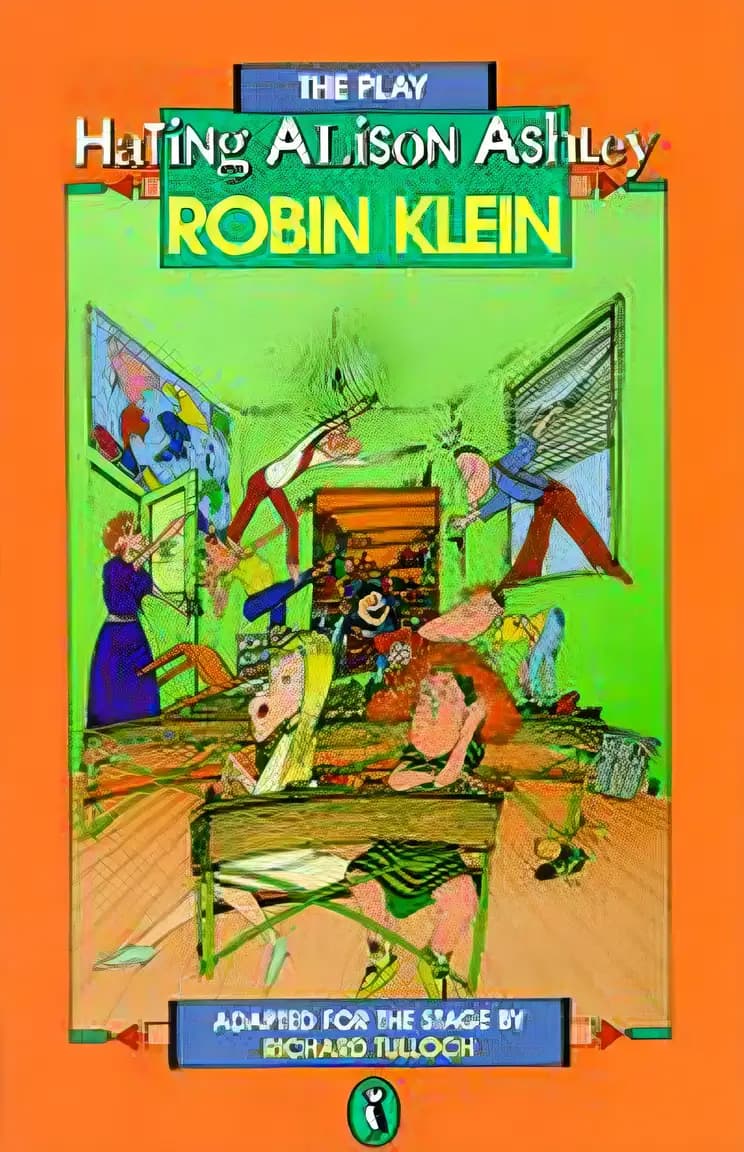
Hating Alison Ashley
A young Puffin story book Series
on Goodreads (22)
What’s inside...
Hating Alison Ashley is a young adult novel by Richard Tulloch that tells the story of Erica Yurken, a creative and dramatic teenager who dreams of a life beyond her mundane existence and chaotic family life. Erica, who goes by the nickname 'Yuk', attends Barringa East Primary School, where she feels she is unappreciated for her talents and intelligence. Her self-esteem is challenged when Alison Ashley arrives at the school. Alison is seemingly perfect: she's beautiful, wealthy, and excels academically. Yuk becomes intensely jealous of Alison, convinced that Alison's presence is ruining her chances to shine. As the story unfolds, Yuk's initial hatred for Alison transforms as she gets to know her better and realizes that Alison's life is not as perfect as it seems. The novel explores themes of jealousy, friendship, and the realization that everyone has their own set of challenges to face. Through a school play and various interactions, Yuk learns to appreciate her own unique qualities and develops a more compassionate view of Alison and her classmates.
Series reading
Non-Sequential
Age
9-12
Length
114 pages
Text complexity
Character compass
Erica Yurken
Miss Belmont
Alison Ashley
Discussion points
How do you think Erica Yurken felt when Alison Ashley arrived at her school? Have you ever felt similar when meeting someone new?
What do you think about the way Erica tries to solve her problems? Can you think of other ways she might have handled her challenges?
Why do you think the relationship between Erica and Alison changed throughout the book? What can we learn from how their relationship evolved?
In what ways do the characters in 'Hating Alison Ashley' show or hide their true selves? Why do you think they do that?
How do the events in the book highlight the importance of understanding and compassion?
Tip: Role play these questions
Encourage empathy by asking your child how they would feel in the characters’ situations, and explore different emotional responses together.
Discuss the motives behind the characters’ actions to help your child understand different perspectives and the consequences of decisions.
Connect the story to real-life scenarios your child might face, such as dealing with feelings of jealousy or competition among peers.
Use examples from the book to discuss the value of honesty and authenticity in friendships.
Highlight moments in the story where characters learn important life lessons, and relate these to your child’s experiences.
Key lessons
Example Lesson: Empathy and Understanding
Explanation: In the book, the protagonist, Erica Yurken, initially harbors feelings of jealousy and dislike towards Alison Ashley. However, as the story unfolds, Erica gains insight into Alison’s life, understanding her struggles and insecurities, which fosters empathy.
Real-World Application: Children can learn to look beyond their initial impressions of peers and try to understand the situations and challenges others might be facing, promoting a more inclusive and empathetic interaction.
Example Lesson: Self-Awareness and Personal Growth
Explanation: Erica’s journey throughout the book highlights her self-reflection on her own behavior and assumptions. This realisation leads her to personal growth and improved self-awareness.
Real-World Application: This lesson encourages children to reflect on their own actions and attitudes, helping them grow into more self-aware and considerate individuals.
Example Lesson: The Impact of Jealousy
Explanation: The book illustrates the negative effects of jealousy through Erica’s experiences of envy towards Alison. It showcases how jealousy can distort perceptions and lead to unhappiness.
Real-World Application: Children can learn the importance of recognizing and managing feelings of jealousy, understanding that such emotions can cloud judgment and impact relationships negatively.
Example Lesson: Importance of Honesty
Explanation: Through various interactions and events in the story, the value of honesty is portrayed, showing how lies and deceit can complicate situations and relationships.
Real-World Application: This can teach children to value and practice honesty in their daily interactions, fostering trust and straightforward communication with others.