
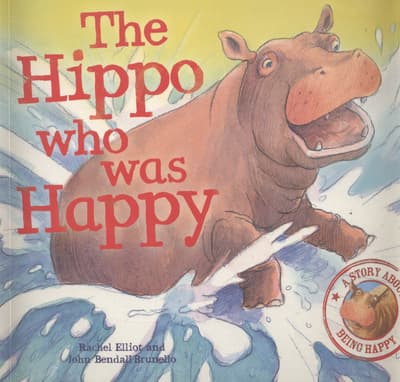
Hippo Who Was Happy
on Goodreads (14)
What’s inside...
Illustrated stories cover these four important feelings (happiness, sadness, fear, anger) with a gentle and sweet approach. A happy hippo, an angry tiger, a sad zebra and a scared elephant allow very young children to understand these emotions and to learn how to cope with them.
Age
3-7
Text complexity
Discussion points
What made the hippo happy in the story? Can you think of a time when you felt the same way?
How do you think the hippo's friends helped him feel happy? Why is friendship important?
What are some things that make you happy? How can you share that happiness with others?
If you were in the story, what would you do to make the hippo feel happier?
Can you think of different ways the hippo could show his happiness? How do you show you're happy?
Tip: Role play these questions
Use expressive reading to convey the emotions in the story, which can help your child understand and connect with the hippo's feelings.
After reading, relate the story to your child’s personal experiences by discussing similar feelings and situations they might have encountered.
Encourage your child to imagine alternative endings or scenarios in the story, which can foster creativity and deeper understanding.
Highlight the importance of empathy by discussing how the characters in the book might feel and how we can help friends in real life.
Let your child express what happiness means to them, either through conversation, drawing or any other form of expression they enjoy.
Key lessons
Example Lesson: Embracing individuality
Explanation: The story exhibits how Hippo embraces his unique happiness, even when others around him are not as joyful.
Real-World Application: Children are encouraged to recognize and celebrate their own unique traits and feelings, understanding that it's okay to be different from others in their emotions and responses.
Example Lesson: Empathy and understanding
Explanation: Hippo shows compassion towards his friends who feel differently, trying to uplift them without changing his own state of happiness.
Real-World Application: This helps children learn the importance of acknowledging and respecting others' feelings while maintaining their own emotional integrity.
Example Lesson: Importance of positive relationships
Explanation: Hippo's interactions with his friends demonstrate how positive relationships can enhance personal well-being.
Real-World Application: Children can apply this by nurturing friendships that bring joy and mutual support, and by being kind and helpful to their peers.
Example Lesson: Resilience in facing challenges
Explanation: Despite the varying moods of others that could affect him, Hippo maintains his cheerful disposition, showing resilience.
Real-World Application: Children learn to stay positive and resilient even when faced with challenges or negative influences, developing strength to overcome emotional obstacles.