
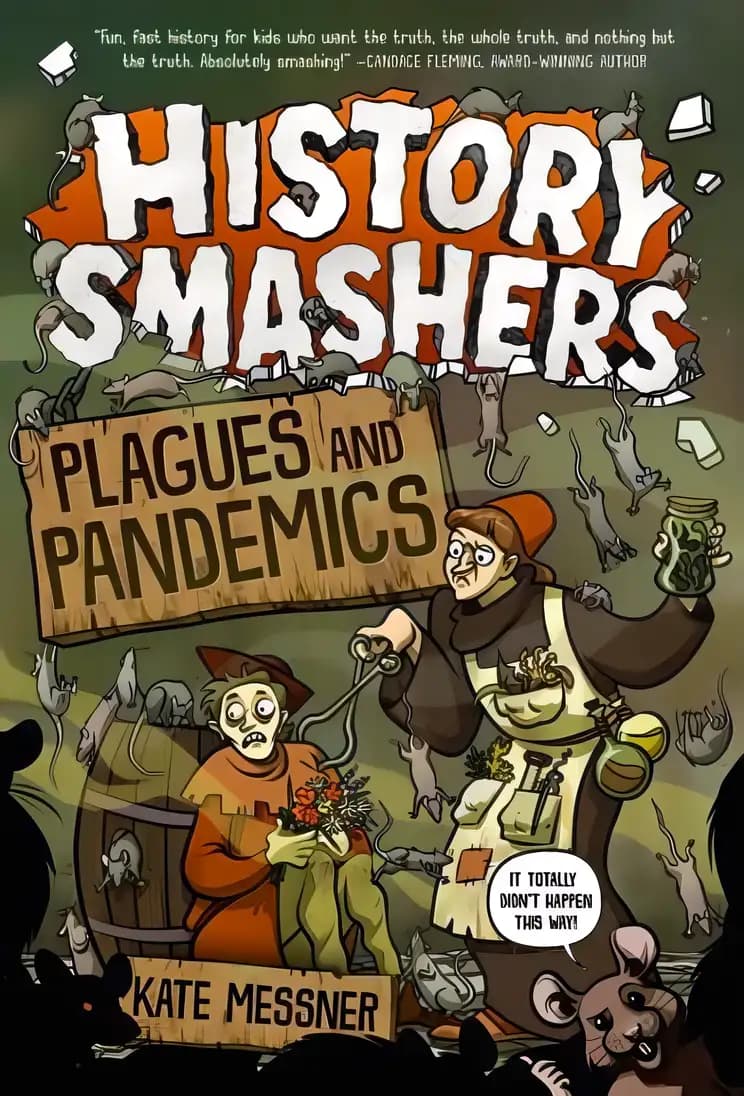
History Smashers: Plagues and Pandemics
#6 of 9 in History Smashers Series
on Goodreads (518)
What’s inside...
Myths! Lies! Secrets! Uncover the hidden truth about history's pandemics, from the Black Death to COVID-19. Perfect for fans of I Survived! and Nathan Hale's Hazardous Tales. During the Black Death in the 14th century, plague doctors wore creepy beaked masks filled with herbs. RIGHT? WRONG! Those masks were from a plague outbreak centuries later--and most doctors never wore anything like that at all! With a mix of sidebars, illustrations, photos, and graphic panels, acclaimed author Kate Messner delivers the whole truth about diseases like the bubonic plague, cholera, smallpox, tuberculosis, polio, influenza, and COVID-19. Discover the nonfiction series that smashes everything you thought you knew about history! Don't miss History Smashers: The Mayflower, Women's Right to Vote, Pearl Harbor, Titanic, and American Revolution.
Discussion points
What did you find most surprising about the history of plagues and pandemics?
How do you think people's responses to past pandemics compare to recent events like COVID-19?
What are some ways societies have tried to prevent the spread of diseases, according to the book?
If you could interview one of the historical figures mentioned, who would it be and what would you ask?
How do you think learning about past pandemics helps us with future challenges?
Tip: Role play these questions
Encourage your child to think about the parallels between historical events and current news, fostering a deeper understanding of the subject.
Ask open-ended questions to promote critical thinking and allow your child to express their thoughts and feelings about the book’s content.
Share your own thoughts and reactions to the book to model thoughtful engagement and encourage a two-way conversation.
Discuss the importance of history in learning from past mistakes and successes, especially in the context of medical science and public health.
Use the book as a starting point for a research project or further reading, guiding your child to explore their interests sparked by the topics covered.
Key lessons
Example Lesson: Critical thinking through debunking myths
Explanation: The book challenges common myths surrounding historical plagues and pandemics, encouraging readers to question and analyze the information.
Real-World Application: Children learn to scrutinize information critically, which helps them discern truth from falsehood in everyday situations and media consumption.
Example Lesson: Importance of hygiene and public health
Explanation: By illustrating the spread and impact of diseases in history, the book highlights the role of hygiene and public health measures.
Real-World Application: This lesson encourages children to adopt healthy habits like handwashing and staying home when sick, understanding their role in community health.
Example Lesson: Empathy for those affected by diseases
Explanation: The book shares stories of how pandemics have impacted individuals and communities, fostering a sense of empathy and understanding.
Real-World Application: Children can apply this empathy in their interactions, showing compassion and support for peers who may be affected by illness or other challenges.
Example Lesson: Understanding the role of science in society
Explanation: Exploring the scientific responses to historical pandemics teaches about the importance of science in solving real-world problems.
Real-World Application: This reinforces the value of science education and can inspire interest in scientific fields and awareness of its impact on society.