
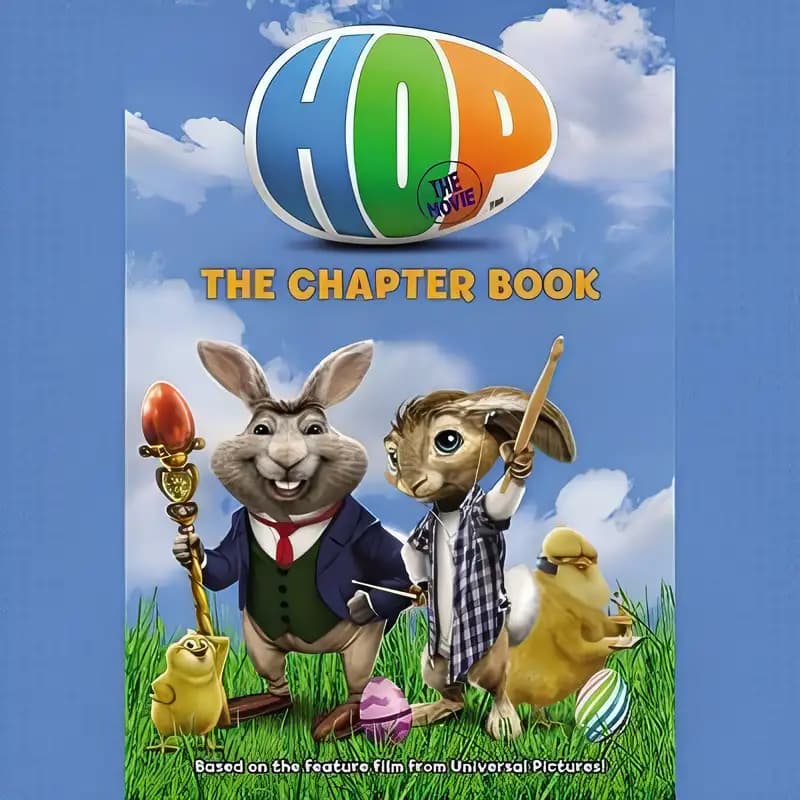
Hop: The Chapter Book
The Gollywhopper Games Series
on Goodreads (14)
What’s inside...
Easter Island is home to the Easter Bunny's magical workshop--where do you think Santa got all his good ideas? Easter bunny Jr., aka E.B. (Russell Brand), would rather pursue his dream of becoming a rock star than hop along in his father's footsteps. Fred (James Marsden), an unemployed slacker, is trying to figure out what to do with his life when he accidentally injures the soon to be Easter Bunny and decides he's the one to take over the job. When these two collide, E.B. and Fred both discover what it takes to grow up.
Series reading
Non-Sequential
Age
8-12
Length
80 pages
Text complexity
Character compass
E.B.
Sam O'Hare
Fred O'Hare
Mr Bunny
Carlos
Discussion points
How do you think E.B. felt when he decided to leave home to pursue his dreams? Can you relate to his feelings?
What are the main challenges E.B. faced, and how did he overcome them?
What lessons did E.B. learn about friendship and responsibility through his adventures?
Why is it important to follow your dreams? How can you support your friends in following theirs?
How would you handle a situation where your dreams conflict with your responsibilities?
Tip: Role play these questions
Encourage your child to express their thoughts and feelings about the characters' decisions and actions in the story.
Discuss the concept of perseverance and how E.B. displays it throughout the book. Relate it to real-life scenarios your child might face.
Use examples from the book to talk about the importance of following dreams and balancing them with responsibilities.
Key lessons
Example Lesson: Value of Friendship
Explanation: In 'Hop: The Chapter Book', friendship is portrayed through the supportive interactions between the characters as they navigate various challenges.
Real-World Application: Children can learn to appreciate and nurture their relationships, understanding the importance of helping and caring for their friends in their daily interactions.
Example Lesson: Responsibility and Commitment
Explanation: The protagonist demonstrates responsibility by taking on challenges and seeing them through to completion, reinforcing the virtue of commitment.
Real-World Application: This lesson can motivate children to undertake their own responsibilities, such as homework or chores, with dedication and perseverance.
Example Lesson: Overcoming Fears
Explanation: Characters in the book face their fears and learn to overcome them through courage and resilience, showing that facing one’s fears is a part of life.
Real-World Application: Children can be encouraged to face their personal fears, whether it’s trying out for a sports team, speaking in front of the class, or making new friends.
Example Lesson: Importance of Teamwork
Explanation: The story highlights how characters work together to solve problems, emphasizing the importance of teamwork.
Real-World Application: This can teach children the value of cooperation and working with others to achieve common goals in group activities or team sports.
Example Lesson: Embrace Diversity
Explanation: Diverse characters in the book showcase a range of talents and perspectives, teaching the importance of embracing diversity.
Real-World Application: Children can learn to appreciate and respect individual differences in their classmates and community, promoting inclusivity and empathy.