
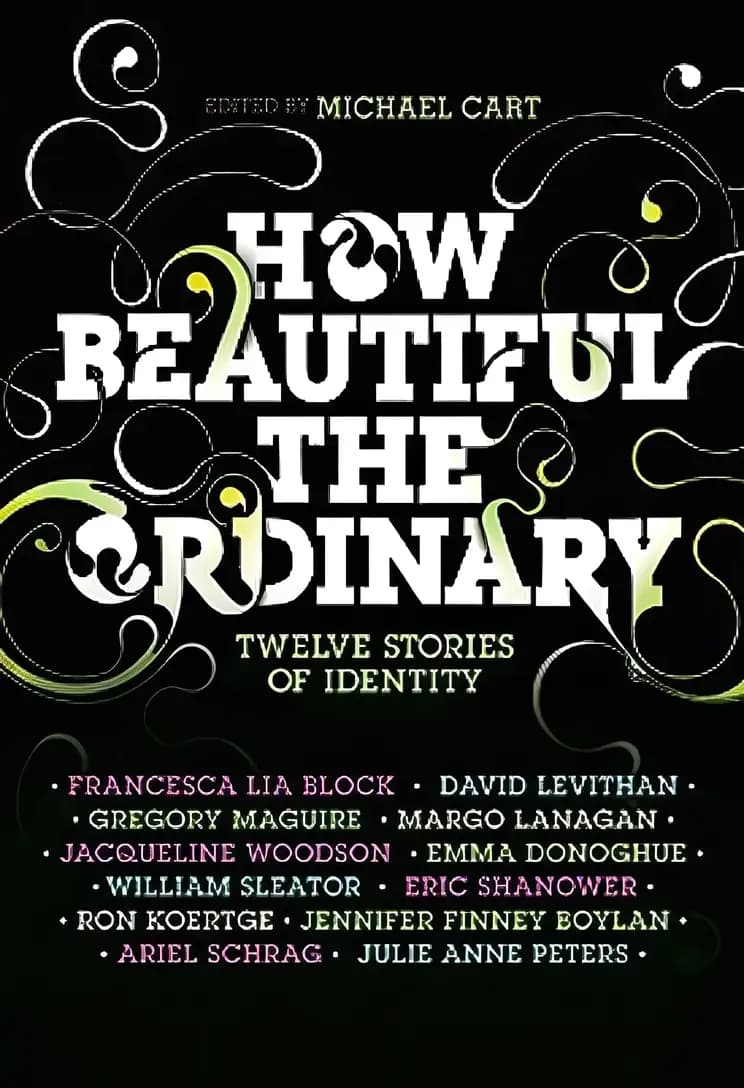
How Beautiful the Ordinary: Twelve Stories of Identity
illustrations by
on Goodreads (1,575)
What’s inside...
Presents twelve stories by contemporary, award-winning young adult authors, some presented in graphic or letter format, which explore themes of gender identity, love, and sexuality. The stories include narratives about a girl mistaken for a boy who steals her sister's skirt, a boy mistaken for a girl who refuses a blue dress, a boy's love for a soldier leading to a stranger's death, a man's revisiting his summer school for an accidental romance, and a forgotten mother's letter to her daughter. These tales represent modern perspectives on love, sexuality, and gender identity, reflecting the diverse possibilities for young people navigating relationships in today's world.
Age
14-17
Length
368 pages
Text complexity
Discussion points
What do you think the title, 'How Beautiful the Ordinary,' means in relation to the stories you read?
Which story did you connect with the most and why?
How did the characters' experiences help you understand different perspectives on identity?
In what ways do the characters show courage in expressing who they are?
How do the themes of acceptance and self-exploration resonate with you?
Tip: Role play these questions
Start the conversation by sharing your own reflections on the book to create a comfortable space for open dialogue.
Encourage your child to think about parallels between the characters' journeys and their own life experiences.
Discuss the importance of empathy and understanding diverse identities by reflecting on the different stories together.
Use examples from the book to talk about the value of self-acceptance and the beauty of being unique.
Highlight key moments in the stories that demonstrate resilience and ask your child how they might apply those lessons in their own life.
Key lessons
Example Lesson: Acceptance of diversity
Explanation: Through its various stories, the book portrays characters from diverse backgrounds and identities, promoting inclusivity and understanding.
Real-World Application: Children learn to appreciate and respect individual differences among their peers, helping create a more inclusive environment at school and in the community.
Example Lesson: Self-discovery and identity
Explanation: The characters in the book navigate their paths to self-discovery, dealing with the complexities of identity, which encourages self-reflection in young readers.
Real-World Application: This lesson aids children in exploring their own identities and helps them understand and express themselves better as they grow.
Example Lesson: Empathy and emotional intelligence
Explanation: The stories delve into the emotional journeys of the characters, fostering empathy and a deeper connection with others' feelings and experiences.
Real-World Application: By understanding the characters’ struggles and triumphs, children can better relate to and empathize with those around them, enhancing their emotional and social skills.
Example Lesson: Resilience in adversity
Explanation: Characters in the book often face challenges related to their identities, yet they show resilience and courage, teaching readers about overcoming obstacles.
Real-World Application: Children learn to persist and maintain hope during difficult times, applying this resilience to personal challenges in their lives.
Example Lesson: The power of storytelling
Explanation: This collection uses storytelling to explore complex themes, underscoring the importance of narratives in shaping perspectives and understanding.
Real-World Application: Children are encouraged to share their own stories and listen to others, fostering a sense of community and mutual respect.