
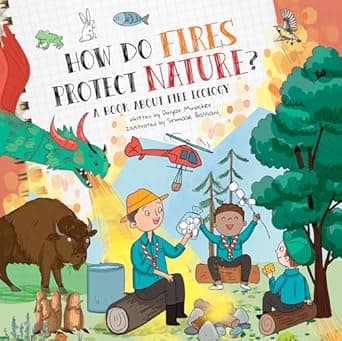
How Do Fires Protect Nature?: A Book About Fire Ecology
How Do Series
What’s inside...
Fires are often seen only as destructive, but many ecosystems actually need periodic burns to thrive. Using clear language, vivid photos, and child-friendly diagrams, Dinyar Minocher explains how natural and carefully managed fires clear dead brush, return nutrients to the soil, trigger seed release, and create rich habitats for plants and animals. The book also introduces the science of fire behavior, the role of Indigenous fire stewardship, and safety tips for preventing harmful wildfires, helping readers see flames as both friend and foe in nature’s balance.
Series reading
Non-Sequential
Age
7-10
Length
36 pages
Text complexity
Discussion points
What surprised you most about how plants survive fire?
Why do you think some fires are called ‘good’?
How can people help prevent dangerous wildfires?
What examples of renewal did you see in the photos?
Tip: Role play these questions
Compare before-and-after images to spot regrowth.
Create a family fire-safety plan based on the book’s checklist.
Key lessons
Example Lesson: Nature recovers and even thrives after certain disturbances.
Explanation: Regrowth photos show green shoots following a burn.
Real-World Application: Children learn setbacks can lead to new beginnings.
Example Lesson: Understanding a problem is the first step to solving it.
Explanation: Explains fire triangle before discussing prevention.
Real-World Application: Kids can analyze issues at school before acting.
Example Lesson: Humans and nature work best in partnership.
Explanation: Indigenous practices illustrate respectful stewardship.
Real-World Application: Encourages teamwork and respect for diverse knowledge.
Example Lesson: Preparedness keeps communities safe.
Explanation: Safety checklist teaches planning ahead.
Real-World Application: Families can create emergency plans together.