
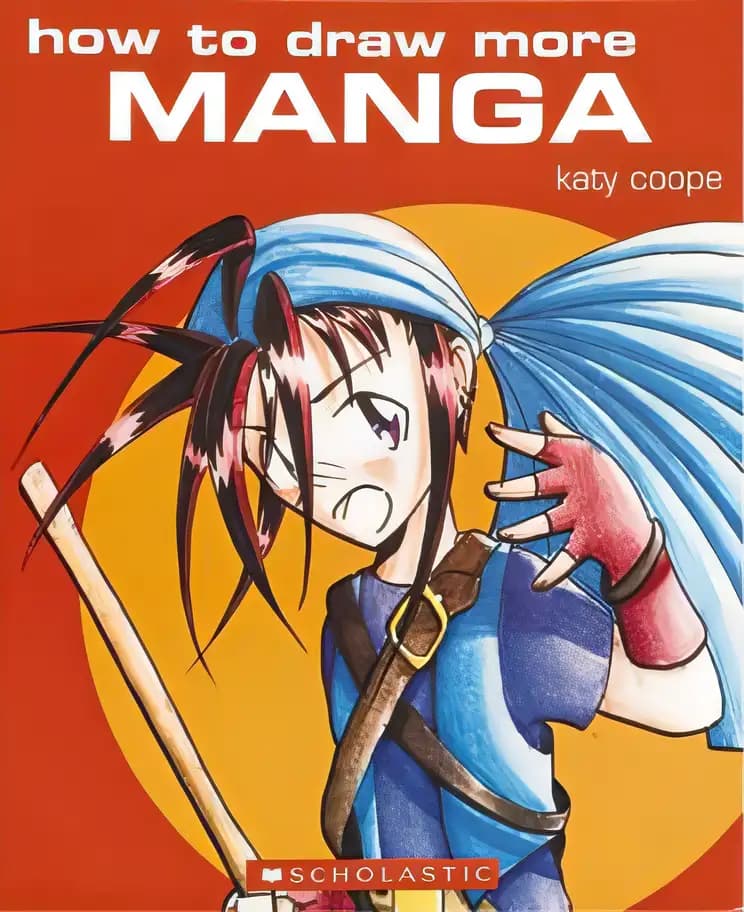
How To Draw More Manga
#2 in How To Draw Manga Series
What’s inside...
An instructional guide to drawing Japanese Manga characters by teen author and illustrator Katy Coope. The book provides a step-by-step process in an oversized format with easy-to-follow text and pictures. It includes chapters on drawing faces, expressions, bodies, and animals, with special tips on adding and using color. It aims to help kids and budding comic-book artists master the art of drawing manga and find inspiration in anime and manga.
Discussion points
What character in the book would you like to draw first, and why?
If you created a manga character, what special powers would they have?
How do the expressions in the manga influence the story being told?
What emotions do you feel when you see the different manga styles in the book?
Which drawing tip from the book did you find most helpful?
Tip: Role play these questions
Encourage your child to describe their favorite manga character from the book and ask them to explain why they find them appealing.
Discuss the creative process together by drawing a simple manga character based on the tips in the book.
Talk about how different emotions are expressed in manga, and ask your child to draw a character that represents each emotion.
Create a shared drawing session where both of you can practice drawing manga faces and discuss the different styles presented in the book.
Celebrate each drawing your child makes, focusing on the effort and creativity rather than the outcome, to boost their confidence and interest in drawing manga.
Key lessons
Example Lesson: Creativity and Expression
Explanation: Katy Coope encourages young readers to explore their artistic abilities and express themselves through drawing manga characters.
Real-World Application: Children can apply this lesson by using their imagination to create unique drawings and tell their own stories through art, fostering creativity and self-expression.
Example Lesson: Patience and Persistence
Explanation: Drawing manga can be challenging, teaching children the value of patience as they master each new technique.
Real-World Application: This lesson translates to other areas of life where children learn to persevere through challenges, whether in academics, sports, or learning new skills.
Example Lesson: Attention to Detail
Explanation: The book guides readers through detailed steps to create manga characters, highlighting the importance of observing and capturing details.
Real-World Application: Children learn the importance of careful observation and meticulous work, skills that are beneficial in educational settings and beyond.
Example Lesson: Cultural Appreciation
Explanation: Through drawing manga, children gain insights into Japanese culture and the art form’s unique styles and traditions.
Real-World Application: This fosters an appreciation and understanding of diverse cultures, promoting inclusivity and global awareness among young readers.