
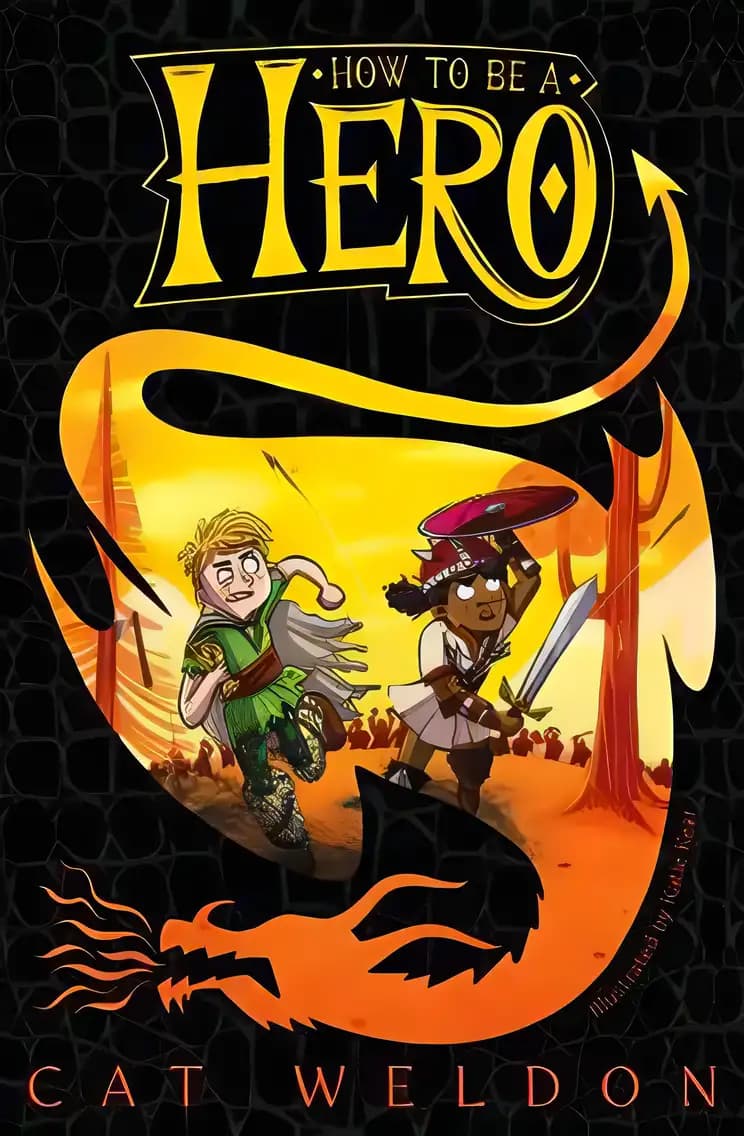
How to Be a Hero
#1 in How to Be a Hero series
What’s inside...
A no-good viking thief, the worst-ever trainee valkyrie, and an ungodly case of mistaken identity come together in this hilarious high-stakes fantasy adventure. When failing trainee valkyrie Lotta mistakes an unconscious viking thief, Whetstone, for a fallen hero and takes him triumphantly to Valhalla, things do not go as planned. Having lost a precious talking cup, Whetstone is desperate to cover up his mistake and the two embark on a quarrelsome journey to find it and regain their heroic status. With Loki the trickster God trying to unleash chaos by obtaining the cup, Whetstone faces the ultimate challenge to prove himself a hero. Set in the world of the Norse Gods, Cat Weldon's 'How to Be a Hero' is filled with humor, bravery, and excitement, making it perfect for fans of 'How to Train Your Dragon' and 'Who Let the Gods Out'.
Discussion points
What do you think makes someone a hero?
Can you think of a time when you did something brave?
How did the main character's actions inspire you?
What would you have done differently if you were in the story?
Who is your personal hero and why?
Tip: Role play these questions
Encourage your child to relate the story to their own experiences by sharing a personal story of bravery or heroism.
Ask open-ended questions that allow your child to express their thoughts and feelings about the story’s themes.
Discuss the different qualities of a hero and identify which ones your child admires the most.
Create a 'hero of the week' activity where each family member shares a story about someone they consider a hero.
Use examples from the book to teach problem-solving and decision-making skills.
Key lessons
Example Lesson: Courage in facing fears
Explanation: The protagonist of the story learns to overcome his fear of the dark by venturing into a dimly lit cave to rescue a friend.
Real-World Application: Children can apply this by confronting their own fears, whether it's trying out for a sports team, speaking in public, or sleeping without a light.
Example Lesson: Empathy towards others
Explanation: Throughout the book, the characters learn to understand and share the feelings of others, particularly when helping a lost animal find its way home.
Real-World Application: Children can learn to recognize emotions in others and offer help or kindness, fostering a supportive community environment.
Example Lesson: The importance of teamwork
Explanation: The protagonist and his friends work together to solve various challenges, showcasing how collaboration leads to success.
Real-World Application: This encourages children to participate in group activities, appreciate diverse abilities, and realize the collective strength in teamwork.
Example Lesson: Persistence in problem-solving
Explanation: The story highlights how the characters face multiple setbacks but continue to try different solutions until they succeed.
Real-World Application: Children can be inspired to persist through difficulties in their academic or personal lives, understanding that not giving up is key to overcoming obstacles.
Example Lesson: Creativity and imagination
Explanation: The hero of the book uses imaginative thinking to devise unique solutions to problems, like building a makeshift raft to cross a river.
Real-World Application: This lesson can encourage children to use their creativity to think outside the box and innovate in daily tasks and challenges.