
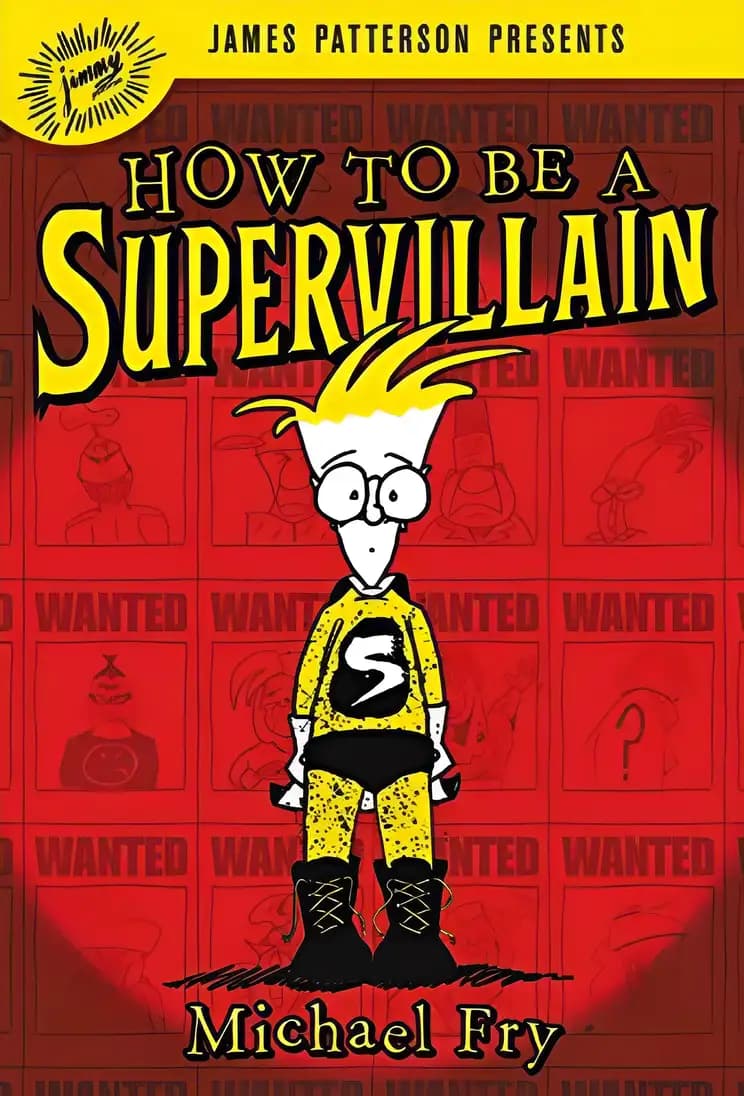
How to Be a Supervillain
#1 of 3 in How to Be a Supervillain Series
on Goodreads (588)
What’s inside...
Victor Spoil comes from a long line of famous supervillains and is expected to join their ranks. However, Victor lacks any bad-guy tendencies, much to his family's disappointment. As a last resort, his parents send him to apprentice under a disgraced supervillain, The Smear. Although their partnership starts off rocky, Victor and The Smear learn valuable lessons from each other. When faced with a tough decision between his mentor and his family's villainous morals, Victor must decide what kind of bad guy he wants to be. This middle-grade adventure by Michael Fry features superhero action and fish-out-of-water humor, combining witty text and hysterical artwork.
Character compass
Victor Spoil
The Smear
Mayhem Spoil
Minerva Spoil
Discussion points
What do you think makes someone a hero or a villain? Can someone be both?
Why do you think Victor wanted to become a supervillain? What would you have done in his situation?
How do you feel about Victor's relationship with his parents? How important is family support in shaping who we are?
What lessons did Victor learn about friendship and trust throughout the story? Have you learned similar lessons in your own life?
Tip: Role play these questions
Ask open-ended questions to encourage your child to express their thoughts and connect the story to their own experiences.
Discuss the moral dilemmas presented in the book and explore how your child feels about making tough choices.
Identify and talk about the humorous elements in the story, which can help make the discussion more engaging and enjoyable for your child.
Encourage your child to draw parallels between the characters' experiences and real-life scenarios to enhance their understanding and empathy.
Key lessons
Example Lesson: Understanding right from wrong
Explanation: The protagonist, Victor, grapples with distinguishing good from evil as he's trained to become a supervillain, which teaches him about moral choices.
Real-World Application: Children can learn to evaluate their decisions and consider the consequences of their actions, promoting ethical thinking.
Example Lesson: The value of friendship
Explanation: Despite differing backgrounds, Victor forms genuine friendships that challenge his preconceived notions of what it means to be a 'villain' or a 'hero'.
Real-World Application: This can help children understand the importance of forming connections and being open to friendships with diverse individuals.
Example Lesson: Self-identity and acceptance
Explanation: Victor's journey towards self-discovery highlights the importance of embracing one’s true self, rather than conforming to others' expectations.
Real-World Application: Kids are encouraged to discover and be confident in their true selves, appreciating their unique qualities.
Example Lesson: Courage to stand up for what is right
Explanation: Throughout the story, Victor faces situations requiring him to stand up against wrongdoings, demonstrating bravery.
Real-World Application: This imparts the courage young readers need to oppose wrongdoing and advocate for justice in their own lives.
Example Lesson: Consequences of choices
Explanation: The narrative shows that choices, whether good or bad, come with consequences, teaching accountability.
Real-World Application: Children learn that their actions have effects, helping them to make more thoughtful and responsible choices.