
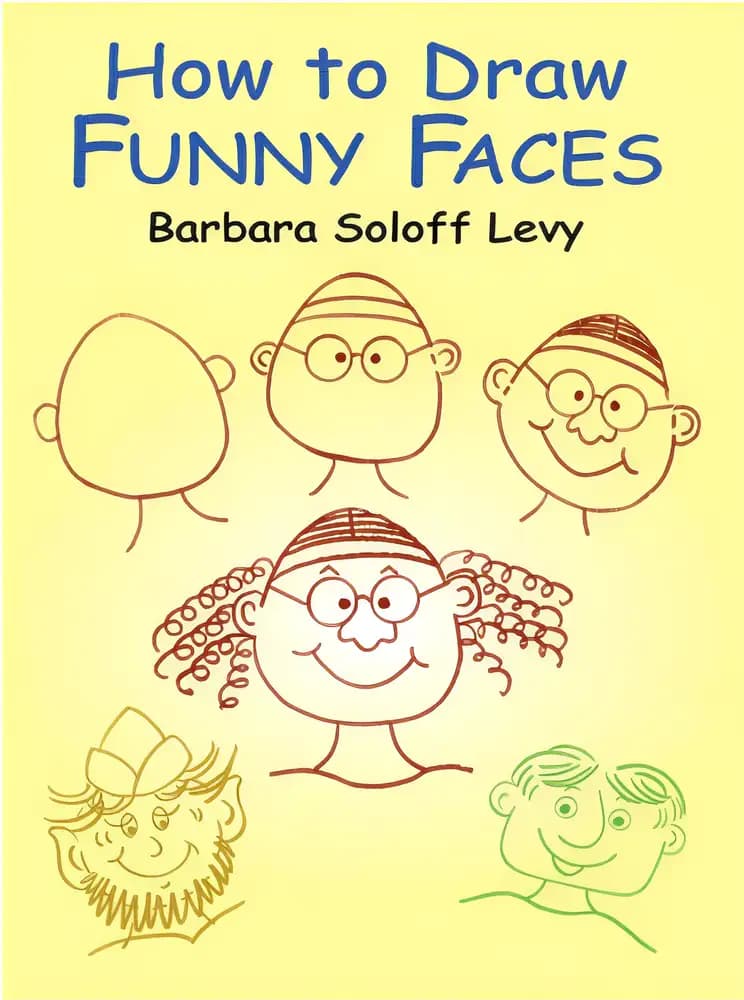
How to Draw Funny Faces
Dover How to Draw Series
on Goodreads (21)
What’s inside...
Aspiring artists will find it a snap to create humorous portraits with this easy-to-follow guide. Step-by-step diagrams show how to draw little girls with unusual ponytails, a bearded leprechaun, a balding man, a lady with a funny hat, and other odd faces by combining ovals and circles and adding curvy lines and squiggles. The guide features 116 black-and-white illustrations to help artists visualize and execute their creations.
Series reading
Non-Sequential
Age
3-11
Length
32 pages
Text complexity
Discussion points
What kind of emotions do you think these funny faces are showing? Can you describe them?
Why do you think the artist chose to draw the faces this way? What do you like about them?
If you were to add another funny face to this book, what would it look like and why?
How do the funny faces make you feel when you look at them?
Which funny face is your favorite and what story would you create about this character?
Tip: Role play these questions
Encourage your child to express themselves by describing what they see and feel about the funny faces. Use follow-up questions to delve deeper into their thoughts and imaginations. Invite them to draw their own funny faces and discuss the choices they make while drawing. This can foster a creative dialogue and help understand their emotions and artistic choices. Lastly, laugh together! Enjoy the humorous aspect of the book and make it a joyful shared experience.
Key lessons
Example Lesson: Creativity and Imagination
Explanation: The book guides children through the process of drawing various funny faces, allowing them to experiment with different expressions and features.
Real-World Application: Children can utilize these skills to express themselves artistically in other drawing projects or crafts, enhancing their creative thinking and problem-solving abilities.
Example Lesson: Attention to Detail
Explanation: As children follow the step-by-step instructions to draw the faces, they learn to pay close attention to details, which is crucial in capturing different facial expressions.
Real-World Application: This skill can help children in academic settings where attention to detail is needed for tasks such as writing, proofreading, or handling complex instructions.
Example Lesson: Following Instructions
Explanation: The book provides specific guidelines on drawing techniques, teaching children the importance of following instructions to achieve intended results.
Real-World Application: This lesson aids in building discipline and responsibility as they learn that careful listening and adherence to guidance can lead to success in various life activities, such as cooking or assembling toys.
Example Lesson: Appreciation for Diversity
Explanation: By drawing a range of funny faces with different features, children learn to appreciate and celebrate diversity in appearances and expressions.
Real-World Application: This understanding can promote inclusivity and respect towards people from different backgrounds, fostering positive social interactions at school and in their community.