
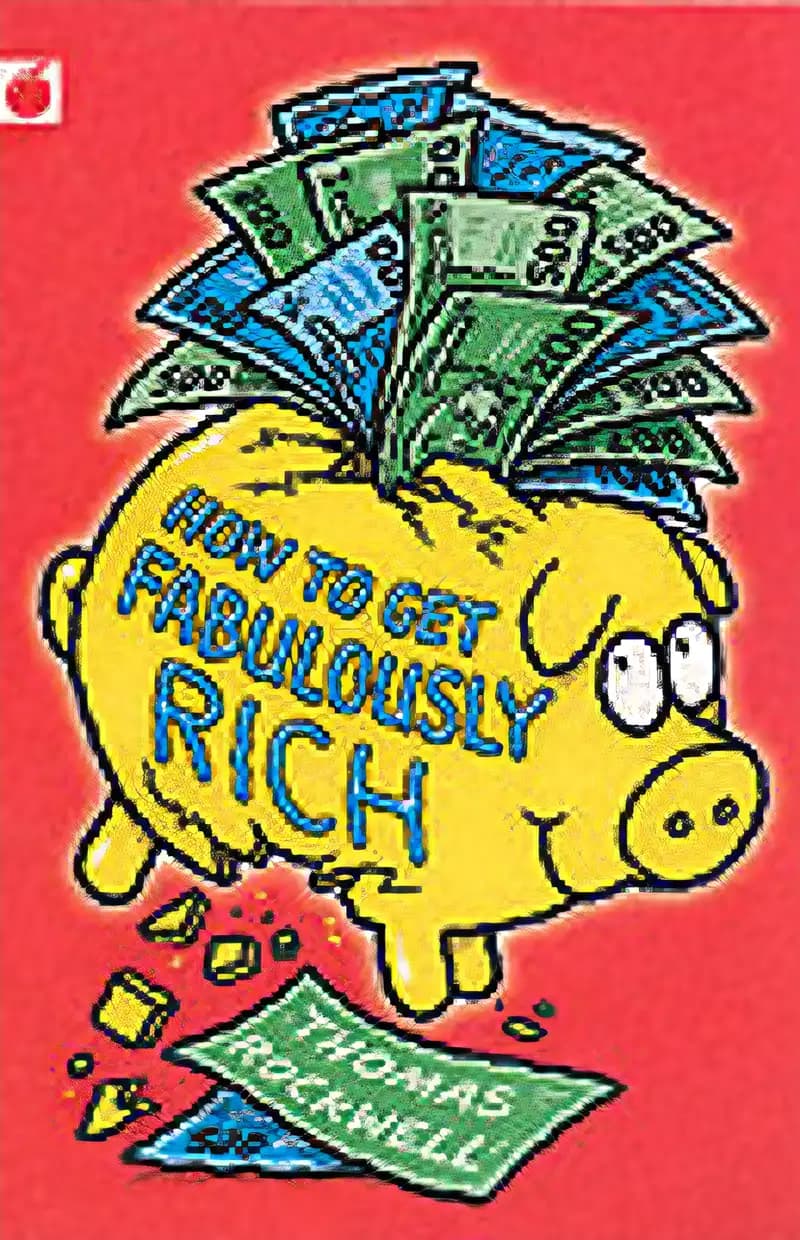
How to Get Fabulously Rich
#3 in Billy Forrester Series
What’s inside...
In this follow-up to How to Eat Fried Worms, Billy has worked out that his chances of winning the lottery are very slim. But, with his mum's encouragement, he invests his money and time in working out how to win and - this time - he does win.
Discussion points
What would you do if you won a million dollars like the character in the book?
How did the main character's life change after winning the money? Do you think these changes were for better or worse?
What do you think about how the character handled his new wealth? Would you have done anything differently?
How do the relationships in the story change because of the money? What does this tell us about the value of money versus friendship?
Tip: Role play these questions
Start your discussion by openly sharing your thoughts about the book’s themes and messages, prompting your child to do the same.
Encourage your child to think critically about the consequences of sudden wealth by comparing different characters’ reactions in the story.
Discuss the moral and ethical decisions made by the characters and ask your child what they would do in those situations, fostering empathy and ethical thinking.
Use examples from your family life or from the media related to money and responsibility to help your child connect the themes of the book to the real world.
Key lessons
Example Lesson: Value of honesty
Explanation: The protagonist, Billy, learns through his adventures that honesty yields trust and respect from others. When Billy considers cheating in a contest, he realizes that honesty will ultimately make him feel better about any outcome.
Real-World Application: Children can apply this lesson by embracing honesty in their daily interactions, leading to stronger relationships and self-respect.
Example Lesson: Importance of hard work
Explanation: Billy learns that hard work is more fulfilling and rewarding than seeking quick and easy paths to wealth. His journey highlights the satisfaction that comes from effort and perseverance.
Real-World Application: This teaches children the value of dedication in schoolwork, chores, and personal goals, encouraging them to strive for achievement through persistent effort.
Example Lesson: Consequences of greed
Explanation: Throughout the book, characters who display greed encounter problems and conflicts. This demonstrates to Billy, and young readers, that greed can lead to negative outcomes and personal dissatisfaction.
Real-World Application: Children can learn to appreciate what they have and focus on non-materialistic goals, fostering a sense of contentment and gratitude.
Example Lesson: Significance of financial literacy
Explanation: The story touches on basic economic principles and the value of money, teaching Billy to make informed financial decisions.
Real-World Application: This can encourage children to learn about managing allowances, saving, and making thoughtful spending choices, laying a foundation for future financial responsibility.