
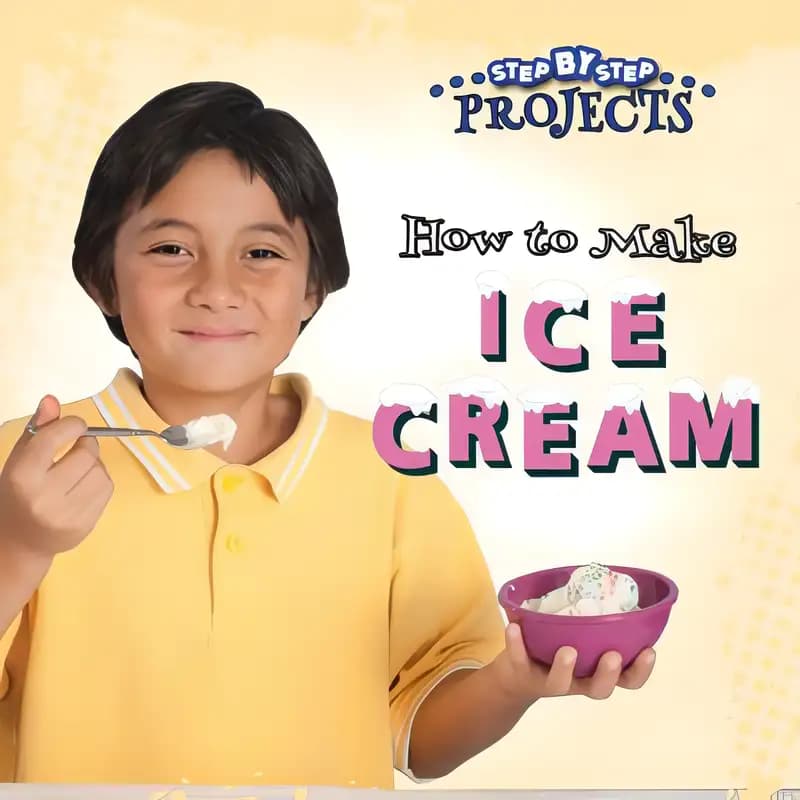
How to Make Ice Cream (Step-by-Step Projects)
Step-By-Step Reading Series
What’s inside...
How to Make Ice Cream is designed to help young learners observe, question, and implement ideas to reach a successful outcome. Featuring a step-by-step format, this 24-page book offers students the opportunity to reach conclusions by following simple, organized directions. With a designated teaching focus, before- and after-reading activities, a photo glossary, and more, this title will help students build problem-solving skills and comprehension confidence. The Step-by-Step Projects series gives young learners the freedom to create, manage, and complete projects with simple directions, instructional photographs, and problem-solving strategies. Each 24-page book features a specific teaching focus, before- and after-reading activities, a photo glossary, and more, to help students build problem-solving skills and comprehension confidence.
Series reading
Non-Sequential
Age
5-7
Length
24 pages
Text complexity
Discussion points
What steps would you add to make your own unique ice cream flavor?
How do you think changing the ingredients would affect the ice cream?
Why is it important to follow the steps in order when making ice cream?
If you could teach someone else how to make ice cream, what tips would you give them?
Tip: Role play these questions
Encourage your child to imagine their own ice cream shop and discuss what flavors and toppings they would offer. Use the book's content as a base to explore creativity and problem solving by asking them to think about how they can modify recipes. Highlight the importance of patience and following directions through the ice cream-making process, relating it to real life situations. Share your own experiences with cooking or making something from scratch to make the conversation more relatable and engaging.
Key lessons
Example Lesson: Following Instructions
Explanation: The book guides children through the sequential steps required to make ice cream, helping them understand the importance of following instructions to achieve desired outcomes.
Real-World Application: This skill can be applied in school assignments, building projects, or even in following a recipe at home, reinforcing the ability to achieve goals through structured guidance.
Example Lesson: Patience and Delayed Gratification
Explanation: Making ice cream involves waiting for the mixture to freeze, teaching children that some processes require time and patience for the results to be enjoyed.
Real-World Application: Children learn the value of waiting patiently for something they want, which can help them manage their expectations and impulses in various situations, such as waiting their turn or saving up for a special toy.
Example Lesson: Creativity and Experimentation
Explanation: The book encourages children to experiment with different flavors and ingredients, promoting creativity and individual expression.
Real-World Application: This encourages children to explore creative solutions in other areas of life, whether in problem-solving, art projects, or personal hobbies, fostering a sense of innovation and personal taste.
Example Lesson: Understanding Processes and Results
Explanation: By illustrating the transformation of raw ingredients into ice cream, the book provides a basic understanding of cause and effect, and how different components work together to create a final product.
Real-World Application: This understanding can be applied in understanding other natural and scientific processes, enhancing their comprehension and curiosity about how things work in the world around them.