
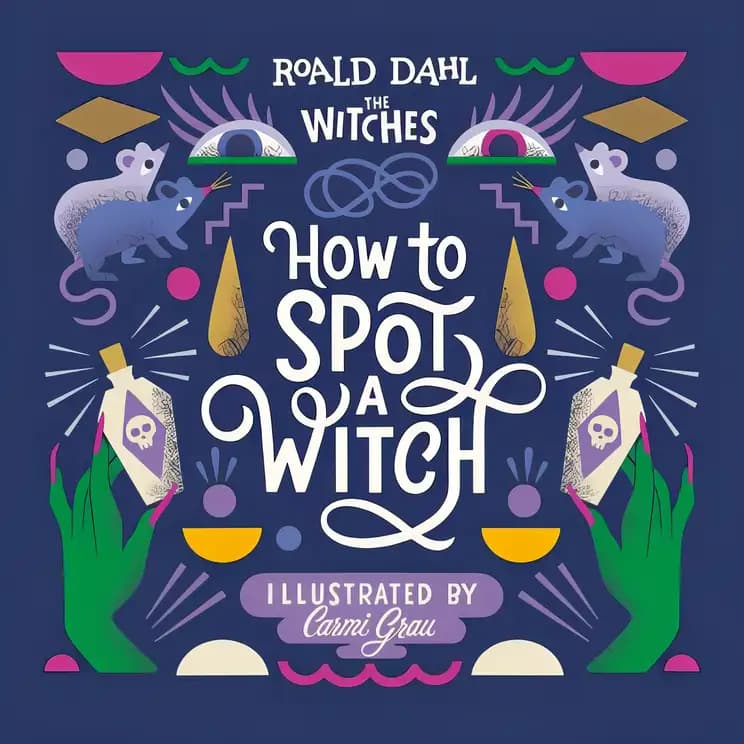
How to Spot a Witch
on Goodreads (27)
What’s inside...
Reimagine Dahl's beloved classic, The Witches, in this stunning hand-lettered gift book, perfect for fans of all ages. It features the best and brightest lines from Roald Dahl's magical story, displayed in creepy, whimsical, and artful calligraphy. This highly illustrated book offers quotes and passages from one of Dahl's most beloved works, rendered in beautiful calligraphy, making it an essential addition to any Dahl collection.
Age
8-12
Length
32 pages
Text complexity
Character compass
The Boy (Narrator)
Bruno Jenkins
Grandma
The Grand High Witch
Discussion points
What do you think makes the witches in the story different from other people?
How do the characters in the book figure out who the witches are? What clues do they use?
If you were a character in the book, how would you react upon meeting a witch?
What do you think is the most important lesson to learn from this story?
How would you help a friend who was scared of witches after reading this book?
Tip: Role play these questions
While discussing the book, use a tone of curiosity and wonder to make the experience more engaging for your child.
Encourage your child to imagine and describe what they would do in the characters' situations, enhancing their empathy and decision-making skills.
Link the story's themes to real-life scenarios to help your child grasp the concepts better, such as how to deal with strangers or understanding that appearances can be deceiving.
After reading the book, consider watching the movie adaptation with your child to compare and contrast the portrayal of witches, boosting their critical thinking.
Use the illustrations in the book as a visual aid to help your child remember details and discuss their interpretations.
Key lessons
Example Lesson: Critical thinking and skepticism
Explanation: The story educates children on how to identify witches, emphasizing critical observation and questioning rather than taking things at face value.
Real-World Application: Children learn to analyze situations and question irregularities, fostering a mindset that prioritizes discernment and thoughtful inquiry in everyday life.
Example Lesson: Courage and bravery
Explanation: Characters in the book often face risky situations requiring bravery to confront witches, showcasing the importance of courage in the face of adversity.
Real-World Application: Inspires children to be brave when facing their own challenges, whether standing up against a bully or trying something outside of their comfort zone.
Example Lesson: Importance of vigilance
Explanation: The book portrays how being vigilant can help one identify and avoid dangers, as the protagonist learns to spot disguised witches.
Real-World Application: Teaches children to be observant and cautious, valuable traits that help ensure personal safety in various situations.
Example Lesson: Family and teamwork
Explanation: Throughout the book, teamwork between the protagonist and his grandmother plays a crucial role in overcoming challenges, highlighting the value of collaboration and familial support.
Real-World Application: Encourages children to value and lean on family ties and teamwork to solve problems and achieve common goals.