
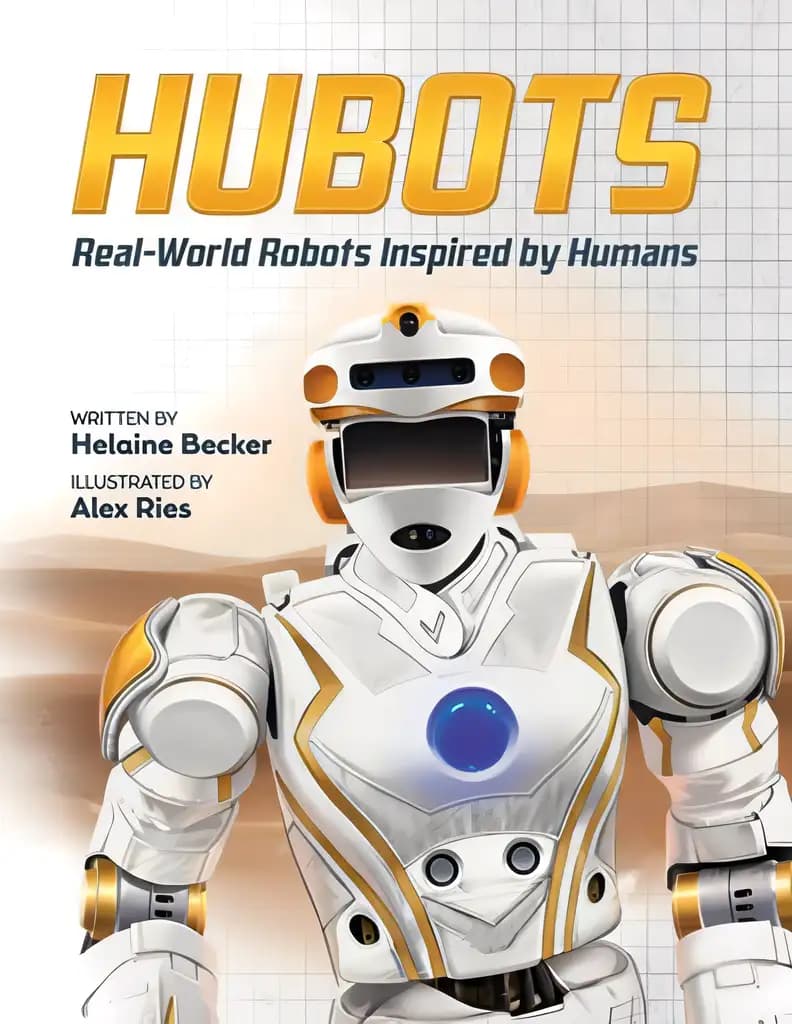
Hubots: Real-World Robots Inspired by Humans
What’s inside...
Using increasingly sophisticated levels of artificial intelligence (AI) and embodied intelligence (EI), a new generation of robots, called hubots, is being designed to mimic human appearance, actions, and thought processes. These human-inspired robots are pushing the limits of robotic capabilities, with ten real-life examples detailed to showcase their unique appearances, skills, and purposes. These purposes range from fighting fires on high seas, to preparing space colonies, to offering companionship for the elderly. The book also explores the concept of the uncanny valley through an illustrated graph, examines some of the robots' physical components, and considers the future of these innovative machines. Written by award-winning author Helaine Becker with hyperrealistic illustrations by Alex Ries, the book is crafted to engage even reluctant readers and serves as a resource for discussions on the societal impacts of advanced robotics.
Age
8-12
Length
32 pages
Text complexity
Discussion points
What do you think it would be like to have a robot helper at home or at school?
If you could design a robot, what human-like tasks would you want it to perform?
How do you think robots can help humans in everyday life?
Can you imagine any problems that might arise from using robots?
Which robot from the book did you find the most interesting or surprising and why?
Tip: Role play these questions
Start by asking your child what they already know about robots to gauge their prior knowledge and interest.
Encourage your child to think creatively by asking them to describe their ideal robot and what tasks it would perform.
Discuss the ethical implications of robots by asking your child how they think robots should be treated and the responsibilities of those who create them.
After reading the book, encourage your child to draw or build their favorite robot from the book using household items or building blocks.
Use the book as a starting point for a family project where you explore building simple robots or programming using child-friendly coding kits.
Key lessons
Example Lesson: Innovation and Creativity
Explanation: The book introduces children to the concept of Hubots, robots inspired by human traits and capabilities, showcasing how creativity can lead to technological advancements.
Real-World Application: Encourages children to think creatively and envision innovative solutions to everyday problems, fostering a mindset geared towards technological progress.
Example Lesson: Teamwork
Explanation: Through the development of Hubots, the book illustrates the importance of collaboration among scientists and engineers from various fields, emphasizing that teamwork is essential for success.
Real-World Application: Teaches children the value of working together on school projects or in team sports, highlighting that collective effort often leads to superior results.
Example Lesson: Problem-Solving Skills
Explanation: Each Hubot is designed to solve specific human problems, thereby demonstrating the practical application of science and technology in problem-solving.
Real-World Application: Inspires children to apply critical thinking and problem-solving skills in their daily activities and challenges, enhancing their ability to navigate obstacles.
Example Lesson: Ethical Considerations of Technology
Explanation: As Hubots are designed with human-like abilities, the book provokes thought on the ethical aspects of artificial intelligence and robotics.
Real-World Application: Prompts children to consider the ethical implications of their actions and the technologies they might use or create, building a foundational understanding of responsibility in innovation.