
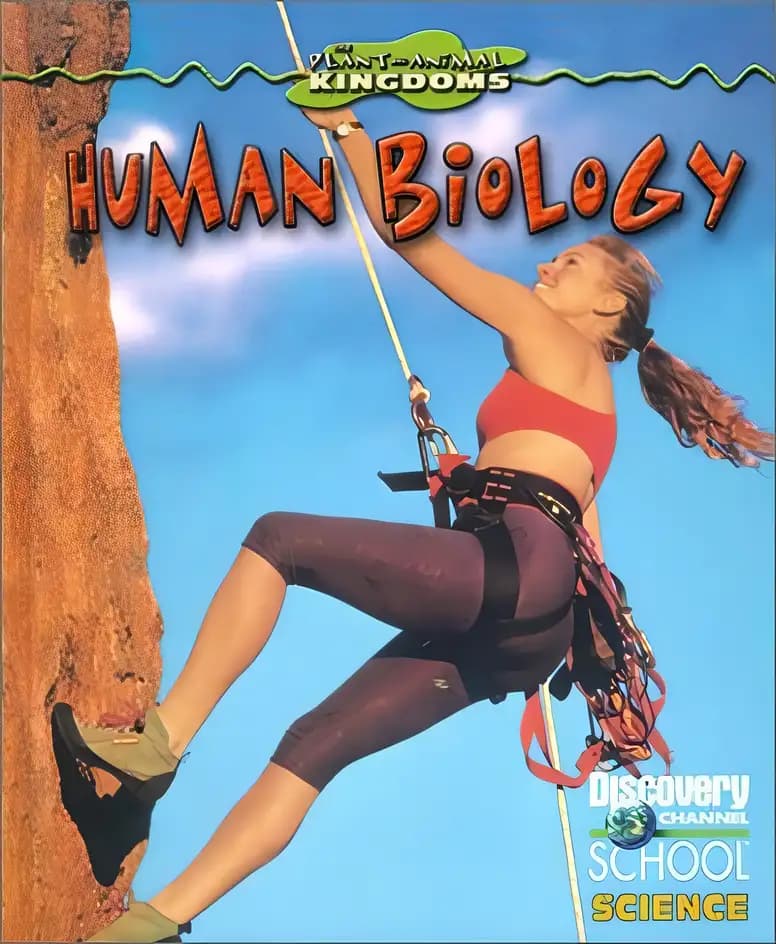
Human Biology
Discovery Channel school science. Series
illustrations by
on Goodreads (1)
What’s inside...
Explains what the human body is made of, how it works, what new discoveries are being made, and more.
Series reading
Non-Sequential
Age
9-12
Length
32 pages
Text complexity
Discussion points
How do you think our bodies turn the food we eat into energy?
What are some ways we can keep our bones and muscles strong and healthy?
Why is it important to have different types of cells in our body?
How do you think our body fights off germs that make us sick?
What can we do to help our body function at its best?
Tip: Role play these questions
Encourage your child to relate the concepts in the book to their everyday life, such as comparing their body’s energy use to how they feel running and playing. Ask them to visualize the processes described, like imagining their immune cells as superheroes fighting off germs. Lastly, help them understand the importance of a balanced diet and exercise by discussing these areas in the context of body functions covered in the book.
Key lessons
Example Lesson: Understanding the human body
Explanation: Stephen Currie's 'Human Biology' offers detailed insights into the structures and functions of the human body, making complex concepts accessible to children.
Real-World Application: Children can apply this knowledge to understand their own bodies better, fostering a sense of curiosity and respect for human biology.
Example Lesson: Importance of a healthy lifestyle
Explanation: 'Human Biology' emphasizes how different body systems interact and the importance of maintaining a healthy lifestyle to support these systems.
Real-World Application: This lesson encourages children to adopt healthy habits, such as eating nutritious foods and exercising regularly, thereby applying the science they learn to their daily choices.
Example Lesson: Science as a tool for problem-solving
Explanation: The book demonstrates how scientific knowledge helps solve real-world problems, such as diseases and health issues, by highlighting advancements in medical science.
Real-World Application: Children learn to appreciate science as a practical tool that can improve lives, inspiring them to explore scientific solutions for everyday problems.
Example Lesson: Respect for diversity in biology
Explanation: Currie’s text explores the genetic and biological diversity in humans, explaining how these differences make each person unique.
Real-World Application: This encourages children to respect and celebrate diversity among people, understanding differences as natural and valuable.