
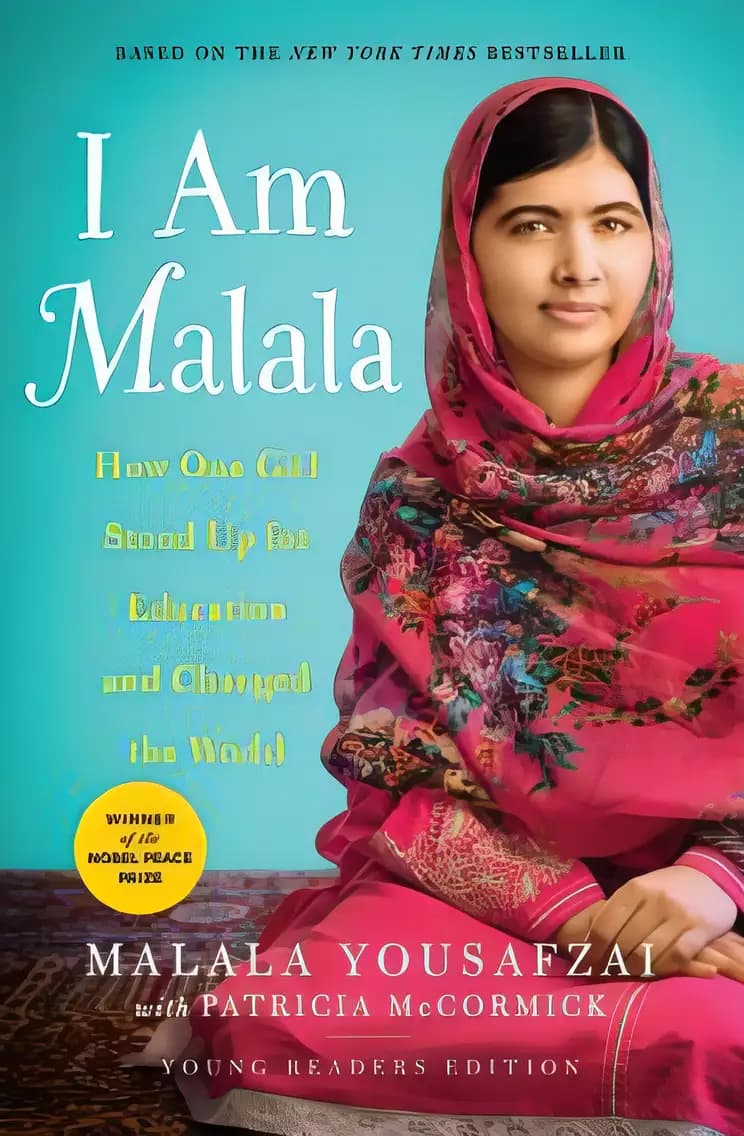
I Am Malala: How One Girl Stood Up for Education and Changed the World
on Goodreads (33,309)
What’s inside...
When the Taliban took control of the Swat Valley in Pakistan, one girl spoke out. Malala Yousafzai refused to be silenced and fought for her right to an education.
On Tuesday, October 9, 2012, when she was fifteen, she almost paid the ultimate price. She was shot in the head at point-blank range while riding the bus home from school, and few expected her to survive.
Instead, Malala's miraculous recovery has taken her on an extraordinary journey from a remote valley in northern Pakistan to the halls of the United Nations in New York. At sixteen, she has become a global symbol of peaceful protest and the youngest nominee ever for the Nobel Peace Prize.
I AM MALALA is the remarkable tale of a family uprooted by global terrorism, of the fight for girls' education, of a father who, himself a school owner, championed and encouraged his daughter to write and attend school, and of brave parents who have a fierce love for their daughter in a society that prizes sons.
I AM MALALA will make you believe in the power of one person's voice to inspire change in the world.
Age
10-13
Length
230 pages
Text complexity
Character compass
Malala Yousafzai
Fiona Reynolds
Moniba
Tor Pekai Yousafzai
Ziauddin Yousafzai
Discussion points
What do you think motivated Malala to stand up for education?
How do you feel about the challenges Malala faced? What would you have done in her situation?
Why is education important, and how does it help us in our lives?
How can we help or support other children around the world who might be struggling to get an education?
What did you learn from Malala's story that you can apply in your own life?
Tip: Role play these questions
Encourage your child to express their thoughts and feelings after reading the book. Listen actively without interrupting, showing them that their opinions are valued.
Relate the themes of the book to your child’s everyday life, possibly discussing any personal experiences with school or learning.
Discuss the role of bravery and courage in the book, asking your child about times they felt brave and how it made a difference.
Highlight Malala’s perseverance, and discuss with your child the importance of standing up for what they believe in, even when it's challenging.
Ask your child how they think the story might inspire others, promoting a sense of empathy and global awareness.
Key lessons
Example Lesson: The power of education
Explanation: Malala Yousafzai's fight for her right to education despite facing extreme challenges showcases the transformative power of education.
Real-World Application: Children can be encouraged to value and pursue their education, understanding its role in shaping their futures and empowering them to make a difference.
Example Lesson: Courage and perseverance
Explanation: Despite being attacked for her beliefs, Malala continued to advocate for girls' education, demonstrating immense bravery and resilience.
Real-World Application: Children learn the importance of standing up for their beliefs and persisting in the face of adversity, fostering qualities of bravery and resilience.
Example Lesson: Equality and human rights
Explanation: Malala's advocacy highlights the importance of equal rights and education for all, regardless of gender.
Real-World Application: This lesson can help children understand and respect everyone's rights and promote equality within their own circles and communities.
Example Lesson: Impact of one individual
Explanation: The story of Malala shows how even young individuals can influence global change through dedication and voice.
Real-World Application: Children learn that their voice is powerful and that they can be agents of change regardless of their age.
Example Lesson: Empathy and understanding
Explanation: Learning about Malala's challenges and her determination to fight for her rights helps readers develop a deeper empathy and understanding for people in difficult situations.
Real-World Application: Children are encouraged to cultivate empathy, leading them to be more understanding and supportive of others in need.