
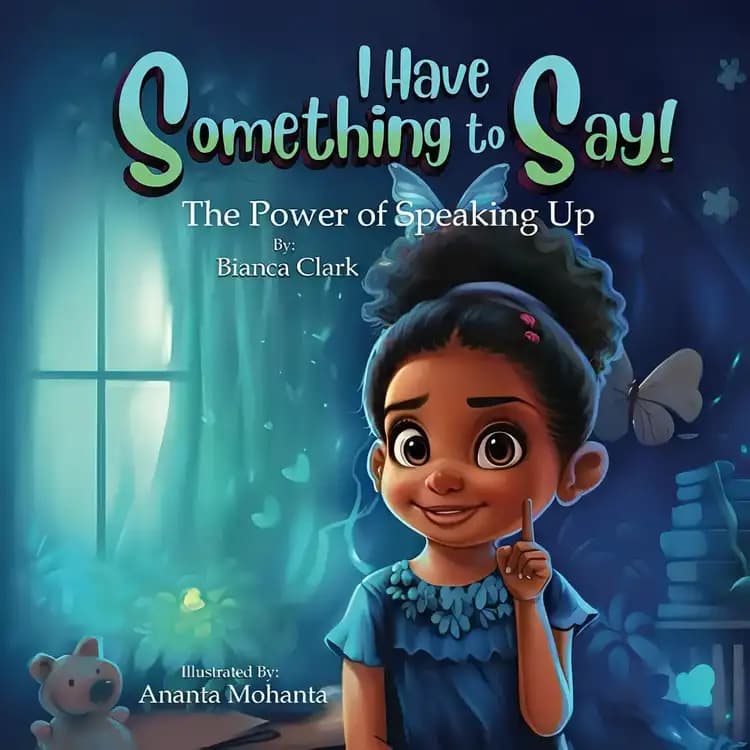
I Have Something to Say!: The Power of Speaking Up
What’s inside...
I Have Something To Say! The Power Of Speaking Up' by Bianca Clark is a children’s book that follows young Mya's journey of empowerment and self-discovery in a noisy city. It motivates young readers to discover their voice, gain confidence, and embrace their uniqueness. The book teaches important life lessons through a problem-solving narrative and emphasizes the importance of speaking up. It features eye-catching illustrations by Ananta Mohanta, making it popular among children and parents.
Age
3-7
Length
40 pages
Text complexity
Discussion points
What made the main character want to speak up about their feelings?
How do you think the story would have changed if the character didn't speak up?
Can you think of a time when you felt like the character? How did you handle it?
Why is it important to tell others about our feelings and thoughts?
What can we do if we're too shy or scared to speak up?
Tip: Role play these questions
Encourage your child to relate to the protagonist by sharing a personal story where you had to speak up.
Praise your child’s responses to show that their thoughts and opinions are valued.
Ask your child to draw a scene where they spoke up about something important to them, fostering a deeper connection to the theme.
Create a 'speaking up jar' where both of you can write moments when you wanted to speak up. Regularly discuss these instances to make speaking up a habit.
Role-play different scenarios from the book to help your child practice speaking up in a safe and fun environment.
Key lessons
Example Lesson: Importance of Self-expression
Explanation: The protagonist of the book learns to overcome shyness and expresses their thoughts and feelings confidently.
Real-World Application: Children can apply this by learning to voice their opinions in class discussions or sharing their feelings with family and friends.
Example Lesson: Courage to Stand Up for Oneself
Explanation: Through various scenarios, the character demonstrates taking a stand on personal beliefs and values, despite challenges.
Real-World Application: This encourages children to uphold their beliefs and assert themselves in situations like peer pressure or bullying at school.
Example Lesson: Resilience in Facing Rejection
Explanation: The story showcases the protagonist handling rejection and criticism when speaking up, yet continuing to express themselves.
Real-World Application: Kids learn to handle rejection from peers or adults gracefully, understanding that it is a part of growth and learning to express oneself better.
Example Lesson: Empathy Towards Others' Opinions
Explanation: As the protagonist learns to voice their own opinions, they also learn to listen and respect differing opinions from others.
Real-World Application: This lesson helps children in developing listening skills and respecting diverse perspectives in their interactions at school and at home.
Example Lesson: Building Confidence
Explanation: Each time the protagonist speaks up, they gain more confidence, showing a positive development in self-esteem.
Real-World Application: Children will be inspired to engage more in activities that involve expressing themselves, boosting their self-confidence and public speaking skills.