
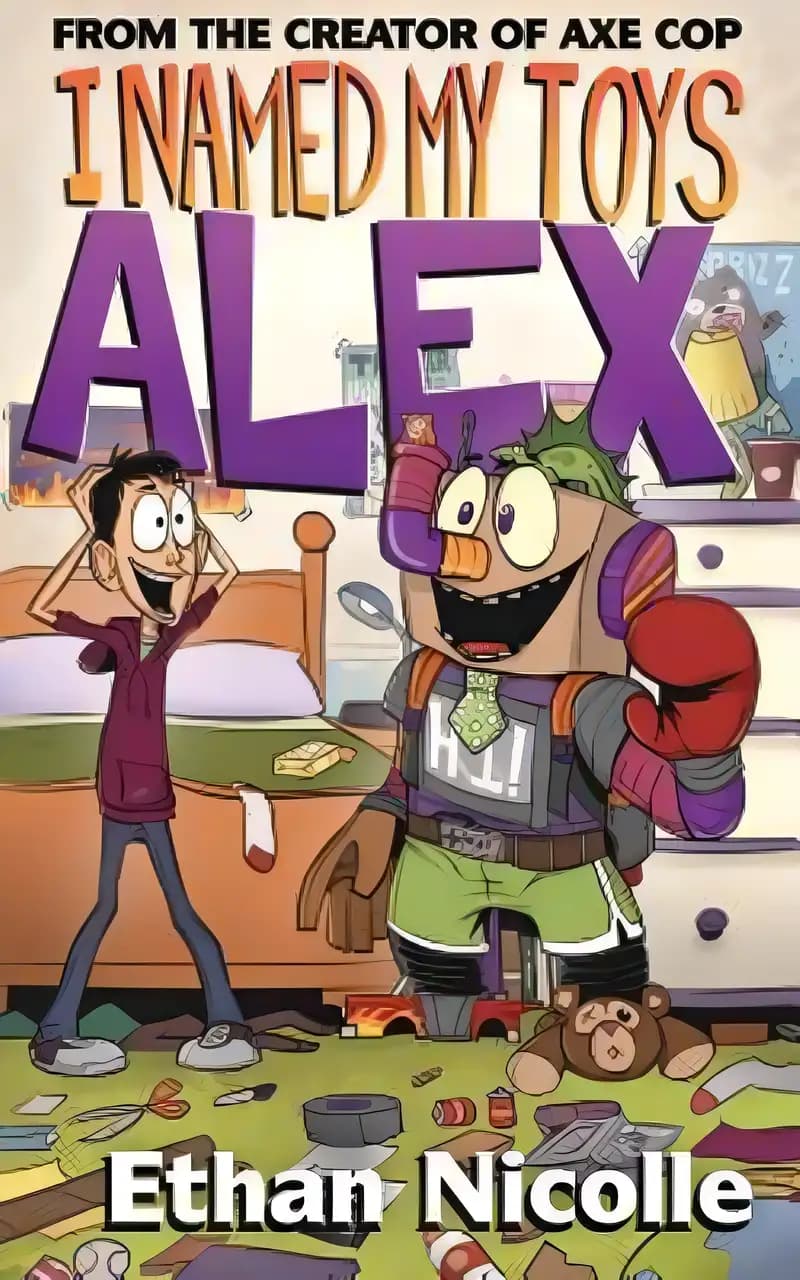
I Named All My Toys Alex
on Goodreads (5)
What’s inside...
When Matty has to spend a Saturday doing chores, he turns all the toys in his messy room into Alex, the coolest friend a kid could ever hope for. Together with their hamster, Tank, they battle the forces of dirty laundry, visit other worlds, battle worms and giant moles and play video games with Jerry. Written and illustrated by Axe Cop artist and co-creator Ethan Nicolle.
Age
4-8
Length
66 pages
Text complexity
Discussion points
Why do you think the character named all their toys 'Alex'? What does this name mean to them?
How do the toys feel about sharing the same name, and how would you feel if you shared your name with everyone in your class?
What are some of the adventures the toys go on, and which adventure would you like to go on with your own toys?
How does the character's decision to name all the toys 'Alex' change their relationship with the toys?
If you could give a different name to each toy in the book, what names would you choose and why?
Tip: Role play these questions
Encourage your child to think about the significance of names and how they shape identity by discussing their own name and the story behind it.
Ask your child to imagine and describe a day in the life of one of the toys named 'Alex' from the book, enhancing their empathy and creativity.
Inspire your child to talk about their favorite toy and create a story involving an adventure, similar to the ones in the book.
Discuss the themes of identity and uniqueness with your child, highlighting how everyone, even toys, can be special in their own way.
Use the discussion to bridge into a craft activity, like making name tags for their toys, blending reading comprehension with practical, hands-on fun.
Key lessons
Example Lesson: The importance of individuality
Explanation: Throughout the story, the main character realizes that naming all toys 'Alex' makes it hard to appreciate the unique qualities of each toy.
Real-World Application: Children learning this lesson will understand the value of recognizing and celebrating everyone's unique traits and personalities in real-life social settings.
Example Lesson: Creativity and problem-solving
Explanation: The protagonist uses creative thinking to come up with new names and solutions once he realizes the confusion caused by the common names.
Real-World Application: This lesson encourages children to think creatively when faced with challenges and to find unique solutions in their daily activities and interactions.
Example Lesson: Responsibility
Explanation: When faced with the confusion of the toys’ names, the protagonist takes responsibility to rectify the situation, showing accountability for his actions.
Real-World Application: This teaches children the importance of taking responsibility for their decisions and actions, a skill vital in their growth and development.
Example Lesson: The value of diversity
Explanation: By naming all toys differently, the protagonist learns to appreciate and embrace diversity, reflecting the diverse world around him.
Real-World Application: Instilling this lesson helps children appreciate diverse cultures and perspectives, promoting inclusivity in their everyday social interactions.
Example Lesson: Empathy and understanding
Explanation: The protagonist’s efforts to rectify his mistake demonstrates his consideration for how the toys feel about being indistinguishable.
Real-World Application: This promotes empathy in children, teaching them to consider others' feelings and perspectives, which is essential for building healthy relationships.