
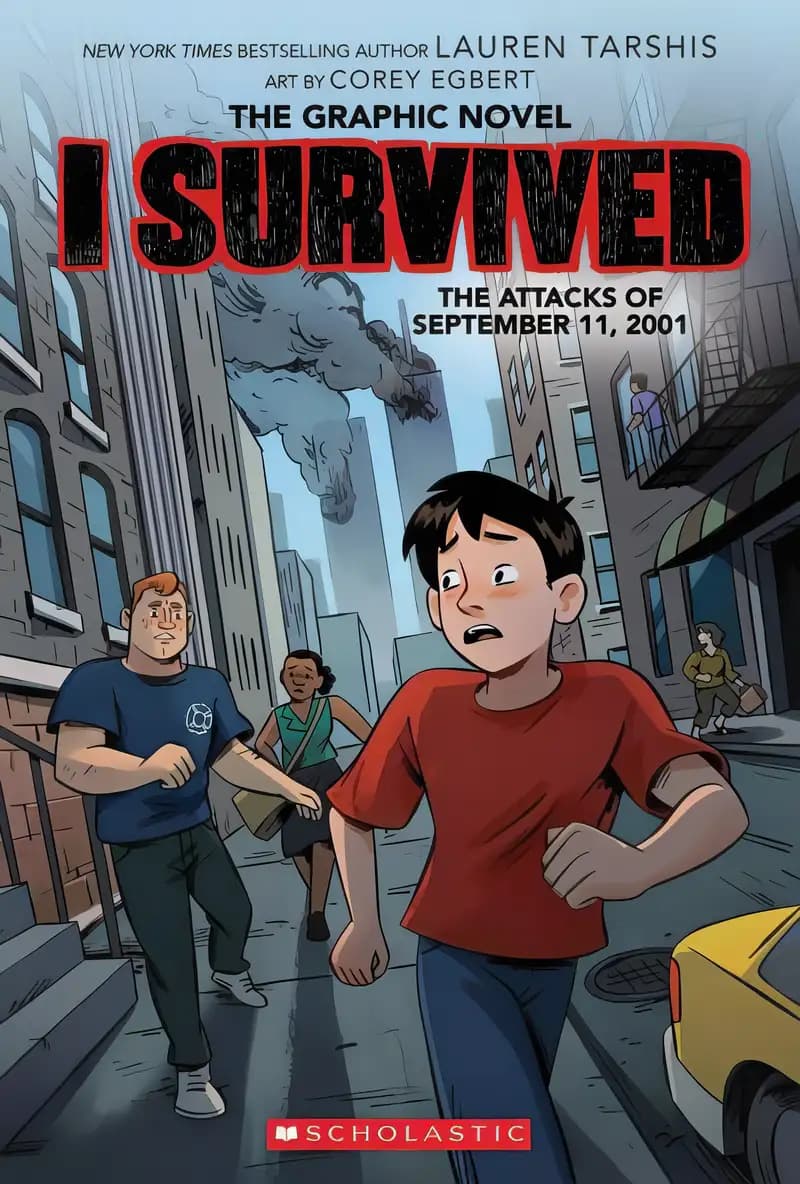
I Survived the Attacks of September 11, 2001: A Graphic Novel (I Survived Graphic Novel #4) (4) (I Survived Graphix)
#4 of 12 in I Survived Graphic Novel Series
What’s inside...
A gripping graphic novel adaptation of Lauren Tarshis's bestselling I Survived the Attacks of September 11, 2001, released in time for the 20th anniversary of 9/11. Lucas, who loves football and his Uncle Benny, a firefighter, is devastated when his parents deem the sport too dangerous and he has to quit. Seeking advice from Benny, Lucas heads to his uncle’s firehouse in New York City, but his life changes forever when tragedy strikes. This adaptation brings the I Survived series to life with bold graphics, combining historical facts with high-action storytelling, and includes a non-fiction section with facts and photos about the real event.
Character compass
Lucas
Uncle Benny
Lucas's Dad
Discussion points
How do you think the main character felt during the attacks, and how would you feel in a similar situation?
What are some ways the community came together after the event? Can you think of examples in our own community where people help each other in tough times?
Why is it important to remember and talk about challenging events like September 11?
How do the illustrations in the graphic novel help you understand the story and emotions better?
Tip: Role play these questions
Initiate the conversation by sharing your own memories of the day, if any, to create a personal connection to the event.
Encourage empathy by asking your child to express what they might have done if they were in the characters’ shoes.
Highlight the acts of bravery and kindness in the story to instill a sense of hope and positivity.
Discuss the historical impact of the event to give your child a broader understanding of its significance.
Key lessons
Example Lesson: Resilience in the face of adversity
Explanation: The protagonist of the story navigates the challenges and fears stemming from the September 11 attacks, demonstrating courage and perseverance.
Real-World Application: Children can learn to remain hopeful and strong even during difficult times, whether it's dealing with personal challenges or larger crises.
Example Lesson: Historical awareness and empathy
Explanation: By immersing readers in a pivotal historical event, the book fosters empathy and a deeper understanding of the impact such events have on individuals and communities.
Real-World Application: This encourages children to be empathetic towards people who have experienced traumatic events and to value the importance of history in shaping our world.
Example Lesson: The importance of community support
Explanation: The story highlights how people came together to support one another during a crisis, illustrating the strength and comfort that community can provide.
Real-World Application: Children learn the significance of supporting others and being part of a community, whether it’s in school, among friends, or in their larger local environment.
Example Lesson: Coping with fear and uncertainty
Explanation: Characters in the book demonstrate various ways of handling fear and uncertainty during the attacks, providing a mirror for children to reflect on managing their own anxieties.
Real-World Application: This lesson helps children understand that it's normal to feel scared or uncertain and that there are constructive ways to deal with these emotions.
Example Lesson: Valuing heroism and bravery
Explanation: The book showcases acts of bravery and heroism during the September 11 attacks, which can inspire readers.
Real-World Application: Children learn to appreciate and recognize acts of bravery in everyday life and understand the impact of courageous actions on others and society.