
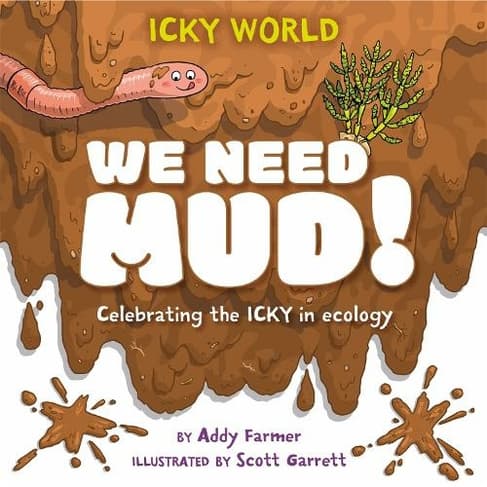
Icky World: We Need MUD!: Celebrating the icky but important parts of Earth's ecology
#3 in Icky World Series
illustrations by
What’s inside...
The book dives into the often overlooked and icky aspects of Earth's ecology, like mud, and explores why they are crucial for the environment.
Discussion points
Why do you think mud is important for the Earth?
What are some of the icky things mentioned in the book that help our planet?
How do you feel about the creatures that live in the mud?
Can you think of ways we can help protect these icky but essential parts of nature?
Tip: Role play these questions
Use expressive reading to make the muddy scenes come alive and emphasize the importance of each icky element.
Relate the story to your child’s personal experiences, such as playing in the park or garden, to make the ecological concepts more relatable.
Encourage your child to ask questions about the book and its themes, showing genuine interest in their thoughts and ideas.
After reading, consider exploring a local park or nature reserve to see some 'icky' natural elements firsthand, reinforcing the book’s messages.
Key lessons
Example Lesson: Appreciation of nature's roles
Explanation: The book highlights the essential roles that often overlooked elements like mud play in the ecosystem.
Real-World Application: Children can learn to value all parts of nature, not just the traditionally beautiful ones, fostering a deeper respect for the environment.
Example Lesson: Understanding ecological balance
Explanation: Through vivid storytelling, the book explains how mud contributes to ecological balance by supporting plant growth and providing habitat.
Real-World Application: This can encourage children to observe and reflect on how different environmental elements interact and support each other in their local surroundings.
Example Lesson: Importance of biodiversity
Explanation: The narrative illustrates various creatures and plants that thrive in muddy environments, highlighting biodiversity.
Real-World Application: Children can be inspired to learn more about different species and their habitats, promoting curiosity and respect for biodiversity.
Example Lesson: Science exploration
Explanation: ‘We Need MUD!’ serves as a fun introduction to basic scientific concepts related to soil and ecosystems.
Real-World Application: This can motivate children to engage in their own little experiments or explorations in nature, enhancing their understanding and appreciation of science.