
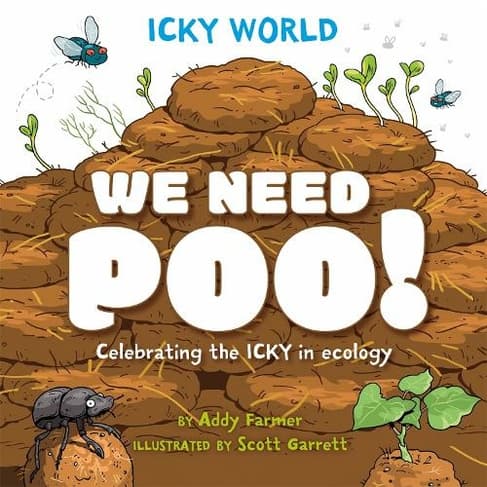
Icky World: We Need POO!
Icky World Series
What’s inside...
Dive into the fascinating and essential role of excrement in Earth’s ecosystems, exploring how every creature’s waste supports the delicate balance of nature.
Series reading
Non-Sequential
Age
8-12
Length
32 pages
Text complexity
Discussion points
Why do you think the book talks about poo, and what important roles do you think it plays in the ecosystem?
How do the characters in the book feel about poo, and what are some ways they deal with it?
Can you think of any other things that might seem icky but are actually important for nature?
What are some ways we can keep our environment clean even when dealing with icky things?
How do you think this book helps us understand and appreciate the natural world?
Tip: Role play these questions
Use a light and humorous tone when discussing the themes of the book to make the conversation more enjoyable.
Relate the topic to daily life by discussing how disposing of waste properly is essential for our health and the environment.
Ask your child to draw or describe their favorite 'icky' animal from the book, using the book’s illustrations as inspiration.
Encourage your child to think critically by asking them how they would handle situations from the book.
Praise your child for expressing their thoughts and ideas, reinforcing that all questions and opinions are valuable in learning.
Key lessons
Example Lesson: The importance of sanitation and hygiene
Explanation: The book explains the process and necessity of excretion in a fun and engaging way, encouraging children to understand why sanitation practices are important.
Real-World Application: Children can apply this lesson by adopting good hygiene habits such as washing hands properly after using the restroom.
Example Lesson: The cycle of nutrients
Explanation: Through the story, children learn how waste can contribute to the nutrient cycle by becoming compost or fertilizer, showing them the interconnectedness of life systems.
Real-World Application: This concept can be applied in everyday life through practices like composting food scraps or understanding how their actions impact the environment.
Example Lesson: Respecting all creatures and natural processes
Explanation: The book portrays various creatures and natural processes with humor and respect, teaching children that everything in nature, including ‘icky’ things like poo, has a purpose.
Real-World Application: Children can show respect for nature and all its elements by not littering, participating in recycling, and learning more about how ecosystems work.
Example Lesson: Understanding science through everyday phenomena
Explanation: By demystifying a common but seldom discussed process, the book makes science accessible and engaging, showing that learning can be found in everyday life.
Real-World Application: Children can be encouraged to observe, question, and learn from other everyday events and processes, fostering a continuous love for learning.