
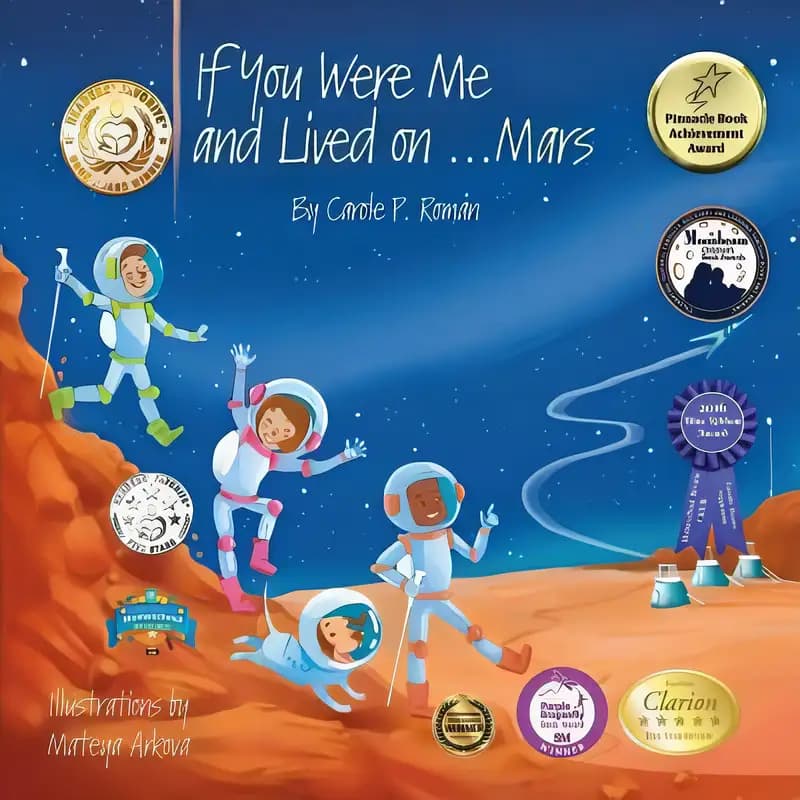
If You Were Me and Lived on... Mars: A Child's Introduction to Cultures Around the World
#23 of 23 in A Child's Introduction to Cultures Around the World Series
What’s inside...
Join Carole P. Roman as she takes readers on an exciting journey to colonize Mars in the latest installment of her educational series. Explore the Red Planet, from its largest volcano, Olympus Mons, to its two moons, Phobos and Deimos. Learn about the attire you would wear, the changing seasons, and experience life on Mars through the perspective of an adventurous young explorer. This book provides a comprehensive look at what it would be like to live on Mars and invites readers to continue their exploration through other books in the series.
Discussion points
How do you think daily life on Mars would be different from Earth?
What are some things you would take with you if you were to live on Mars?
If you could meet a child from Mars, what would you like to ask them?
Why do you think it's important to learn about different cultures, even imaginary ones like on Mars?
How would you feel about living on another planet and why?
Tip: Role play these questions
Encourage your child to use their imagination to think about what life might be like on Mars.
Discuss the importance of understanding and appreciating different cultures, relating it back to the diversity of Earth.
Ask your child to draw or describe a house they would live in if they were on Mars, using descriptions from the book.
Create a 'What if?' scenario game where you and your child think about different aspects of daily life and how they would change on Mars.
Use the book as a starting point for a small research project where you and your child can learn more about Mars and space travel.
Key lessons
Example Lesson: Cultural Awareness
Explanation: The book introduces young readers to diverse cultures on Mars, offering a creative twist by situating them in a familiar yet fantastical context.
Real-World Application: Children will learn to appreciate and respect differences among people in their own community and around the world, fostering a sense of global citizenship.
Example Lesson: Imagination and Curiosity
Explanation: By exploring what life might look like on another planet, the book encourages children to think creatively and ask 'what if' questions about the world.
Real-World Application: This sense of curiosity can be applied in educational settings, encouraging children to engage actively with subjects such as science and geography.
Example Lesson: Understanding Geography
Explanation: The story takes children through various hypothetical locales on Mars, which parallels learning about real-world geography.
Real-World Application: Children can transfer this knowledge to understand Earth's geography better, recognize country locations, or understand environmental differences.
Example Lesson: Adaptability
Explanation: The characters in the book adjust to living in a different environment on Mars, which illustrates the necessity of adaptability.
Real-World Application: This lesson helps children learn to be flexible and resilient in new situations or when facing changes in their own lives.