
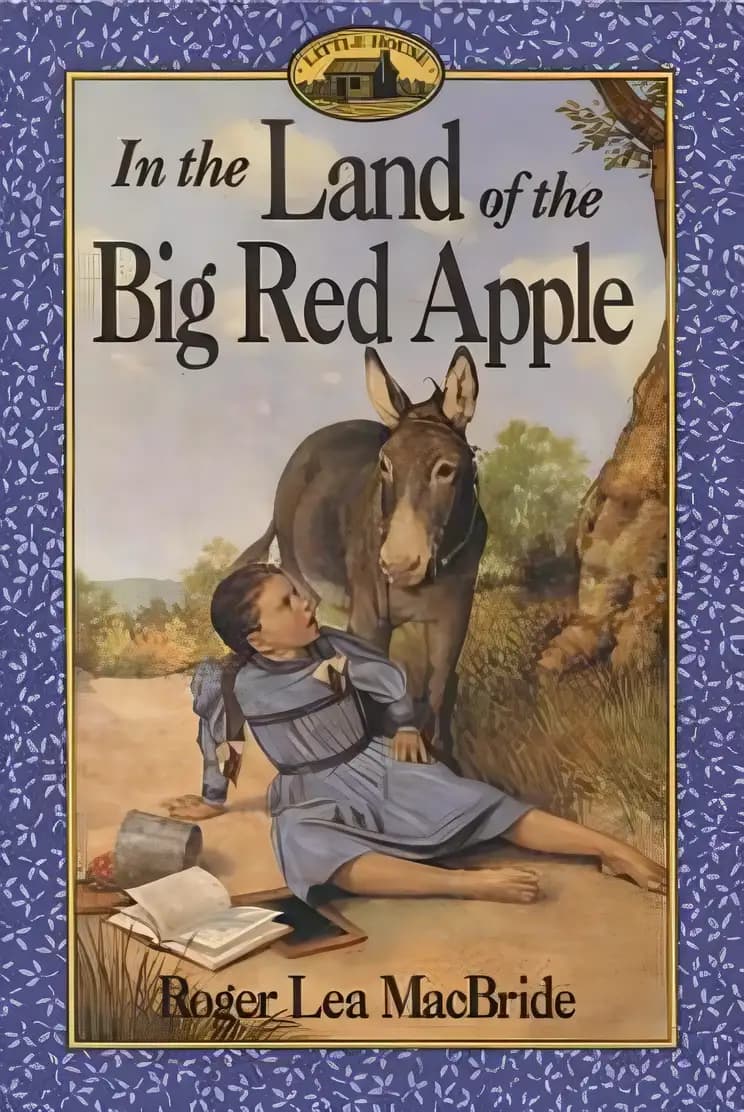
In the Land of the Big Red Apple (Little House Sequel)
#3 of 8 in Little House: The Rose Years Series
What’s inside...
The third book in the Rose Years series, the story of the spirited daughter of the author of the beloved Little House series. Eight going on nine, Rose Wilder is beginning to settle into her new life in Missouri, the Land of the Big Red Apple. Her father is building their farmhouse and she dreams of the day they'll have their own bright crop to harvest. But before that can happen, she has a fierce ice storm to contend with and her first real Christmas in the Ozarks to enjoy.
Character compass
Rose Wilder
Almanzo Wilder
Laura Ingalls Wilder
Rose Wilder Lane
Discussion points
How do you think Rose felt when her family moved to the new land? Would you feel the same way?
What would you have done differently if you were in Rose's shoes during her adventures?
What does the big red apple symbolize in the story? How does it relate to the choices Rose and her family make?
How do the challenges Rose faces help her grow? Can you think of a time when a challenge helped you grow?
Tip: Role play these questions
Encourage your child to imagine themselves in Rose's world—ask them how they would feel experiencing Rose’s adventures.
Discuss the historical setting of the book. Help your child understand the time period and how it differs from today.
Focus on the emotions depicted in the book. Ask your child how they think each character feels in different situations, promoting empathy and emotional intelligence.
Relate the book's themes to your child's life by asking them to compare their personal experiences with those of Rose—fostering a deeper connection with the text.
Key lessons
Example Lesson: Importance of Hard Work
Explanation: The characters in 'In the Land of the Big Red Apple' often engage in challenging tasks that require persistence and effort, such as farming and household responsibilities.
Real-World Application: Children can learn the value of diligence and perseverance in achieving goals, whether in their studies, chores, or hobbies.
Example Lesson: Family and Community Support
Explanation: Throughout the book, the importance of family and community bonds is highlighted as characters rely on each other for support and companionship.
Real-World Application: This lesson encourages children to value and nurture relationships with family members and peers, understanding the strength that comes from a supportive network.
Example Lesson: Adaptability to Change
Explanation: The family in the story faces various changes and challenges, adapting to new environments and situations with resilience.
Real-World Application: Children can learn to embrace change positively, using it as an opportunity for growth and learning.
Example Lesson: Appreciation for Nature
Explanation: The book's setting in a rural area brings attention to the beauty and significance of the natural world, with characters interacting with their environment in respectful and meaningful ways.
Real-World Application: This can foster a sense of responsibility and appreciation for nature among children, encouraging environmentally friendly behaviors.
Example Lesson: Economic Understanding
Explanation: The book deals with themes of trade, barter, and the value of goods, providing a basic understanding of economic principles.
Real-World Application: Children can apply these concepts to understand the value of money, saving, and responsible spending in their daily lives.