
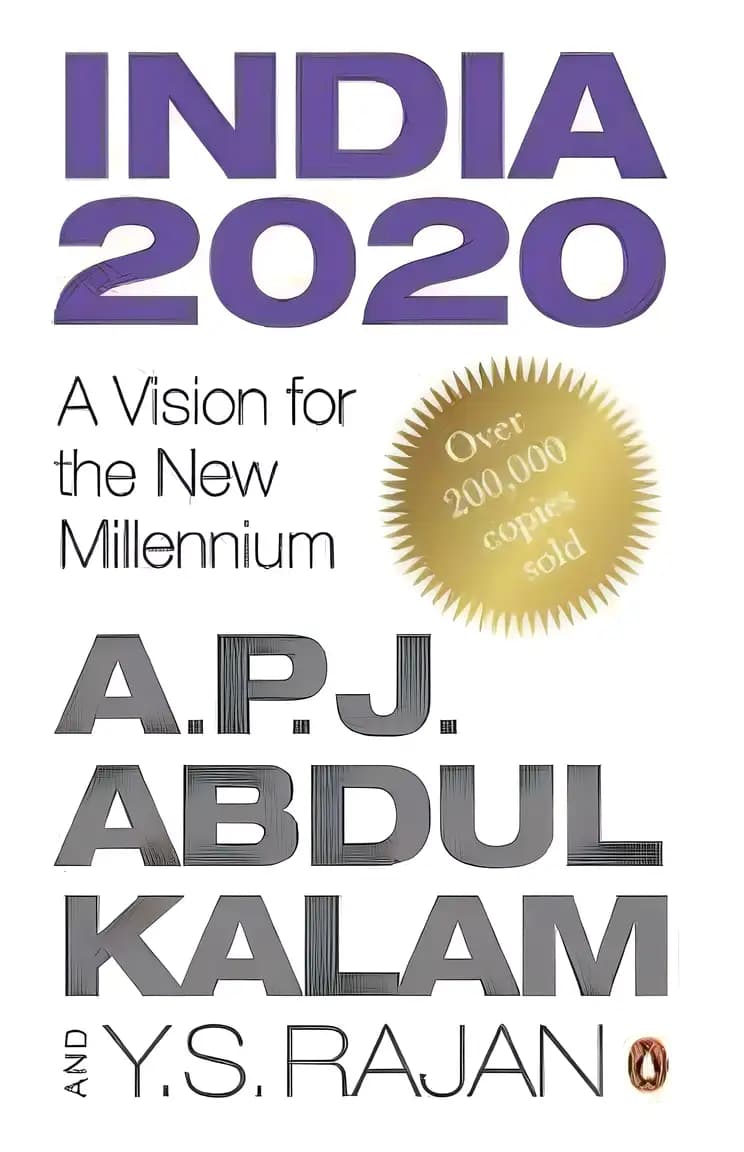
India 2020: A Vision for the New Millennium
on Goodreads (2,147)
What’s inside...
In this ground-breaking vision document, first published in 1998, Dr. A.P.J. Abdul Kalam and Y.S. Rajan offer a blueprint for India to be counted among the world's top five economic powers by the year 2020. They cite growth rates and development trends to show that the goal is not unrealistic. Past successes - the green revolution and satellite-based communication linking remote regions of the country, for instance bear them out. The same sense of purpose can make us a prosperous, strong nation in a matter of years, assert Kalam and Rajan. This is a book that every citizen who hopes for a better India must read.
Age
14-17
Length
342 pages
Text complexity
Discussion points
How do you imagine the future of technology will impact our daily lives?
What are some ways we can contribute to making our community better?
Dr. Kalam discusses education as a powerful tool; why do you think education is important?
If you could solve one major world problem, what would it be and why?
How do you think leaders should help make the world a better place?
Tip: Role play these questions
Encourage your child to think creatively by asking them to draw or describe their vision of the future.
Connect the themes of the book to current events or personal family experiences to make the discussion more relatable.
Listen actively to your child’s opinions and thoughts, and show appreciation for their insights to boost their confidence in expressing ideas.
After discussing a problem mentioned in the book, brainstorm together on possible solutions, emphasizing teamwork and critical thinking.
Key lessons
Example Lesson: The importance of setting goals
Explanation: The book 'India 2020' revolves around Dr. Kalam's vision for a developed India, emphasizing the significance of setting clear and achievable goals.
Real-World Application: Children can learn to set personal and academic goals, which can help them achieve success in school and their personal lives.
Example Lesson: The value of hard work and dedication
Explanation: Dr. Kalam's discussion of transforming India into a developed nation by 2020 highlights the necessity of dedication and perseverance.
Real-World Application: This lesson teaches children the importance of committing to their tasks and working hard to overcome challenges, whether in their studies, sports, or other activities.
Example Lesson: The role of science and technology in society
Explanation: The book details the advancements needed in science and technology for India’s growth, showcasing their pivotal role in national development.
Real-World Application: Children are encouraged to take an interest in scientific subjects and understand their impact on improving society and solving real-world problems.
Example Lesson: Teamwork and collaboration
Explanation: Kalam stresses the importance of collaborative efforts among citizens to achieve national goals.
Real-World Application: This underscores the importance of teamwork in achieving common objectives, teaching children to work cooperatively in group settings, be it in school projects or team sports.
Example Lesson: Visionary thinking
Explanation: Throughout the book, Kalam inspires with his forward-thinking ideas and plans for the nation, demonstrating the power of visionary leadership.
Real-World Application: Encouraging children to think big and be innovative can help them become forward-thinking leaders in their own right, capable of generating new ideas and solutions.