
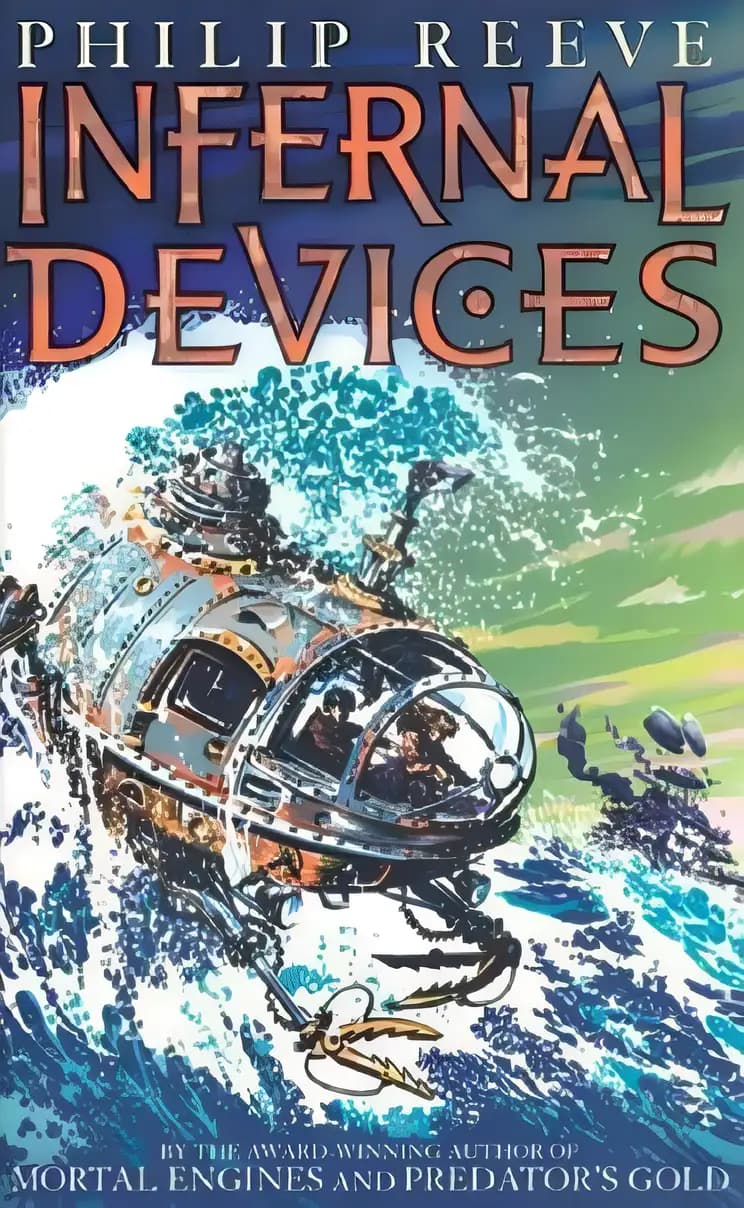
Infernal Devices
#3 of 5 in Mortal Engines Quartet Series
on Goodreads (18,136)
What’s inside...
The third book in the Predator Cities series follows the story of Wren, the daughter of Tom Natsworthy and Hester Shaw. The family lives in the static settlement of Anchorage, which has settled on the edge of what was once America. Wren, desperate for adventure, is lured by a submarine pirate who offers her a chance to escape. In return, she must steal the Tin Book, a task that could ignite a conflict that may tear the world apart.
Character compass
Wren Natsworthy
Hester Shaw
Theo Ngoni
Tom Natsworthy
Stalker Fang
Nimrod Pennyroyal
Fishcake
Discussion points
How do you think the characters feel about the changes in their world, and what would you feel in their place?
Which inventions in the book did you find most interesting and why?
How do the relationships between characters evolve throughout the story, and what can we learn from them?
What are the moral challenges the characters face, and how would you handle similar situations?
If you could ask the author one question about the book, what would it be?
Tip: Role play these questions
Encourage your child to imagine the settings described in the book. Ask them to draw a scene or describe it in detail to enhance their understanding and engagement.
Discuss the historical context of the narrative to give your child a deeper understanding of the underlying themes and motivations of the characters.
Create a fun activity where your child can design their own mechanical invention inspired by the book, discussing the science and creativity behind it.
Compare and contrast the dilemmas faced by the characters with real-life scenarios to help your child apply the moral lessons from the book in their own life.
Encourage empathy by asking your child how they would feel in the characters’ situations, promoting a deeper personal connection to the narrative.
Key lessons
Example Lesson: Resilience in the face of adversity.
Explanation: The protagonist, Tom Natsworthy, showcases remarkable resilience when faced with numerous challenges and uncertainties in a dystopian world.
Real-World Application: Children can learn the importance of overcoming difficulties and adapting to changes, which can help them navigate challenges in school and social situations.
Example Lesson: Importance of teamwork and collaboration.
Explanation: Tom and his allies must work together to navigate the complex political and social landscapes, demonstrating how cooperation can lead to success.
Real-World Application: This lesson teaches children the value of working collaboratively in group projects or team sports, encouraging respect and mutual support among peers.
Example Lesson: Questioning moral ambiguity.
Explanation: Characters in 'Infernal Devices' often grapple with difficult moral decisions, encouraging readers to think deeply about right and wrong.
Real-World Application: Children can apply this to ethical dilemmas in their own lives, learning to consider multiple perspectives and make thoughtful decisions.
Example Lesson: The impact of technology on society.
Explanation: The book explores the ways advanced machinery and conflicts over resources shape societies, prompting readers to think critically about technology and progress.
Real-World Application: This can help children understand the role of technology in their daily lives and inspire discussions about responsible usage and sustainability.
Example Lesson: Adaptability to change.
Explanation: Characters must adapt to rapidly changing environments and situations, a recurring theme throughout the book.
Real-World Application: Teaching children the skill of adaptability, which is crucial for handling new situations such as moving to a new school or dealing with changes at home.