
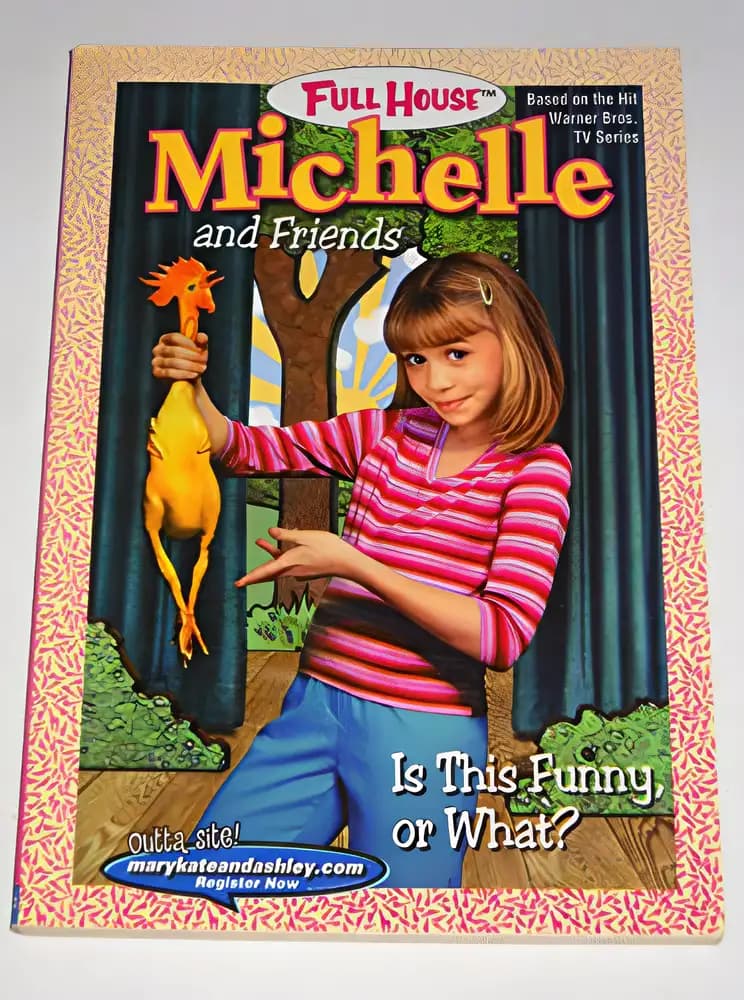
Is This Funny, or What? (FULL HOUSE : MICHELLE AND FRIENDS)
#37 in Full House: Michelle Series
on Goodreads (11)
What’s inside...
Michelle earns the lead role in a comedy her class is putting on, but when she fails to make anyone laugh during the rehearsal, she knows she will have to regain her comic personality or lose part in the play.
Character compass
Michelle Tanner
Discussion points
What part of the book made you laugh the most, and why do you think it was funny?
How do you think Michelle feels when she's with her friends in the story?
Can you think of a time when something funny happened to you with your friends?
What do you think makes a good friend like the ones in Michelle's story?
If you could add another funny event to the book, what would it be?
Tip: Role play these questions
Use expressive tones and facial expressions to mirror the emotions in the story, making the reading experience fun and lively.
Pause after funny parts to discuss why they are humorous, relating them to real-life experiences or family inside jokes.
Encourage your child to express their feelings about the characters' actions, fostering empathy and understanding of social cues.
After reading, engage in an activity where you and your child create your own funny story or comic strip based on the themes of the book.
Key lessons
Example Lesson: Understanding humor and its appropriateness
Explanation: The book explores different situations where Michelle and her friends learn what is funny and what might not be, highlighting the importance of context in humor.
Real-World Application: Children can apply this lesson by learning to assess situations in their own lives to understand what is humorous and appropriate, helping them interact socially in a respectful manner.
Example Lesson: Importance of friendship and sharing
Explanation: Throughout the story, Michelle and her friends share many laughs and moments together, showcasing how sharing experiences can strengthen friendships.
Real-World Application: Children can learn to value and nurture their friendships by sharing their own experiences and time with peers, which can lead to more meaningful relationships.
Example Lesson: Learning from mistakes
Explanation: As the characters attempt to be funny, they sometimes make mistakes or misunderstandings occur, but they learn from these incidents.
Real-World Application: This teaches children that it's okay to make mistakes and that important lessons can be learned from every misstep, promoting a growth mindset.
Example Lesson: Expressing oneself creatively
Explanation: The characters in the book often come up with creative ways to be funny, encouraging self-expression through creativity.
Real-World Application: Children are encouraged to explore and express their own unique ideas and personalities, which supports their emotional and intellectual development.