
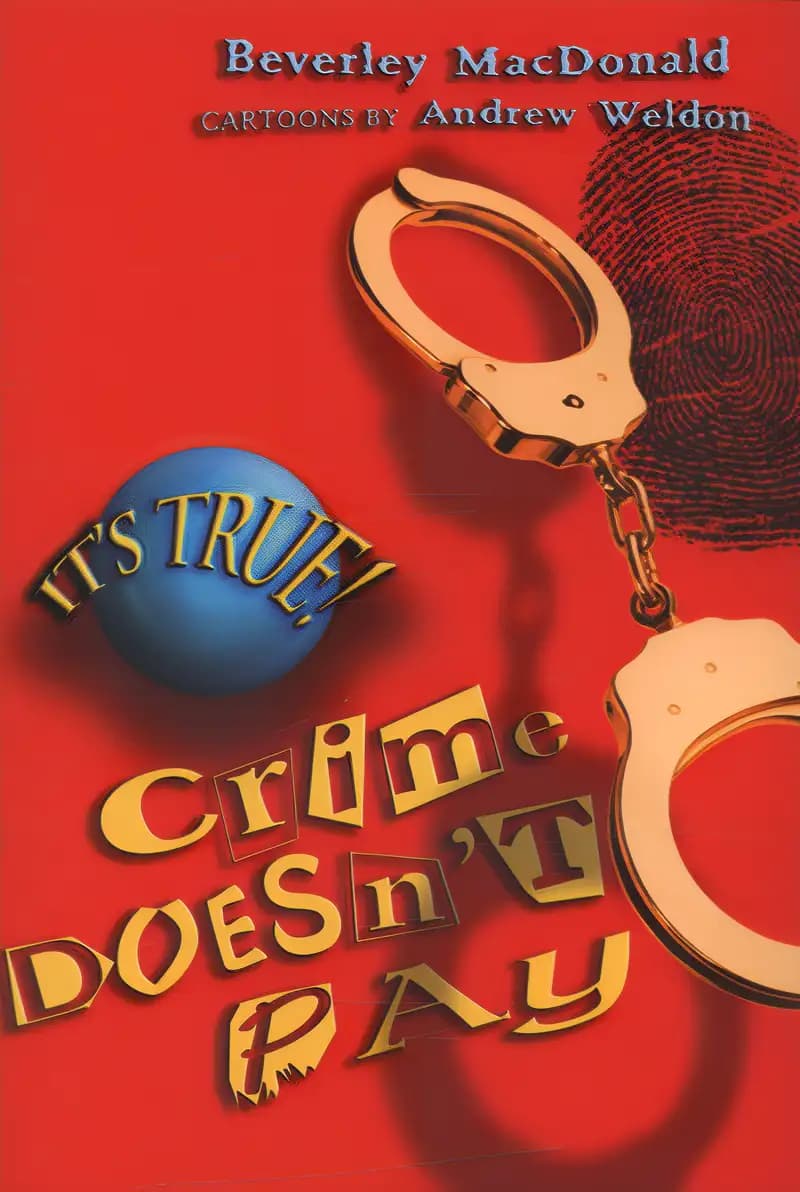
It's True! Crime Doesn't Pay
What’s inside...
Pssst! It's true! This is the best book on crime you'll ever read! Did you know that maggots can help solve crimes? That right-handed criminals run away to the left when they leave a crime scene? That the people who are best at detecting lies are not police but mothers? Once you had to catch a crook red-handed to prove him guilty. Now we can use the pattern of a bloodstain, fingerprints, computers and DNA samples to solve crimes. Even so, mysteries remain, like the Shark Arm murder and the strange case of D.B. Cooper, who jumped out of a plane with $200 000 and was never seen again ...Astound your friends with gory fact and stories of true crime.
Why read this book
- Highlights importance of ethical behavior engagingly.
- Encourages dialogue on consequences of crime.
- Stimulates critical thinking through real-life scenarios.
- Supports character development in young readers.
Age
10-13
Length
96 pages
Text complexity
Discussion points
Why do you think the characters in the book made the choices they did?
How do you feel about the consequences they faced?
What would you have done differently if you were in their shoes?
How can we apply the lessons from this book to our own lives?
What does 'Crime doesn't pay' mean to you?
Tip: Role play these questions
Ensure you create a comfortable and open atmosphere where the child feels safe expressing their thoughts and opinions.
Emphasize understanding over judgment when discussing character actions and consequences to foster empathy and critical thinking.
Connect the themes of the book to real-life scenarios that your child could encounter to make the content more relatable.
Acknowledge and validate your child's feelings and perspectives to encourage open communication.
Guide the conversation to help the child think about the importance of good decision making and the impacts of negative actions.
Key lessons
Example Lesson: Honesty is the best policy
Explanation: The book illustrates through various stories how characters who engage in dishonest behaviors eventually face consequences.
Real-World Application: Children can learn to value truthfulness in their daily interactions and understand that being honest builds trust and respect.
Example Lesson: Teamwork and collaboration
Explanation: Characters in the book who work together to solve problems demonstrate the effectiveness of collaboration.
Real-World Application: Children can apply this lesson by engaging in group activities at school or with friends, learning that cooperation can lead to successful outcomes.
Example Lesson: Understanding the consequences of actions
Explanation: The stories highlight how negative actions lead to undesirable outcomes, teaching the concept of cause and effect.
Real-World Application: This can help children think through their choices before acting, fostering a sense of responsibility.
Example Lesson: Resilience in the face of challenges
Explanation: Characters that encounter setbacks but continue to strive forward exemplify resilience.
Real-World Application: Children can be encouraged to persevere through their own challenges, whether in their academic or personal life, understanding that persistence is key to overcoming obstacles.
Example Lesson: Empathy for others
Explanation: By showing the impact of crimes and dishonesty on victims, the book teaches empathy.
Real-World Application: This lesson assists children in developing an understanding of the feelings of others, encouraging them to consider how their actions affect those around them.