
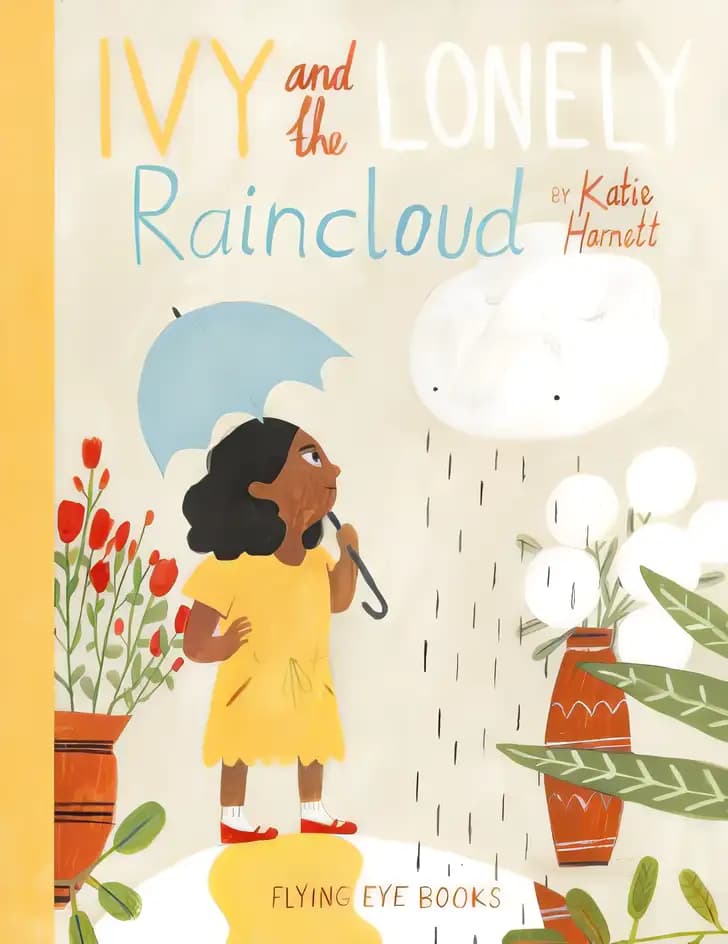
Ivy and the Lonely Raincloud
on Goodreads (212)
What’s inside...
In this charming tale, a lonely raincloud who is shunned for the very thing that makes him unique—rain—finds friendship with a grumpy little florist. Together, they discover that what makes them different can also bring joy, as the raincloud helps the sad florist find happiness again. Acclaimed illustrator Katie Harnett's work, recognized at the Bologna Children's Book Fair, brings this heartwarming story to life.
Age
2-7
Length
26 pages
Text complexity
Character compass
The Lonely Raincloud
Ivy
Discussion points
How do you think Ivy felt when she first saw the raincloud? Can you describe a time you felt the same?
Why do you think the raincloud was following Ivy? What does it mean to feel lonely?
How did Ivy help the raincloud feel better? What can we do when we see someone feeling sad or lonely?
What changes did you notice in the raincloud after Ivy helped it? How do our actions affect others' feelings?
What is the importance of kindness and friendship as shown in the story?
Tip: Role play these questions
Encourage your child to express their emotions by relating to Ivy or the raincloud, fostering a deeper understanding of their own feelings.
Discuss the theme of loneliness and companionship. This can help children understand and empathize with others who might feel left out or alone.
Use real-life examples of similar situations where kindness transformed a negative emotion, reinforcing the message of the book.
Highlight the facial expressions and colors in the illustrations to discuss the mood of the characters, helping children understand non-verbal cues of emotions.
After reading, engage in a creative activity, like drawing their own version of a lonely raincloud and how they would make it happy, to solidify the theme of compassion.
Key lessons
Example Lesson: Empathy and Understanding
Explanation: In 'Ivy and the Lonely Raincloud', Ivy learns to empathize with the raincloud’s sadness, helping it feel appreciated and needed despite its gloomy nature.
Real-World Application: Children can learn to recognize emotions in others and offer comfort, promoting emotional intelligence and fostering better interpersonal relationships.
Example Lesson: Acceptance and Friendship
Explanation: The story shows how Ivy accepts the raincloud, leading to a beautiful friendship, despite their initial differences.
Real-World Application: This teaches children the value of accepting others for who they are, encouraging inclusivity and reducing bullying in social settings.
Example Lesson: Finding Joy in Unexpected Situations
Explanation: Ivy discovers that what initially appeared to be a nuisance (the raincloud) could bring joy and benefits, such as helping flowers to grow in her garden.
Real-World Application: Children learn to stay positive and find the silver linings in less-than-ideal situations, enhancing resilience and adaptability.
Example Lesson: Caring for Nature
Explanation: The partnership between Ivy and the raincloud demonstrates collaboration in nurturing the environment, highlighting the consequences of natural elements like rain.
Real-World Application: It encourages young readers to be mindful of their environment and understand the ecological roles different elements play, fostering a sense of environmental stewardship.