
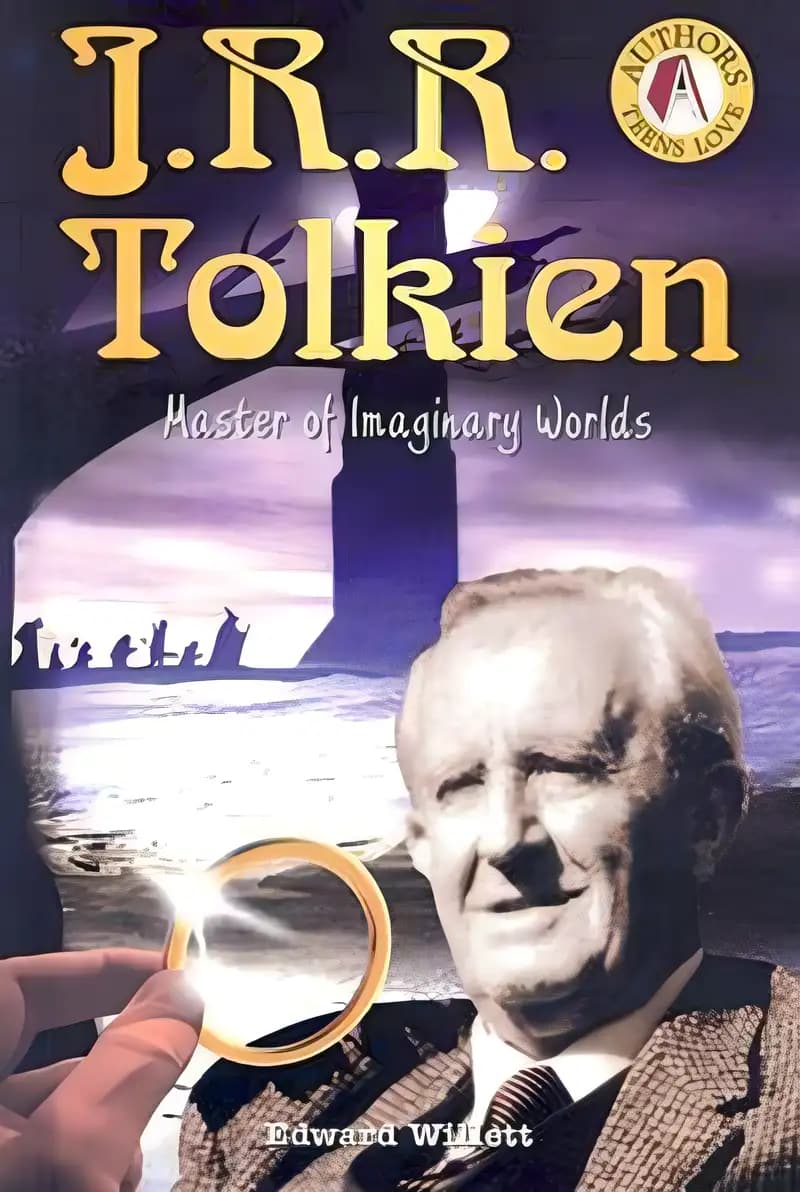
J.R.R. Tolkien: Master of Imaginary Worlds (Authors Teens Love)
Authors teens love Series
on Goodreads (18)
What’s inside...
Examines the personal life and literary career of the author of the Lord of the Rings trilogy.
Series reading
Non-Sequential
Age
11-17
Length
128 pages
Text complexity
Character compass
John Ronald Reuel Tolkien
Discussion points
What do you think inspired Tolkien's creation of Middle Earth and its various characters?
Why do you think stories about quests, like those in Tolkien's books, are appealing to people?
How do the characters in Tolkien's works demonstrate the importance of courage and friendship?
Can you think of any ways that Tolkien’s personal experiences might have influenced his writings?
What lessons can we learn from the conflicts and resolutions in Tolkien’s stories?
Tip: Role play these questions
Start by sharing your own thoughts on Tolkien's world to kickstart the conversation. Show genuine interest in your child's responses and encourage them to think deeper about the story and its characters. Relate the themes of the book to real-life scenarios to help them connect with the material on a personal level. Finally, ask them how they might use the lessons from the book in their own lives to foster a sense of practical application.
Key lessons
Example Lesson: Perseverance and Dedication
Explanation: The book chronicles Tolkien's meticulous process of creating entire languages and detailed maps for his fictional world, demonstrating his unwavering commitment to his craft.
Real-World Application: Children can learn the importance of dedication in any project or hobby they undertake, understanding that great achievements require time and persistence.
Example Lesson: The Power of Imagination
Explanation: Tolkien's creation of expansive and intricate fantasy worlds showcases the limitless potential of the human imagination.
Real-World Application: Encourages children to explore their own creativity and imagination, whether it's through writing, drawing, or storytelling.
Example Lesson: The Importance of Studying Literature
Explanation: The book highlights Tolkien’s background as a professor of Anglo-Saxon literature, illustrating how his academic studies influenced his writing.
Real-World Application: Children can see the value of paying attention in their literature classes and how it can potentially influence their own creative outputs.
Example Lesson: Resilience in the Face of Hardship
Explanation: Tolkien's life was marked by personal losses, including being orphaned at a young age and serving in World War I, yet he channeled his experiences into his writing.
Real-World Application: This can teach children about resilience and overcoming difficulties, encouraging them to transform their personal challenges into opportunities for growth.
Example Lesson: Cultural Appreciation and Understanding
Explanation: Through the book's exploration of Tolkien’s deep interest in languages and culture, readers see how these elements are woven into his stories, promoting a richer world view.
Real-World Application: Children can be inspired to learn about and appreciate different cultures and histories, enhancing their empathy and global awareness.