
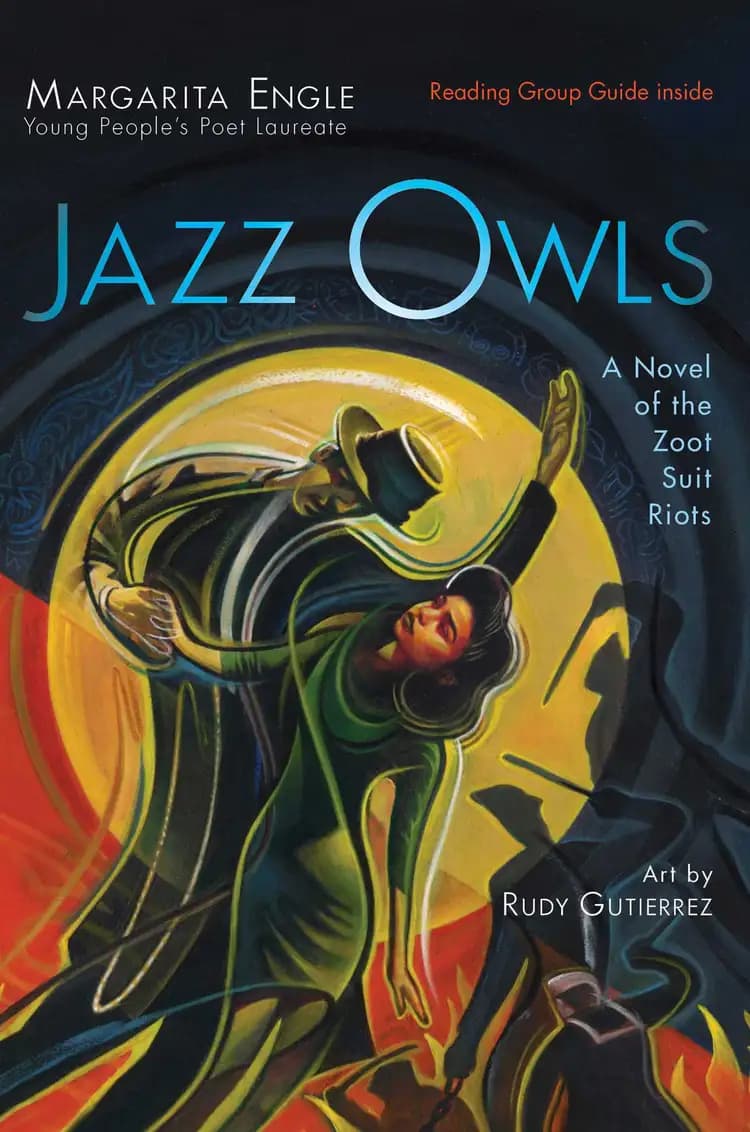
Jazz Owls: A Novel of the Zoot Suit Riots
What’s inside...
From the Young People’s Poet Laureate Margarita Engle comes a searing novel in verse about the Zoot Suit Riots of 1943. The story captures the experiences of young Navy sailors and Mexican American girls in Los Angeles during World War II. As the sailors prepare for battle, they seek solace in dance and music with the local girls, who are known as Jazz Owl girls. However, racial violence erupts when white sailors attack Mexican American boys over the zoot suits they wear, leading to false arrests and highlighting the racial tensions of the time. Through vivid imagery and powerful verse, this novel explores the complexities of identity, prejudice, and the human desire to feel alive in the face of adversity.
Age
11-12
Length
208 pages
Text complexity
Character compass
Marisa
Lorena
Manny
Discussion points
How do the characters in 'Jazz Owls' respond to the challenges they face during the Zoot Suit Riots? What does this tell us about resilience?
Why do you think the author chose to tell this story using poems? How does this style affect your understanding or feelings about the events?
The Zoot Suit Riots were fueled by racial tensions. How do the characters in the book navigate their cultural identities during these times?
What role does music play in the lives of the characters in 'Jazz Owls'? Can music be a form of resistance or a source of comfort during difficult times?
If you were a character in 'Jazz Owls,' how would you have reacted to the events of the Zoot Suit Riots?
Tip: Role play these questions
Encourage your child to express their thoughts and feelings about the story. Use empathetic listening to show you value their perspective.
Discuss the historical context of the Zoot Suit Riots before diving into the book. Understanding the real events can help deepen the discussion.
Link themes from the book to current events. Ask your child to think about how the themes of identity, injustice, and resilience are still relevant today.
Use examples from the book to have a broader conversation about diversity and the importance of cultural respect and understanding.
After reading, you might watch a documentary or explore more literary works about the Zoot Suit Riots to enrich the conversation and provide multiple perspectives.
Key lessons
Example Lesson: Empathy and Understanding
Explanation: The novel, by portraying diverse perspectives during the Zoot Suit Riots, teaches empathy by having readers explore the emotions and viewpoints of different characters.
Real-World Application: Children can apply this by learning to consider and respect different perspectives and emotions in their daily interactions with diverse groups of people.
Example Lesson: Historical Awareness
Explanation: Through its vivid depiction of the 1940s and the Zoot Suit Riots, the book educates young readers about significant historical events and cultural tensions.
Real-World Application: This awareness can encourage children to explore more historical events and understand the context of current societal issues.
Example Lesson: Justice and Standing Up for What's Right
Explanation: Characters in the story are involved in challenging societal injustices, which can teach children about the importance of standing up against wrongdoing.
Real-World Application: Children can be inspired to speak out against unfair treatment they witness in school or their community, promoting a more just environment.
Example Lesson: Cultural Pride and Identity
Explanation: The protagonists’ embrace of their cultural heritage, despite societal challenges, highlights the importance of pride in one's identity.
Real-World Application: This can help children appreciate their own cultural backgrounds and respect others', fostering a sense of community and belonging.
Example Lesson: Resilience in the Face of Adversity
Explanation: The main characters show resilience throughout the riots and personal struggles, demonstrating the power of perseverance.
Real-World Application: This can teach children to remain steadfast in pursuing their goals and overcoming obstacles, regardless of the challenges they face.