
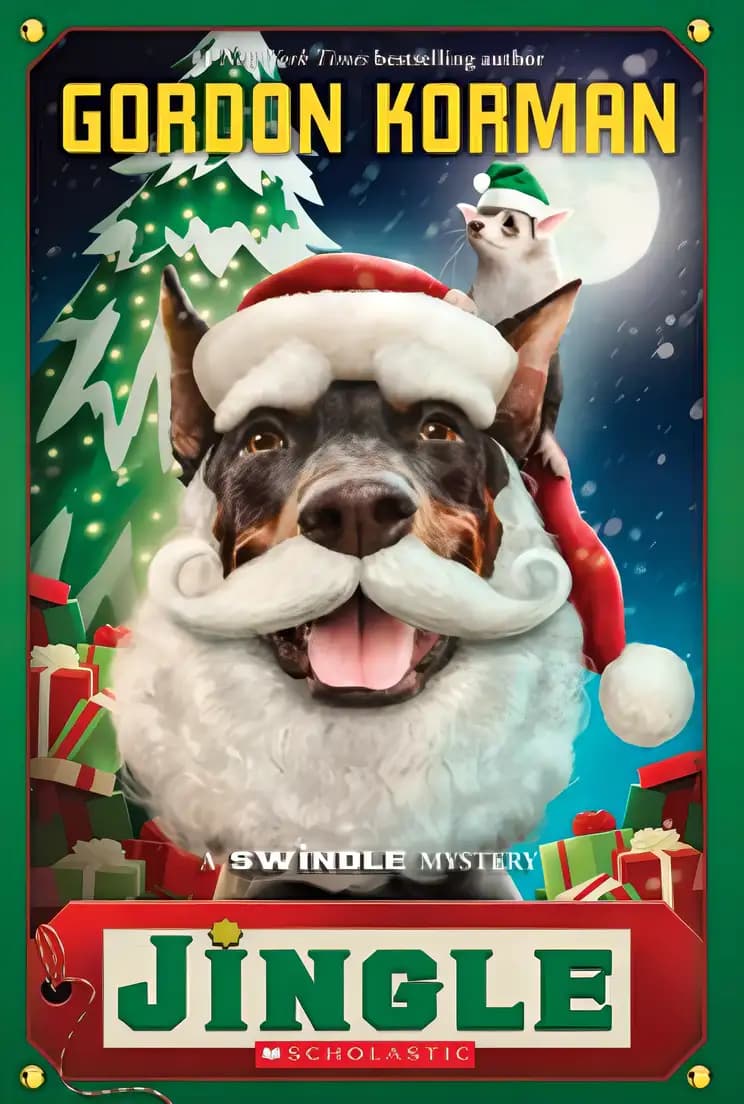
Jingle (Swindle #8)
#8 of 8 in The Swindle Series
on Goodreads (801)
What’s inside...
The eighth installment in #1 New York Times bestselling author Gordon Korman's Swindle series! JINGLE: a light clinking or tingling sounds, often heralding the approach of Santa, reindeer, or the mysterious thief of a priceless possession. Griffin Bing and his friends are NOT happy. Instead of going away for winter break, they've been signed up to volunteer at a local Christmas extravaganza . . . as elves. It's not easy being an elf. Not when Santa is bad news and Rudolph is being played by a Doberman who makes up his own rules wherever he goes. But being an elf is nothing compared to being blamed when a prized Christmas possession -- worth over ten million dollars -- is stolen right from under your nose. It's time for these elves to get off the shelf and track down a Christmas thief!
Character compass
Griffin Bing
Darren Vader
Logan Kellerman
Ben Slovak
Pitch Benson
Melissa Dukakis
Savannah Drysdale
Discussion points
What do you think Griffin felt when he found the valuable Babe Ruth baseball card? How would you feel in his situation?
Why do you think teamwork was important for Griffin and his friends in the book? Can you think of a time when you had to work together with others to achieve a goal?
What lessons did the characters learn about honesty and integrity throughout their adventure? How do these values impact our lives?
How did the characters change from the beginning to the end of the story? Which character's transformation did you find most compelling, and why?
If you could give one piece of advice to any character in 'Jingle', who would it be and what would you tell them?
Tip: Role play these questions
Help your child relate to the characters by comparing their experiences to similar situations in their own life. This can deepen their understanding of the book’s themes.
Encourage your child to think critically about the choices characters make and ask what they might have done differently, fostering a sense of empathy and moral reasoning.
Celebrate teamwork and integrity as you discuss the book, relating these themes back to real-life situations that your child may encounter at school or in friendships.
Use examples from the book to discuss the importance of growth and change, highlighting how the characters evolved and what might be learned from their experiences.
After discussing the questions, consider having your child write down or draw their favorite part or a lesson they learned. This can help consolidate their thoughts and feelings about the story.
Key lessons
Example Lesson: Teamwork and collaboration
Explanation: In 'Jingle', characters work together to solve problems, demonstrating that teamwork can often lead to better solutions than working alone.
Real-World Application: Children can apply this by participating in group activities at school or in sports, learning to value the input and cooperation of others.
Example Lesson: Problem-solving skills
Explanation: The protagonists face various challenges through the story and must come up with creative solutions to move forward, teaching children the importance of thinking critically under pressure.
Real-World Application: This skill is essential in a child’s daily life, helping them to navigate obstacles they encounter in schoolwork, friendships, or even family life.
Example Lesson: Honesty and integrity
Explanation: The characters in the book learn valuable lessons about the importance of being honest and the consequences of deceit, reinforcing ethical behavior.
Real-World Application: Children learn to practice honesty in their interactions with others, understanding that this fosters trust and respect in relationships.
Example Lesson: The value of perseverance
Explanation: Despite the difficulties they encounter, the characters persist in their efforts to achieve their goals, showcasing the benefits of not giving up.
Real-World Application: This teaches children the importance of persistence in achieving their own goals, whether educational, personal, or communal.