
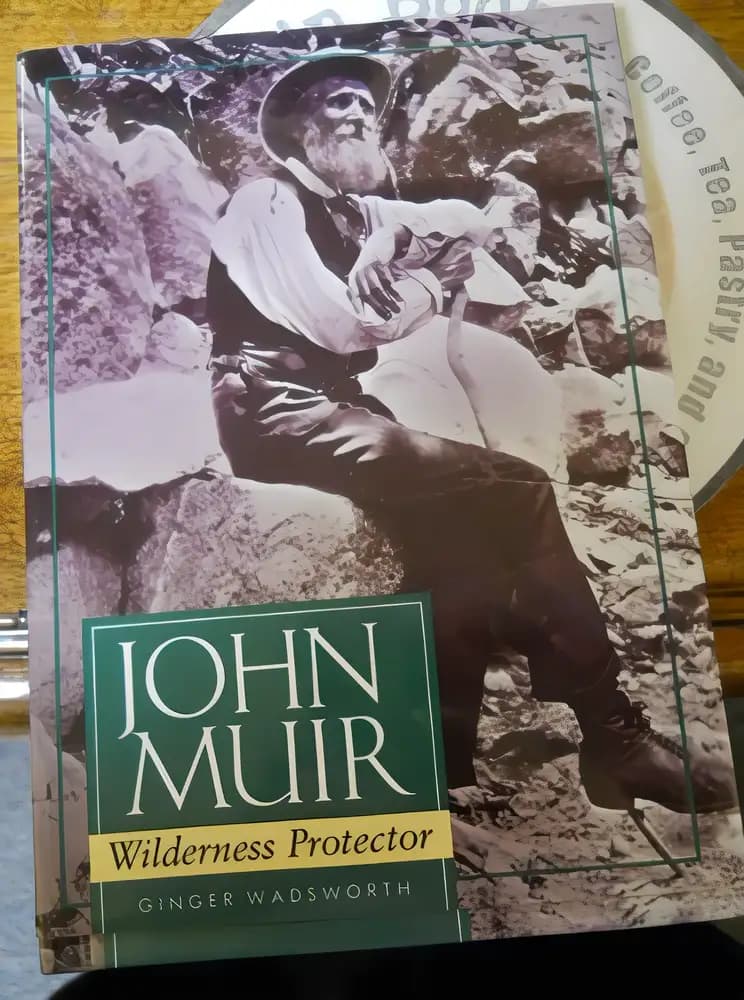
John Muir: Wilderness Protector
on Goodreads (24)
What’s inside...
A biography of the naturalist and explorer who helped found the Sierra Club and was influential in the development of our national park system. A biography of the dedicated botanist, explorer, and conservationist describes how Muir fought for the establishment of America's national parks, founded the Sierra Club, and more.
Age
11-12
Length
128 pages
Text complexity
Character compass
John Muir
Discussion points
Why do you think John Muir felt it was important to protect the wilderness?
What are some ways that you can help take care of nature?
How did John Muir's actions make a difference in the world?
What qualities did John Muir have that made him a good leader and advocate for the environment?
Can you think of a place you love in nature? Why is it special to you?
Tip: Role play these questions
Encourage your child to express their thoughts and feelings about nature and conservation after reading the book.
Connect the story to personal experiences by discussing family trips to parks or natural landscapes.
Ask your child to imagine what their favorite park or nature reserve would look like if no one took care of it.
Discuss the impact of individual actions on the environment, emphasizing empowerment and responsibility.
Use the book as a starting point to research more about John Muir together, enhancing their understanding and interest.
Key lessons
Example Lesson: Environmental stewardship
Explanation: John Muir's passionate advocacy for preserving wilderness areas is a central theme. His dedication illustrates the importance of conserving nature.
Real-World Application: Children can be encouraged to take part in local clean-up projects or planting trees, fostering a sense of responsibility towards their environment.
Example Lesson: Persistence in pursuit of passions
Explanation: Throughout the book, John Muir's persistent efforts in advocating for national parks shows his dedication to his beliefs, despite many challenges.
Real-World Application: Children can learn to stay dedicated to their interests and hobbies, understanding that persistence is key to achieving long-term goals.
Example Lesson: Appreciation for natural beauty
Explanation: Muir's vivid descriptions of landscapes serve to instill a deep appreciation for the aesthetics of the natural world.
Real-World Application: This can motivate children to explore and value the natural beauty around them, perhaps through hiking, camping, or simply spending more time outdoors.
Example Lesson: Scientific curiosity
Explanation: The book highlights John Muir's early fascination with the natural environment and his self-driven studies, which laid the groundwork for his later conservation efforts.
Real-World Application: Children can be inspired to investigate and learn more about the science behind the natural phenomena they encounter in their daily lives.
Example Lesson: Advocacy and using one's voice for change
Explanation: John Muir's success in lobbying the U.S. government to establish national parks demonstrates the power of using one’s voice to advocate for change.
Real-World Application: Teaching children that their voice matters and can be used to advocate for positive changes in their community, whether at school or in local governance.